White Wilderness and Minitel
Meanwhile, Vanderslice has another gift up his sleeve:
Yes We Can is the most jolting, swinging, all-round best album by the World Saxophone Quartet in nearly 20 years.
WSQ, which was formed in 1977, still has at its core two of the founding members, David Murray on tenor sax and Hamiett Bluiett on baritone. The alto parts, which have shifted over the decades, are taken up here by Kidd Jordan and James Carter (the latter also on soprano at times). They’re all playing at peak power.
In its original guise, with Julius Hemphill and Oliver Lake on altos, WSQ was the signature jazz band of the 1980s, the spearhead of a spontaneous “neo-classical” movement (as critic Gary Giddins dubbed it), which combined the avant-garde’s passionate expressionism with the wit, grace and beauty of myriad traditional forms.
Much of this movement was captured on the Italian Black Saint label, as were the quartet’s seminal albums (especially Revue, W.S.Q., and Live at Brooklyn Academy of Music), though their most voluptuous work, the 1986 Plays Ellington, appeared on Nonesuch.
Hemphill, a master of stretched harmony, was the band’s driving force, and his departure. . .

Producer of the series, Michael Silver of Audio High in Mountain View, CA, has retained Marc Wilsher to make high-resolution digital recordings of the entire series. Judging from an unedited hi-res master of the first movement of Beethoven's "Waldstein" sonata, the clarity and truthfulness of Silverman's sound in Le Petit Trianon are first-class.
The recordings could be as revelatory as the recordings that John Atkinson and Ray Kimber have and continued to make of Silverman performing other repertoire. Stereophile will release a new recording of Brahms' Handel Variations and Schumann's Symphonic Études later this year, and IsoMike has recently released a 7-CD set of Silverman performing all the Mozart piano sonatas. (JA's photo shows Robert performing a Mozart sonata at the 2010 Rocky Mountain Audio Fest.)
What I expected of themin the short term, at leastwas this: They were required to answer three new questions, written for their benefit on that still-vibrating chalkboard, at the beginning of each and every school day. If the children didn't hand in their answers before the first-period classes began, I would not accept their homework from the night before, thus earning them a score of nothing. On the other hand, a good record of correct or at least entertaining answers to those morning questions would, I promised, be used to nudge upward any borderline report-card grade at the end of each quarter.
It's an unlikely mix of homages, but with an equally surefooted and agile band, it works. And on Preminger's latest album, Before the Rain (on the Palmetto label), his bandpianist Frank Kimbrough, bassist John Herbst, and drummer Matt Wilsonis all that.
The disc consists mainly of slow ballads, some originals, some standards, simmered in polyrhythms, cool in demeanor but ripe with emotion. There are also some jagged upbeat tunes, where all the playersand this is more a true quartet than a leader-with-three-backupsstep out with a controlled abandon.
The sound quality is good, though I wish the drums were a little less compressed.
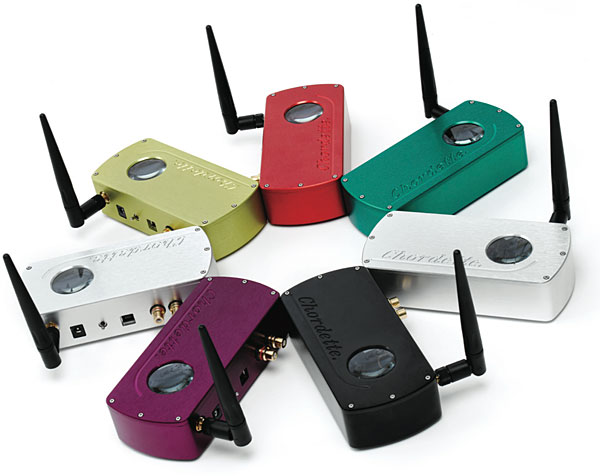
Depressed? Don't be. Those of us in the perfectionist community have a history of dealing with such things, howsoever slowly and inefficiently. (footnote 1). We're getting better at it, too, year by year. An example: Chord Electronics, of sunny southern England, has now brought to market their Chordette Gem D/A converter ($799) which they offer as an affordable means of getting perfectionist-quality sound from computer-music files.