We are now well past the era in which every review of digital playback equipment had to begin with an apology for the medium. CD replay performance may, in fact, now be bumping up against a glass ceiling. But that doesn't discourage high-end audio manufacturers from trying to advance the art, and tempt audiophiles (at least those among us who are not hopeless digiphobes) out of our minds. 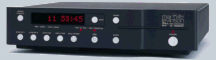 Take Madrigal Audio Laboratories, maker of Mark Levinson audio gear. First, they come out with the reference standard No.30 D/A converter. Then came the much less expensive No.36. Pretty good piece. (I should say—I gushed over it in our November 1995 issue, Vol.18 No.11.) So then what do they do? Raise the ante yet again with the No.36S. To make matters worse, they bring out a new transport to match. Have they no shame? The No.37
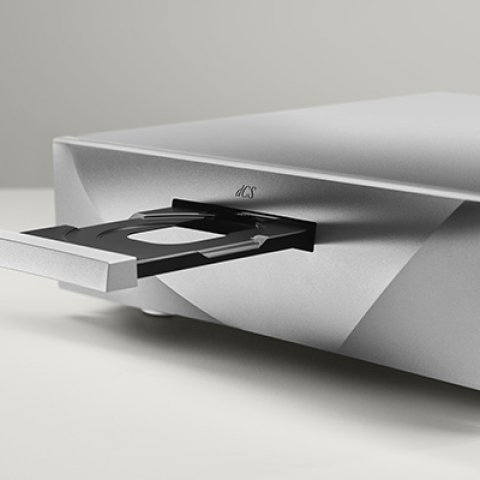
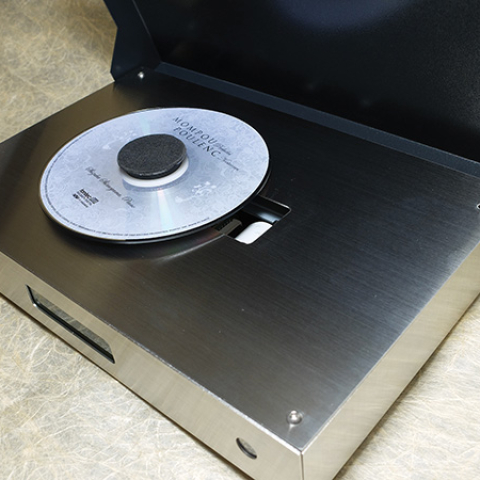
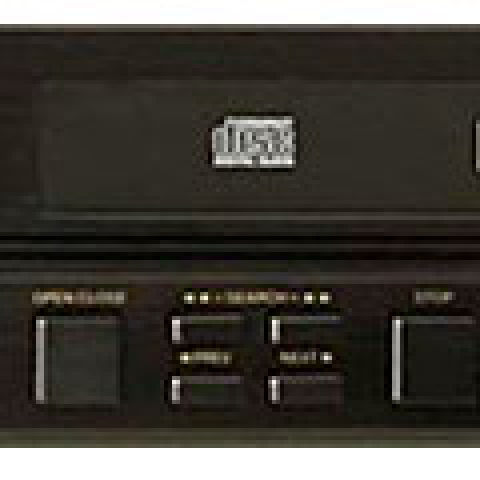
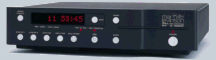
Since it's the completely new kid on the block here, I'll begin with the No.37 transport—the long-awaited, lower-priced alternative to Levinson's No.31.5 and visually similar to Levinson's first one-piece CD player, the No.39. The first thing you notice is the almost vestigial loading drawer. It isn't much larger or thicker than the CD itself. While it's kind of cute, care must be taken when seating a CD. While there's a small recess in the drawer for the disc, this recess is not easy to find by feel alone, and the disc does not slip securely into it. At one point I inadvertently mis-seated a CD and closed the door, which promptly jammed halfway in. A gentle manual tug pulled the drawer back out. The player was none the worse for wear, but the disc was damaged. I didn't experiment with discs bearing fad-of-the-year stick-on stabilization rings, but if your collection is riddled with these, I'd figure out a way to remove them or choose another transport. I also suspect that supplemental CD damping discs of any kind will be incompatible with the No.37. Stick with unadorned CDs and you should be fine.
On the back panel are the four digital outputs, the power connector, an input for an external IR repeater (not supplied) for an installation which might require it, and communications ports to link the No.37 to other Mark Levinson 30-series components. This last feature can perform a number of useful functions even if your only other Levinson component is a D/A converter such as the No.36 or No.36S. By far the most unique of these is the polarity link. This operates in conjunction with another feature of the No.37—playlists. A playlist is, in effect, a user program for playback of a given CD which is stored in the transport's internal memory, ready for instant recall when desired—playlists may be stored for literally thousands of CDs. The desired polarity for each designated cut may also be stored in each playlist. When the user inserts a CD and selects a preprogrammed playlist with polarity information, the communications link relays this information to the Levinson D/A converter and automatically switches the converter's polarity as each cut is played. Neat. In addition, the No.37 has all of the usual CD-player features—full programmability, versatile display readouts, an IR remote control built like a tank, etc., etc., and so forth—so I won't bore you with an in-depth discussion of, say, random play. Besides, I don't know of anyone who buys a single-play, high-end transport or CD player for the bells and whistles. There are plenty of them here, however, and they are all thoroughly described in Levinson's typically first-rate owner's manual. The No.37's transport mechanism is a Philips CDM 12 industrial model, dfor which Levinson developed its own user interface. The laser mechanism uses an all-digital servo control system, and the transport itself is shock-mounted.
In conventional transport designs the reference clock is located near the laser mechanism; according to Madrigal, this noisy electrical environment contributes to jitter. In the No.37, this reference clock—a temperature-compensated crystal oscillator—is located in the final stage of the output section, with its own dedicated power supply. The digital output is stored briefly in a buffer and released in sync with the accuracy of the clock. This design is said to virtually eliminate jitter in the output signal. I did experience problems with my first sample of the No.37. It occasionally failed to unmute when I engaged Play (all digital players mute the sound briefly until the player is up to speed and the digital data are stabilized). The track timer would begin counting, indicating operation, but there was no sound. Stopping and starting the player invariably got things working properly. The drawer also did not always close all the way (1/8" or so would stick out). A second sample functioned normally, but with a slightly noisy drawer action (a "twang," like the sound of a tweaked spring, could be heard on opening and closing) (footnote 1).
Footnote 1: The second sample also had not been set for the proper voltage when it arrived.
Take Madrigal Audio Laboratories, maker of Mark Levinson audio gear. First, they come out with the reference standard No.30 D/A converter. Then came the much less expensive No.36. Pretty good piece. (I should say—I gushed over it in our November 1995 issue, Vol.18 No.11.) So then what do they do? Raise the ante yet again with the No.36S. To make matters worse, they bring out a new transport to match. Have they no shame? The No.37 Since it's the completely new kid on the block here, I'll begin with the No.37 transport—the long-awaited, lower-priced alternative to Levinson's No.31.5 and visually similar to Levinson's first one-piece CD player, the No.39. The first thing you notice is the almost vestigial loading drawer. It isn't much larger or thicker than the CD itself. While it's kind of cute, care must be taken when seating a CD. While there's a small recess in the drawer for the disc, this recess is not easy to find by feel alone, and the disc does not slip securely into it. At one point I inadvertently mis-seated a CD and closed the door, which promptly jammed halfway in. A gentle manual tug pulled the drawer back out. The player was none the worse for wear, but the disc was damaged. I didn't experiment with discs bearing fad-of-the-year stick-on stabilization rings, but if your collection is riddled with these, I'd figure out a way to remove them or choose another transport. I also suspect that supplemental CD damping discs of any kind will be incompatible with the No.37. Stick with unadorned CDs and you should be fine.
Footnote 1: The second sample also had not been set for the proper voltage when it arrived.