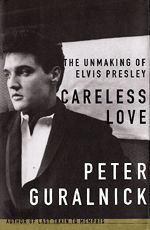
"Here's somebody who just loves to sing." Over the telephone, Peter Guralnick sounds sad, incredulous. "But he's unable at the end of his life to force himself into the recording studio—the fear of completion, fear of exposing your untrammeled idea to execution. What a terrible thing to lose that ability, that faith in yourself." 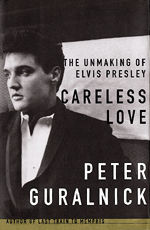 Writing about the final decade and a half of the life of Elvis Presley is, by any measure, a sad affair. Almost from the time he returned from the army in 1960, things slid downhill with seeming inexorability until his death in 1977. Except for a very few oases of artistic renewal and personal triumph, this was when Elvis, who just a few years before had changed the world both musically and sociologically, sold out. He traded his artistic aspirations for lavish consumerism, childish diversions, and numbing self-destruction, in a game with himself he knew one day he'd have to lose—or get out of entirely. As Guralnick puts it in Careless Love: The Unmaking of Elvis Presley (Little, Brown, 767pp, 1999), the recently published second volume of his superb Elvis biography: "Although he never permitted himself to fully acknowledge it, [Presley] was well aware that he had not been faithful to his ideals, that things were not working out in certain respects the way he had planned." A page later, he finishes the thought: "...in the end he felt there was no need to resolve these dichotomies just now; all would become clear when his purpose became clear, his mission revealed. All else was merely temporal; the contradictions between what he desired and what he accepted would one day fade away, his dedication to doing something great would eventually overwhelm his weakness." It's such clearheaded synthesis that distinguishes Guralnick's book from the many Elvis bios that have come before and makes it and its companion volume, Last Train from Memphis: The Rise of Elvis Presley (Little Brown, 560pp, 1994), a standard in Elvis biography that's unlikely to be equaled any time soon. Each volume won the prestigious Ralph J. Gleason Music Book Award in the year in which it was published.
While more than 300 books have been written about Elvis Aron Presley since his explosive rise to stardom in 1955, the smaller subset of biographies has always provided the liveliest, most clearly divided battleground. On one side are the fans and true believers, the apologists and hagiographers who endeavor not only to logically explain away the man's dark sides, but who invariably find intellectual alleyways in which they can morally sanitize his every snarl and fetish. Many Elvis periodicals (like Elvis: The Man and His Music and Elvis World) fall into this category, as well as books like The Real Elvis: Good Old Boy, and a number of reminiscences by friends and family members.
Writing about the final decade and a half of the life of Elvis Presley is, by any measure, a sad affair. Almost from the time he returned from the army in 1960, things slid downhill with seeming inexorability until his death in 1977. Except for a very few oases of artistic renewal and personal triumph, this was when Elvis, who just a few years before had changed the world both musically and sociologically, sold out. He traded his artistic aspirations for lavish consumerism, childish diversions, and numbing self-destruction, in a game with himself he knew one day he'd have to lose—or get out of entirely. As Guralnick puts it in Careless Love: The Unmaking of Elvis Presley (Little, Brown, 767pp, 1999), the recently published second volume of his superb Elvis biography: "Although he never permitted himself to fully acknowledge it, [Presley] was well aware that he had not been faithful to his ideals, that things were not working out in certain respects the way he had planned." A page later, he finishes the thought: "...in the end he felt there was no need to resolve these dichotomies just now; all would become clear when his purpose became clear, his mission revealed. All else was merely temporal; the contradictions between what he desired and what he accepted would one day fade away, his dedication to doing something great would eventually overwhelm his weakness." It's such clearheaded synthesis that distinguishes Guralnick's book from the many Elvis bios that have come before and makes it and its companion volume, Last Train from Memphis: The Rise of Elvis Presley (Little Brown, 560pp, 1994), a standard in Elvis biography that's unlikely to be equaled any time soon. Each volume won the prestigious Ralph J. Gleason Music Book Award in the year in which it was published.
While more than 300 books have been written about Elvis Aron Presley since his explosive rise to stardom in 1955, the smaller subset of biographies has always provided the liveliest, most clearly divided battleground. On one side are the fans and true believers, the apologists and hagiographers who endeavor not only to logically explain away the man's dark sides, but who invariably find intellectual alleyways in which they can morally sanitize his every snarl and fetish. Many Elvis periodicals (like Elvis: The Man and His Music and Elvis World) fall into this category, as well as books like The Real Elvis: Good Old Boy, and a number of reminiscences by friends and family members. 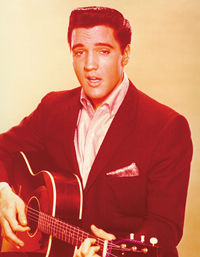 On the other, more critical side, one executioner towers above all others. By any standard applicable, Albert Goldman's Elvis (McGraw-Hill, 1981), published four years after Presley's death in 1977, is a vicious, even bloodthirsty dismembering of its subject. Unforgettably salacious, Goldman's retelling of Elvis' rise and fall—the familiar life story slathered in noxious details and searing perversity—has become a lightning rod for controversy: a "see-I-told-ya" bible for detractors, and heresy for the rest. For anyone aspiring to write an Elvis bio, Elvis is the 800-lb gorilla that must be wrestled with before, during, and after. "I found the book offensive. It doesn't matter who you are writing about, no human being should be treated in that way," says Guralnick from his home near Boston. His experience with Goldman dates back long before his own Elvis project. When Elvis was released, Guralnick was a music writer for the Boston Phoenix, an alternative newsweekly. His review of the book was published the same week Greil Marcus' more famous one appeared in the Village Voice. "[Goldman's book] contradicts my ideas of decency and humanity. It has nothing to do with the book I wrote. One of the things I've always tried to do is to leave myself open to truth coming in over the transom. You can't accept any source on faith, but you can't exclude any source. So the fact that I had a visceral dislike for Goldman's book didn't mean I could disregard it. What I did was the same thing I do with fan magazine accounts: I tried to deconstruct [Goldman's] book and remove the attitude, which is a lot of the book—it's probably 70% attitude—to get to what he's really saying and whether it's well-sourced."
As far as Goldman's work being well-researched, Guralnick calls Elvis, overall, "chewy"—in other words, mixed. In some cases, like his uncovering of the Dutch background of Presley's inimitable manager, Col. Tom Parker, Goldman was solid. But the evidence for many of the numerous sex frolics cited by Goldman has proved more evanescent. Guralnick's interest in Elvis Presley began back in his teens, when he first began to love the blues, and particularly the part they played in Presley's version of rock'n'roll. The distinguished author of some of the finest books written about American popular music in the last 25 years—Searching for Robert Johnson, Sweet Soul Music, Lost Highway, and Feel Like Going Home—Guralnick says he'd contemplated a book on Elvis for some time before actually beginning work on it. Several specific Elvis projects finally inspired him to try and add a new voice to the already crowded chorus of Presley biographers. "It actually stemmed from two or three specific impulses. I did the liner notes for the The Complete Sun Sessions in 1987, a two-LP set [reissued as The Sun Sessions CD, RCA 6414-2-R], at the same time I wrote the script for a documentary on Elvis." (The documentary was Elvis '56, from which Guralnick eventually disassociated himself.)
On the other, more critical side, one executioner towers above all others. By any standard applicable, Albert Goldman's Elvis (McGraw-Hill, 1981), published four years after Presley's death in 1977, is a vicious, even bloodthirsty dismembering of its subject. Unforgettably salacious, Goldman's retelling of Elvis' rise and fall—the familiar life story slathered in noxious details and searing perversity—has become a lightning rod for controversy: a "see-I-told-ya" bible for detractors, and heresy for the rest. For anyone aspiring to write an Elvis bio, Elvis is the 800-lb gorilla that must be wrestled with before, during, and after. "I found the book offensive. It doesn't matter who you are writing about, no human being should be treated in that way," says Guralnick from his home near Boston. His experience with Goldman dates back long before his own Elvis project. When Elvis was released, Guralnick was a music writer for the Boston Phoenix, an alternative newsweekly. His review of the book was published the same week Greil Marcus' more famous one appeared in the Village Voice. "[Goldman's book] contradicts my ideas of decency and humanity. It has nothing to do with the book I wrote. One of the things I've always tried to do is to leave myself open to truth coming in over the transom. You can't accept any source on faith, but you can't exclude any source. So the fact that I had a visceral dislike for Goldman's book didn't mean I could disregard it. What I did was the same thing I do with fan magazine accounts: I tried to deconstruct [Goldman's] book and remove the attitude, which is a lot of the book—it's probably 70% attitude—to get to what he's really saying and whether it's well-sourced."
As far as Goldman's work being well-researched, Guralnick calls Elvis, overall, "chewy"—in other words, mixed. In some cases, like his uncovering of the Dutch background of Presley's inimitable manager, Col. Tom Parker, Goldman was solid. But the evidence for many of the numerous sex frolics cited by Goldman has proved more evanescent. Guralnick's interest in Elvis Presley began back in his teens, when he first began to love the blues, and particularly the part they played in Presley's version of rock'n'roll. The distinguished author of some of the finest books written about American popular music in the last 25 years—Searching for Robert Johnson, Sweet Soul Music, Lost Highway, and Feel Like Going Home—Guralnick says he'd contemplated a book on Elvis for some time before actually beginning work on it. Several specific Elvis projects finally inspired him to try and add a new voice to the already crowded chorus of Presley biographers. "It actually stemmed from two or three specific impulses. I did the liner notes for the The Complete Sun Sessions in 1987, a two-LP set [reissued as The Sun Sessions CD, RCA 6414-2-R], at the same time I wrote the script for a documentary on Elvis." (The documentary was Elvis '56, from which Guralnick eventually disassociated himself.)
Writing about the final decade and a half of the life of Elvis Presley is, by any measure, a sad affair. Almost from the time he returned from the army in 1960, things slid downhill with seeming inexorability until his death in 1977. Except for a very few oases of artistic renewal and personal triumph, this was when Elvis, who just a few years before had changed the world both musically and sociologically, sold out. He traded his artistic aspirations for lavish consumerism, childish diversions, and numbing self-destruction, in a game with himself he knew one day he'd have to lose—or get out of entirely. As Guralnick puts it in Careless Love: The Unmaking of Elvis Presley (Little, Brown, 767pp, 1999), the recently published second volume of his superb Elvis biography: "Although he never permitted himself to fully acknowledge it, [Presley] was well aware that he had not been faithful to his ideals, that things were not working out in certain respects the way he had planned." A page later, he finishes the thought: "...in the end he felt there was no need to resolve these dichotomies just now; all would become clear when his purpose became clear, his mission revealed. All else was merely temporal; the contradictions between what he desired and what he accepted would one day fade away, his dedication to doing something great would eventually overwhelm his weakness." It's such clearheaded synthesis that distinguishes Guralnick's book from the many Elvis bios that have come before and makes it and its companion volume, Last Train from Memphis: The Rise of Elvis Presley (Little Brown, 560pp, 1994), a standard in Elvis biography that's unlikely to be equaled any time soon. Each volume won the prestigious Ralph J. Gleason Music Book Award in the year in which it was published. On the other, more critical side, one executioner towers above all others. By any standard applicable, Albert Goldman's Elvis (McGraw-Hill, 1981), published four years after Presley's death in 1977, is a vicious, even bloodthirsty dismembering of its subject. Unforgettably salacious, Goldman's retelling of Elvis' rise and fall—the familiar life story slathered in noxious details and searing perversity—has become a lightning rod for controversy: a "see-I-told-ya" bible for detractors, and heresy for the rest. For anyone aspiring to write an Elvis bio, Elvis is the 800-lb gorilla that must be wrestled with before, during, and after. "I found the book offensive. It doesn't matter who you are writing about, no human being should be treated in that way," says Guralnick from his home near Boston. His experience with Goldman dates back long before his own Elvis project. When Elvis was released, Guralnick was a music writer for the Boston Phoenix, an alternative newsweekly. His review of the book was published the same week Greil Marcus' more famous one appeared in the Village Voice. "[Goldman's book] contradicts my ideas of decency and humanity. It has nothing to do with the book I wrote. One of the things I've always tried to do is to leave myself open to truth coming in over the transom. You can't accept any source on faith, but you can't exclude any source. So the fact that I had a visceral dislike for Goldman's book didn't mean I could disregard it. What I did was the same thing I do with fan magazine accounts: I tried to deconstruct [Goldman's] book and remove the attitude, which is a lot of the book—it's probably 70% attitude—to get to what he's really saying and whether it's well-sourced."