What the hell is going on with headphones these days?! I mean, the past couple years have seen the whole headphone trip suddenly break on through to the other side after decades of numbingly bad sound. Yeah, the high-dollar Stax electrostatics had always been there if you really wanted some quality headphones, but even they had their problems with coloration and treble steeliness. Other than that, though, it was a real teenage wasteland, with Koss, AKG, Sony, and Sennheiser all battling it out to see who could produce a less mediocre pair of headphones than the rest of the pack. If you wanted comfort, you chose Sennheiser. Bass, Koss. "Studio sound," AKG. Me, I was a headphone slut—I played around with all these brands, trying to find a pair I could live with, but nothing I heard was cool enough to warrant a long-term commitment. 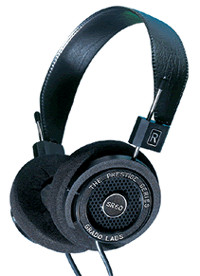 Then suddenly, a couple of years ago, Joe Grado came out of left field with headphones that totally rewrote the book. I'd sworn off 'phones by that point, but all it took was a quick listen to those new Grados and I had to have 'em. They were so clean, so clear, so detailed—so right. I bought the $495 HP 2s without even thinking twice, they freaked me out so bad. Now I use them all the time as my Ultimate Rez Rig—if I can't hear it with the Grados, it ain't be. Grado isn't alone in the Headphone Renaissance. After decades of Mello-Yello, Sennheiser retooled and came out with their new HD 580, a completely totally bitchin' set of cans and a legit rival to the Grados. JA raved about them in Vol.17 No.1, and he's right—these new Sennheisers are way better than anything they've done before. Then there's the Etymotics, little $300 earbuds you plug into your head that seal off all outside stimuli and basically link your tympanic membrane directly to the input waveform. Not to mention the sudden rash of high-end headphone amplifiers like the original Melos SHA-1 and the great li'l HeadRoom portables. And new models from Krell, Audible Illusions, and others are all vying to drive this amazing new breed of superphones to a degree of sound quality literally unheard of only a couple of years ago. OK, so that's the High End. But what about the low end, where me and my friends eat our government cheese and wait for the high tech to trickle down to our demograph? Sure, now you can buy $300 dynamic headphones that kill yesterday's $2000 electrostats, but the under-$100 market is still Dungville with a capital D. There's around 14,000 different models ranging from el cheapo earbuds that buzz like bees to Walkman-style squawkers to big puffy-cushioned "Digital Ready U-Bet" jobs at the top of the lines.
All of these suck, and suck hard—I recently spent several days going around to the various Dung Huts that sell these headphones alongside Bose speakers, microwave ovens, and Dirt Devils, and when it was over I just wanted to lower myself into a tub of Noxzema and be left alone for a couple of months. Forget radiation testing on humans—I'll happily mainline any glowing syringe Uncle Sam cares to try out on me so long as he doesn't clap a pair of Satanic cheap-ass dungphones on my head while he's cooking my works. And it's not just us Mud People who want good cheap cans, either. Even the well-heeled audiophile doesn't wanna take his muy expensivo headphones along when he travels, even if they do annihilate the cheap-ass set that came with his portable CD player or Walkman. Besides which, the cool-man Grados seem to be a pretty tough load for the portable gear I've tried them with—the Grados need quite a bit more in the way of speaker-driving juice before they sing than those little open-air giveaway 'phones, and the typical anemic output stages in portable CD and cassette players just can't drive them to decent levels with any kind of quality. The $20 cheapest-possible Sony Walkman I bought at Target for po'-boy travel tunes burped like a fat baby when I tried driving the HP 2s with it, so I just stuck with the dungphones that came with the player when traveling and left the Grados at home. And every time I'd fly somewhere, I'd sit there with these awful 'phones quacking in my ears, thinking, "OK, we lift off, I yell my demands and wave the gun. No— First I wave the gun, then I tell the pilot to fly to Cyprus. Man I wish Joe Grado would do a great cheap headphone I could drive with this Walkman! I'd pay, oh, 69 clams for something like that if it was out there. Wave, then yell. Wave, yell. Soon I shall be with my brothers in the struggle again."
Joe Grado's got legendary ears—did he hear my plea? Grado SR60
Then suddenly, a couple of years ago, Joe Grado came out of left field with headphones that totally rewrote the book. I'd sworn off 'phones by that point, but all it took was a quick listen to those new Grados and I had to have 'em. They were so clean, so clear, so detailed—so right. I bought the $495 HP 2s without even thinking twice, they freaked me out so bad. Now I use them all the time as my Ultimate Rez Rig—if I can't hear it with the Grados, it ain't be. Grado isn't alone in the Headphone Renaissance. After decades of Mello-Yello, Sennheiser retooled and came out with their new HD 580, a completely totally bitchin' set of cans and a legit rival to the Grados. JA raved about them in Vol.17 No.1, and he's right—these new Sennheisers are way better than anything they've done before. Then there's the Etymotics, little $300 earbuds you plug into your head that seal off all outside stimuli and basically link your tympanic membrane directly to the input waveform. Not to mention the sudden rash of high-end headphone amplifiers like the original Melos SHA-1 and the great li'l HeadRoom portables. And new models from Krell, Audible Illusions, and others are all vying to drive this amazing new breed of superphones to a degree of sound quality literally unheard of only a couple of years ago. OK, so that's the High End. But what about the low end, where me and my friends eat our government cheese and wait for the high tech to trickle down to our demograph? Sure, now you can buy $300 dynamic headphones that kill yesterday's $2000 electrostats, but the under-$100 market is still Dungville with a capital D. There's around 14,000 different models ranging from el cheapo earbuds that buzz like bees to Walkman-style squawkers to big puffy-cushioned "Digital Ready U-Bet" jobs at the top of the lines.
All of these suck, and suck hard—I recently spent several days going around to the various Dung Huts that sell these headphones alongside Bose speakers, microwave ovens, and Dirt Devils, and when it was over I just wanted to lower myself into a tub of Noxzema and be left alone for a couple of months. Forget radiation testing on humans—I'll happily mainline any glowing syringe Uncle Sam cares to try out on me so long as he doesn't clap a pair of Satanic cheap-ass dungphones on my head while he's cooking my works. And it's not just us Mud People who want good cheap cans, either. Even the well-heeled audiophile doesn't wanna take his muy expensivo headphones along when he travels, even if they do annihilate the cheap-ass set that came with his portable CD player or Walkman. Besides which, the cool-man Grados seem to be a pretty tough load for the portable gear I've tried them with—the Grados need quite a bit more in the way of speaker-driving juice before they sing than those little open-air giveaway 'phones, and the typical anemic output stages in portable CD and cassette players just can't drive them to decent levels with any kind of quality. The $20 cheapest-possible Sony Walkman I bought at Target for po'-boy travel tunes burped like a fat baby when I tried driving the HP 2s with it, so I just stuck with the dungphones that came with the player when traveling and left the Grados at home. And every time I'd fly somewhere, I'd sit there with these awful 'phones quacking in my ears, thinking, "OK, we lift off, I yell my demands and wave the gun. No— First I wave the gun, then I tell the pilot to fly to Cyprus. Man I wish Joe Grado would do a great cheap headphone I could drive with this Walkman! I'd pay, oh, 69 clams for something like that if it was out there. Wave, then yell. Wave, yell. Soon I shall be with my brothers in the struggle again."
Joe Grado's got legendary ears—did he hear my plea? Grado SR60
The new $69 SR60 is the cheapest model in Grado's new Prestige series of affordable headphones based on the same technology featured in the $595 HP 1 and the $495 HP 2 Signature Series. Joe's nephew John explained to me that the Grado Mojo can basically be boiled down to one essential goal: the elimination of resonance. In developing the He-Man Grados, every part was specially designed and treated to reduce resonances so the dynamic speaker driver could operate from a perfectly rigid structure—Grado claims this is why they have such great resolution and freedom from coloration. You get a bit more resonance as you go down the Grado line, John says, and you lose a bit more detail and transparency, but the family resemblance between the top-of-the-line HP 1 and the el cheapo SR60 remains strong.
Then suddenly, a couple of years ago, Joe Grado came out of left field with headphones that totally rewrote the book. I'd sworn off 'phones by that point, but all it took was a quick listen to those new Grados and I had to have 'em. They were so clean, so clear, so detailed—so right. I bought the $495 HP 2s without even thinking twice, they freaked me out so bad. Now I use them all the time as my Ultimate Rez Rig—if I can't hear it with the Grados, it ain't be. Grado isn't alone in the Headphone Renaissance. After decades of Mello-Yello, Sennheiser retooled and came out with their new HD 580, a completely totally bitchin' set of cans and a legit rival to the Grados. JA raved about them in Vol.17 No.1, and he's right—these new Sennheisers are way better than anything they've done before. Then there's the Etymotics, little $300 earbuds you plug into your head that seal off all outside stimuli and basically link your tympanic membrane directly to the input waveform. Not to mention the sudden rash of high-end headphone amplifiers like the original Melos SHA-1 and the great li'l HeadRoom portables. And new models from Krell, Audible Illusions, and others are all vying to drive this amazing new breed of superphones to a degree of sound quality literally unheard of only a couple of years ago. OK, so that's the High End. But what about the low end, where me and my friends eat our government cheese and wait for the high tech to trickle down to our demograph? Sure, now you can buy $300 dynamic headphones that kill yesterday's $2000 electrostats, but the under-$100 market is still Dungville with a capital D. There's around 14,000 different models ranging from el cheapo earbuds that buzz like bees to Walkman-style squawkers to big puffy-cushioned "Digital Ready U-Bet" jobs at the top of the lines. The new $69 SR60 is the cheapest model in Grado's new Prestige series of affordable headphones based on the same technology featured in the $595 HP 1 and the $495 HP 2 Signature Series. Joe's nephew John explained to me that the Grado Mojo can basically be boiled down to one essential goal: the elimination of resonance. In developing the He-Man Grados, every part was specially designed and treated to reduce resonances so the dynamic speaker driver could operate from a perfectly rigid structure—Grado claims this is why they have such great resolution and freedom from coloration. You get a bit more resonance as you go down the Grado line, John says, and you lose a bit more detail and transparency, but the family resemblance between the top-of-the-line HP 1 and the el cheapo SR60 remains strong.