Although Mark Levinson Audio Systems components continue to be produced, the company's headquarters moved in late 2003 from the Madrigal plant in Middletown, Connecticut, to Harman Specialty's facility in Bedford, Massachusetts. There ML shares manufacturing and sales space with Harman's other high-end lines, Revel and Lexicon.
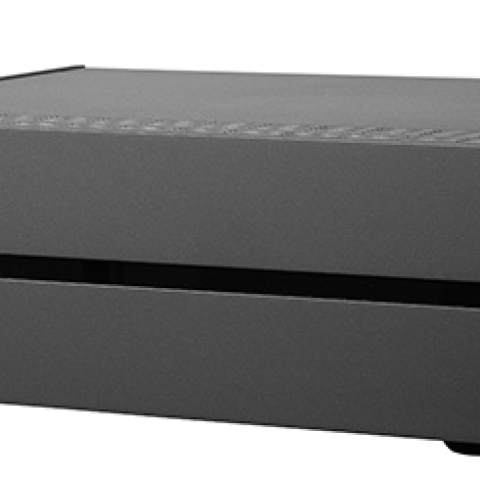
 The ML line of high-end solid-state power amplifiers changed even before the company was reorganized. Beginning with the 400W No.436 monoblock (reviewed in the August 2003 Stereophile, Vol.26 No.8), ML amps morphed into low, flat, rack-mountable chassis with internal heatsinks—a marked change from the tall, massive, curved, silver-and-black art deco exteriors of the No.300 line, with its prominent external heatsinks. The No.436 monoblock is near the top of the Levinson line by virtue of price ($12,600/pair) and power (400W), but I wanted to hear one of their less expensive dual-mono designs. I'd previously reviewed ML's lowest-powered solid-state stereo amplifiers, including the No.27 (Vol.13 Nos.6 & 7), No.27.5 (Vol.16 No.7), No.331 (Vol.19 No.1), and No.334 (Vol.22 No.9). The No.334, which served as one of my reference amplifiers for five years, has now been replaced in the ML line by the No.431. I wondered if the changes in company structure and design philosophy had been accompanied by a sonic transformation.
Slim new design
The ML line of high-end solid-state power amplifiers changed even before the company was reorganized. Beginning with the 400W No.436 monoblock (reviewed in the August 2003 Stereophile, Vol.26 No.8), ML amps morphed into low, flat, rack-mountable chassis with internal heatsinks—a marked change from the tall, massive, curved, silver-and-black art deco exteriors of the No.300 line, with its prominent external heatsinks. The No.436 monoblock is near the top of the Levinson line by virtue of price ($12,600/pair) and power (400W), but I wanted to hear one of their less expensive dual-mono designs. I'd previously reviewed ML's lowest-powered solid-state stereo amplifiers, including the No.27 (Vol.13 Nos.6 & 7), No.27.5 (Vol.16 No.7), No.331 (Vol.19 No.1), and No.334 (Vol.22 No.9). The No.334, which served as one of my reference amplifiers for five years, has now been replaced in the ML line by the No.431. I wondered if the changes in company structure and design philosophy had been accompanied by a sonic transformation.
Slim new design
The two-channel Mark Levinson No.431 is 3.51" shorter, 1" deeper, 0.2" wider, and 7 lbs lighter than the No.334, while rated to deliver almost twice the power into 8 and 4 ohms. In fact, one can stack two No.431s in the space required for one No.334. ML also supplies an optional rack-mount kit for the No.431 that provides conduits for dressing interconnect and speaker cables.
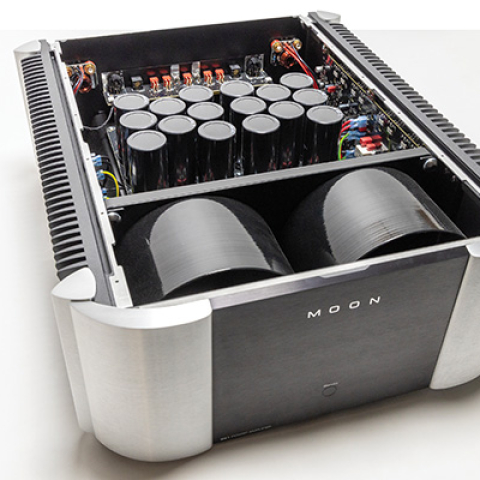
The No.431 requires neither the No.334's prominent external heatsinks nor the No.436's cooling fans. Why? First, the No.431's output stage is biased at half the level of the No.334's, so it runs much cooler. Second, the No.431 is not rated for loads below 4 ohms or for bridged operation. The No.431's internal crosscut heatsinks are mounted in two tunnels that run along both sides of the chassis, the circuit boards between them. The heatsinks are visible through two 2 7/8" by 10" rectangular openings in the amplifier's top panel. Nearby, two rows of perforated holes in the amplifier's top panel provide extra ventilation. At the No.431's lower operating temperatures, the differences in heat inside the chassis produce enough of a convection, or chimney, effect to pull air through the chassis and cool the amplifier without the need for fans. Air flows through the tunnels while remaining isolated from the circuits, to keep dust from being drawn into the amplifier's center.
Inputs, outputs, controls
The No.431 is controlled by three different switches: the Power and Standby buttons on the front panel, and the Power Save switch on the rear panel. The latter selects among the No.431's four operating modes—Off, On, Sleep, and Standby. Standby mode can be selected by first setting the Power Save switch to Off, then pushing and releasing the front-panel Power button. This connects power to the main power supply and voltage gain stages, to allow them to run at their normal operating temperatures, but doesn't turn on the output stages. Pressing and releasing Standby turns the amplifier on fully.
The Sleep mode is activated by setting the rear-panel Power Save switch to On, then pushing and releasing the Power button. AC is then connected to a small power supply, communication circuits, and control circuits, but the No.431 consumes less than 15W of power while Sleeping. This mode also allows the amplifier to respond to the DC trigger control via a rear-panel, 1/8" mini-jack labeled Trigger In, something that will be favored in an extensive home theater system, where a central control unit can toggle all the amplifiers between Sleep and On. The front-panel Standby button also can toggle the amplifier fully on if pressed and released, or toggle between Standby and Sleep if pressed and held down.
The No.431's rear panel handles all signal and communication functions. It has custom speaker binding posts, two three-pin balanced XLR input connectors, two RCA single-ended input connectors, and an IEC AC receptacle for the detachable power cord. For balanced operation, one must remove tiny U-shaped shorting pins that connect pin 1 (signal, ground) to pin 3 (signal, inverting) of the XLR connectors. The shorting pins reduce noise pickup during single-ended operation, but are small and difficult to find if dropped on the carpet.
The rear panel also has control ports. Three RJ-11 jacks sit in a row at the center of the rear panel. One, labeled Control, functions as an RS-232 port to allow the amplifier's software-controlled operating system to be updated. It can also be connected to a master control system such as an AMX or Crestron. The other two RJ-11 jacks are marked with the Link logo and labeled Link Input and Link Control. These can be connected to compatible Mark Levinson preamplifiers to share linked controls. For example, switching a linked preamplifier to Standby mode switches all linked power amps to Standby as well. If a linked amplifier experiences a fault condition, it will report the fault to the preamplifier, which will display the power amp's model number and fault code. Finally, there is a 3.5mm mini-jack that can be connected to an outboard infrared receiver so that the No.431 can be controlled remotely.
Internal circuitry
The No.431 has been refined compared with earlier ML designs by minimizing the amount of wiring in the power supply and by reducing circuit complexity. This makes service in the field easier, increases the amplifier's electrical stability, and lowers the amount of local feedback needed for low-distortion operation. The No.431's voltage-stage printed-circuit boards (PCBs) are made of Arlon 25N composite, as in ML's No.32 Reference preamplifier. Arlon 25N has a lower, more stable dielectric constant than conventional PCB material, resulting in better electrical isolation of the circuit stages for better sound.
The ML line of high-end solid-state power amplifiers changed even before the company was reorganized. Beginning with the 400W No.436 monoblock (reviewed in the August 2003 Stereophile, Vol.26 No.8), ML amps morphed into low, flat, rack-mountable chassis with internal heatsinks—a marked change from the tall, massive, curved, silver-and-black art deco exteriors of the No.300 line, with its prominent external heatsinks. The No.436 monoblock is near the top of the Levinson line by virtue of price ($12,600/pair) and power (400W), but I wanted to hear one of their less expensive dual-mono designs. I'd previously reviewed ML's lowest-powered solid-state stereo amplifiers, including the No.27 (Vol.13 Nos.6 & 7), No.27.5 (Vol.16 No.7), No.331 (Vol.19 No.1), and No.334 (Vol.22 No.9). The No.334, which served as one of my reference amplifiers for five years, has now been replaced in the ML line by the No.431. I wondered if the changes in company structure and design philosophy had been accompanied by a sonic transformation.
Slim new design
The two-channel Mark Levinson No.431 is 3.51" shorter, 1" deeper, 0.2" wider, and 7 lbs lighter than the No.334, while rated to deliver almost twice the power into 8 and 4 ohms. In fact, one can stack two No.431s in the space required for one No.334. ML also supplies an optional rack-mount kit for the No.431 that provides conduits for dressing interconnect and speaker cables.
The No.431 is controlled by three different switches: the Power and Standby buttons on the front panel, and the Power Save switch on the rear panel. The latter selects among the No.431's four operating modes—Off, On, Sleep, and Standby. Standby mode can be selected by first setting the Power Save switch to Off, then pushing and releasing the front-panel Power button. This connects power to the main power supply and voltage gain stages, to allow them to run at their normal operating temperatures, but doesn't turn on the output stages. Pressing and releasing Standby turns the amplifier on fully.
The No.431 has been refined compared with earlier ML designs by minimizing the amount of wiring in the power supply and by reducing circuit complexity. This makes service in the field easier, increases the amplifier's electrical stability, and lowers the amount of local feedback needed for low-distortion operation. The No.431's voltage-stage printed-circuit boards (PCBs) are made of Arlon 25N composite, as in ML's No.32 Reference preamplifier. Arlon 25N has a lower, more stable dielectric constant than conventional PCB material, resulting in better electrical isolation of the circuit stages for better sound.