

Rediscoveries #1: Archie Shepp's Ballads
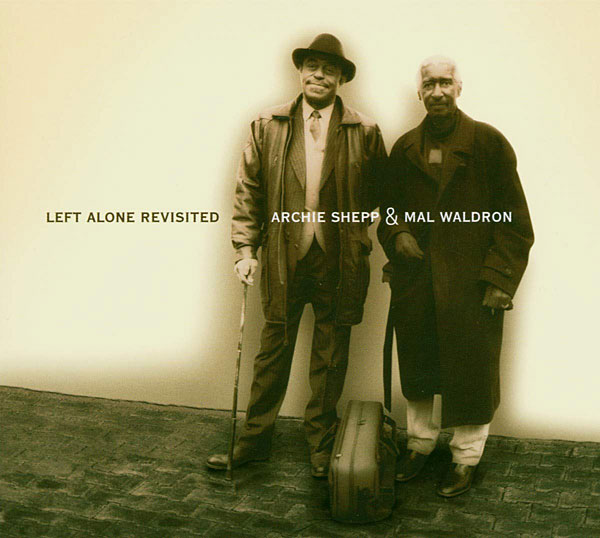
A review of the Archie Shepp/Jason Moran duet album Let My People Go, in the April issue, may have startled some readers. Shepp is a tenor saxophonist known for tearing across the fiercest climes of the avant-garde (his seminal album is called Fire Music); yet at 83, he's playing standards, spirituals, and slow blues. In fact, Shepp has been exploring such traditional terrain for several decades. Sofor the debut of an occasional column on underappreciated albums, artists, genres, and labelslet's shine some light on Archie Shepp's ballads.
Rediscoveries #10: Marianne Faithfull, Songs of Innocence and Experience
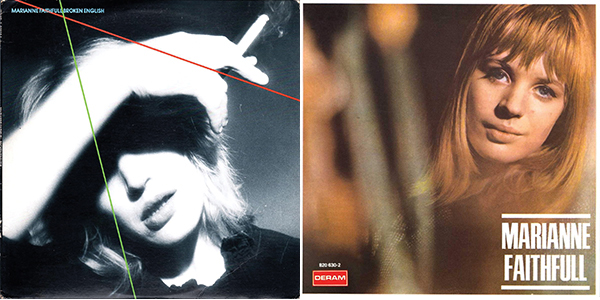
Much of the coverage of the passing of Marianne Faithfull has focused on her private life rather than her music. That is understandableyet it's also regrettable because it misses the important fact that for 60 years, Faithfull produced an impressive catalog of music, releasing 21 solo studio albums plus collaborations, compilations, and live recordings.
To oversimplify, her career can be divided in two periods. The first, which received most of the attention in obituaries, was in the 1960s, when she was a face of the British Invasion. In the mid-'60s, with her soft, folky voice and very English pop, she enjoyed several US hits including "As Tears Go By" and "Come and Stay with Me," both from her self-titled 1965 debut album, though "As Tears Go By" was released as a single in 1964. The other charting singles were "This Little Bird" and "Summer Nights," both from her second album, The World of Marianne Faithfull. ("Go Away from My World," from the same album, also charted in the US—barely.)
Rediscoveries #11: New Premium ECM Luminessence Reissues
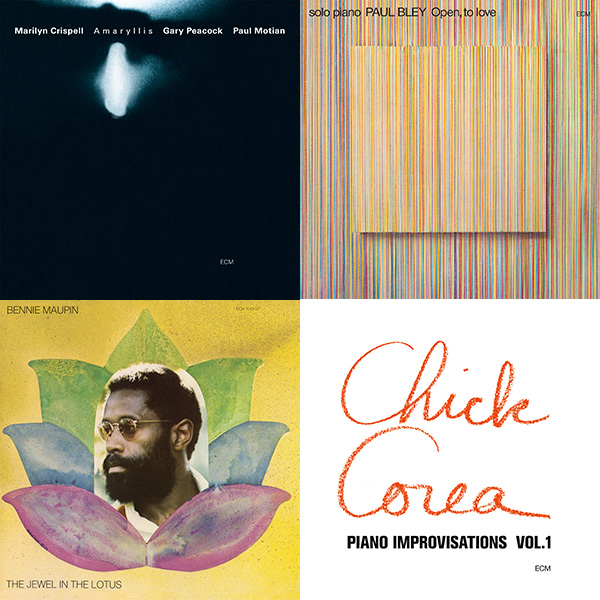
In the 1990s into the 2000s, I had the pleasure of interviewing jazz drummer and composer Paul Motian for both Modern Drummer and DownBeat. Motian's playful yet cantankerous spirit shone through in both conversations. The first interview took place at the ECM Records offices in Midtown Manhattan.
ReDiscoveries #12: Interscope Releases the Rolling Stones' Black and Blue
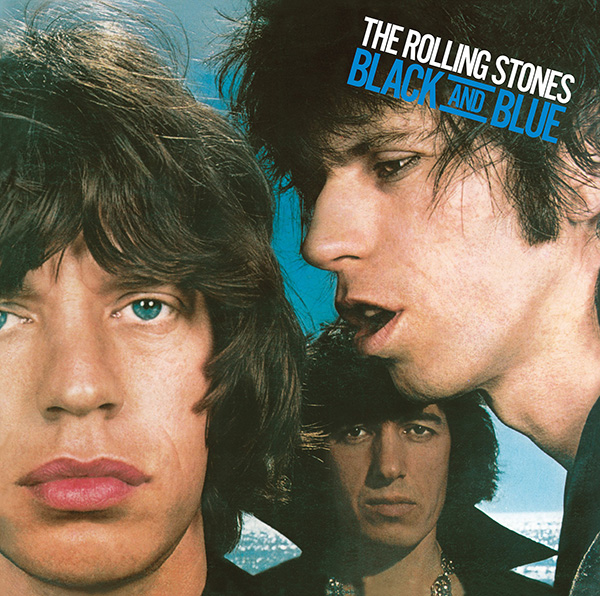
In the Rolling Stones' long history, the Mick Taylor era was a peak, if not the peak. Taylor, who replaced cofounder Brian Jones in the late 1960s, proved a great musical foil for Keith Richards. He was a technical wizard on the guitar; those fluid higher-octaves riffs and runs were the perfect counterpoint to Richards's jabbing and stabbing and growling style.
ReDiscoveries #13: The End of the Road for Megadeth
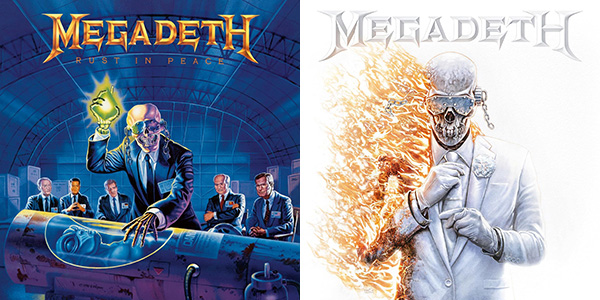
After ignominious dismissal from Metallica shortly before that band's debut recording, guitarist Dave Mustaine could have easily become a Greg Walls–esque footnote in metal history. But his seething anger, easily audible in his subsequent discography, led him to retaliate by forming Megadeth, which, if not as lucrative as Metallica, was just as influential.
ReDiscoveries #14: Real-Life Influencers, Rock'n'Roll Style
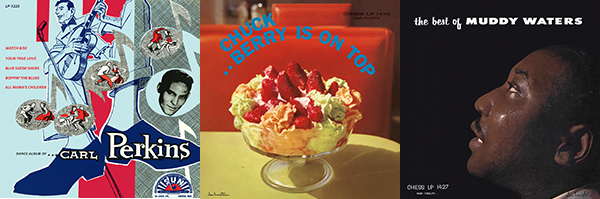
Here's what real influencers do: If you're Carl Perkins, every song on your first LP was covered by Beatles. If you're Muddy Waters, the Rolling Stones named their band after one of your songs.. If you're Chuck Berry, you influenced anyone who has ever considered themselves rock'n'rollers. And if you're Johnny Cash, you were the original Outlaw Country artist, and you invented the country-rock nexus.
ReDiscoveries #2: Joe Henderson, Blue Note and Beyond
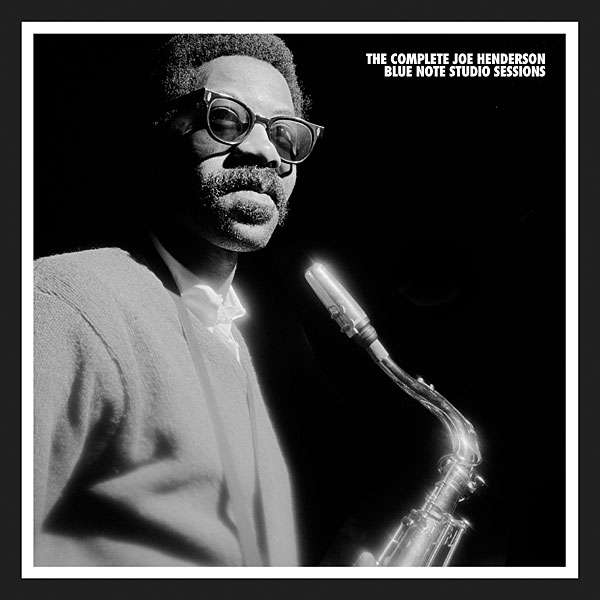
Called "the phantom" by fellow musicians and dubbed the "bearded, goateed astronaut of the tenor sax" by a close friend, trumpeter Kenny Dorham, the enigmatic Joe Henderson recorded five albums for the Blue Note label that are uniformly regarded as jazz classics. Mosaic Records has gathered those recordsPage One, Our Thing, In 'n Out, Inner Urge, Mode for Joeplus Henderson's sideman dates and alternate takes for Blue Note for a limited-edition, five-CD box set, The Complete Joe Henderson Blue Note Studio Sessions (Mosaic Records MD5-271).
Rediscoveries #3: Blondie Against the Odds 1974–1982
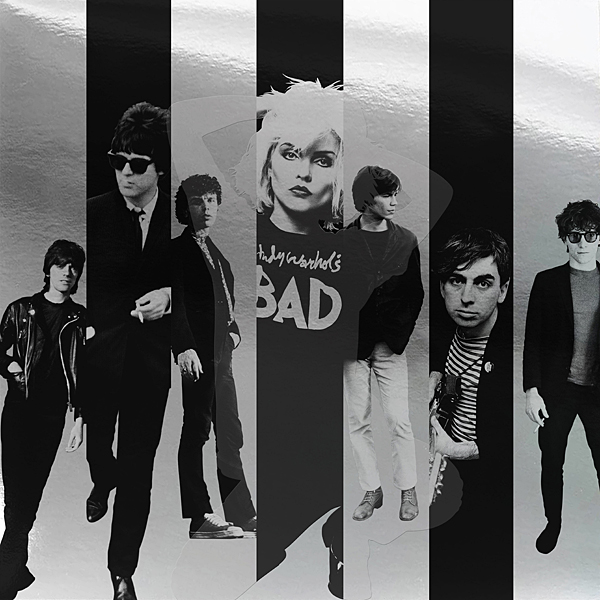
When I discovered Blondie's breakthrough album, Parallel Lines, those lines filled my teenage mind with jealous fantasies. Whoever the object of Deborah Harry's desire wasI knew it was probably Chris Stein, her bandmate and romantic partnerwas too lucky to walk the earth. Possibly, Stein wrote the lines for her, and she willingly sung them to him. In a band that contained many songwriting partnerships, the song, "Pretty Baby," was co-written by Stein and Harry.
ReDiscoveries #4: Lee "Scratch" Perry & King Scratch
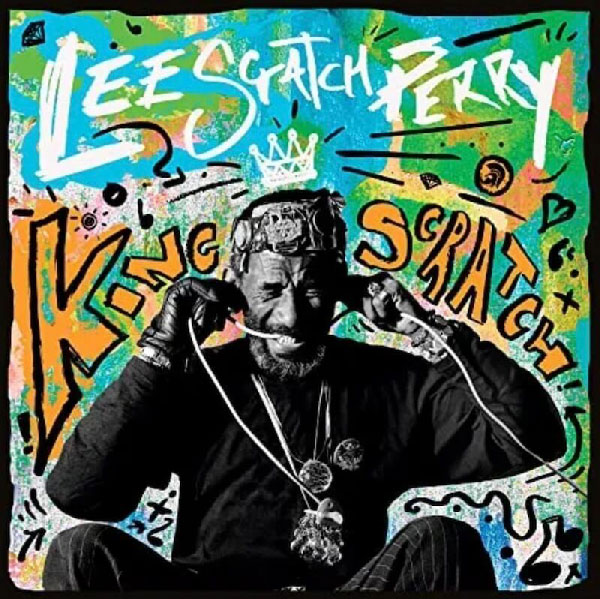
"Whip dem, whip dem," sings Junior Byles on "Beat Down Babylon," to the accompaniment of whip cracks that recall the ones on Frankie Laine's "Mule Train." Produced by Mitch Miller some 20 years before Lee "Scratch" Perry produced Byles's reggae hit, "Mule Train" helped establish "the primacy of the producereven more than the artist, the accompaniment, or the material," according to author Will Friedwald, who adds that "Miller also conceived of the idea of the pop record 'sound' per se: not so much an arrangement or a tune, but an aural texture (usually replete with extramusical gimmicks) that could be created in the studio."
ReDiscoveries #5: Alice Cooper's Billion Dollar Babies
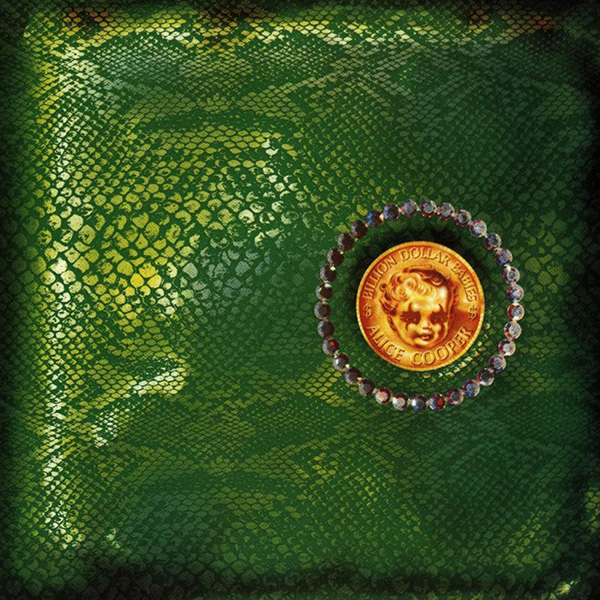
1972 is widely praised as the most fertile year ever for rock albums, notching such classics as The Rolling Stones' Exile on Main Street, David Bowie's The Rise and Fall of Ziggy Stardust and the Spiders from Mars, and Neil Young's Harvest. But albums released in 1973 and currently celebrating their 50th anniversary may be even better: Pink Floyd's Dark Side of the Moon, Elton John's Goodbye Yellow Brick Road, ZZ Top's Tres Hombres, and Bruce Springsteen's The Wild, the Innocent, and the E Street Shuffle, among others. But of all the enduring albums of '73, the most exotic, audacious, and ultimately entertaining must be Alice Cooper's Billion Dollar Babies.