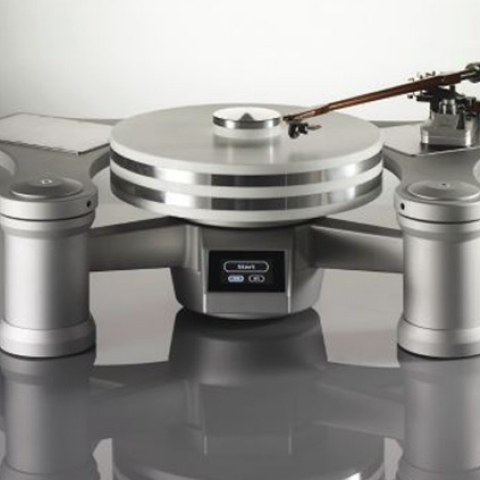
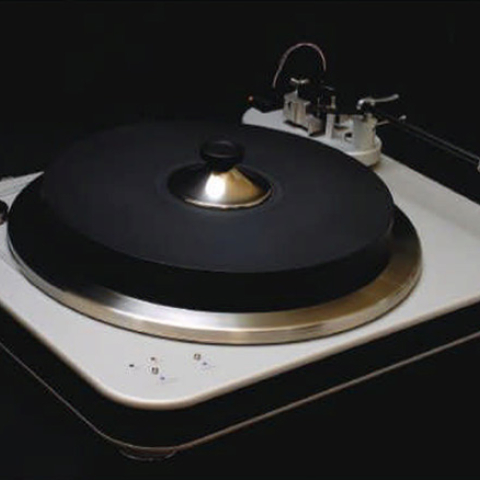
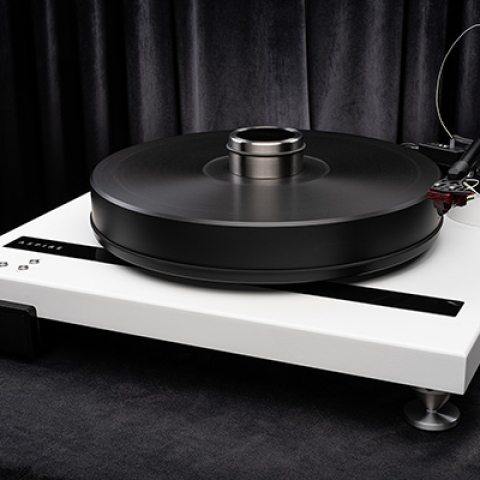
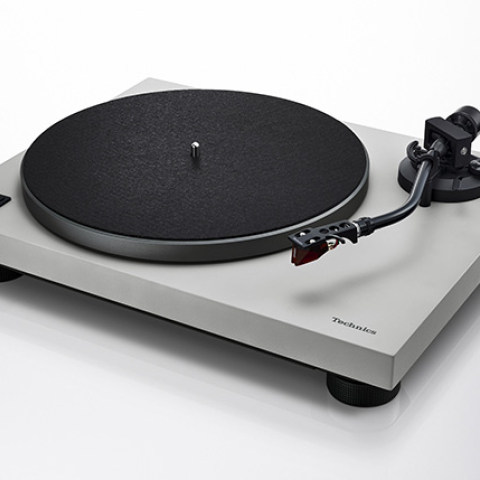
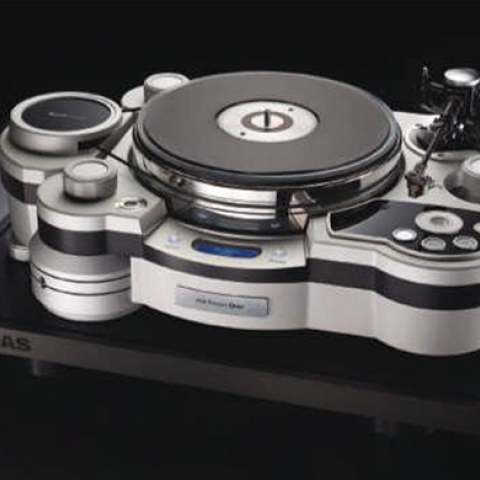
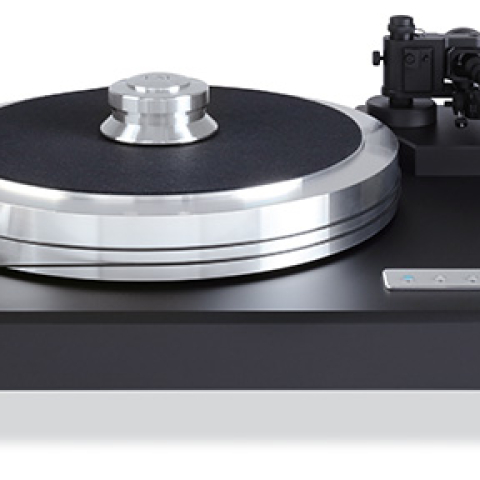
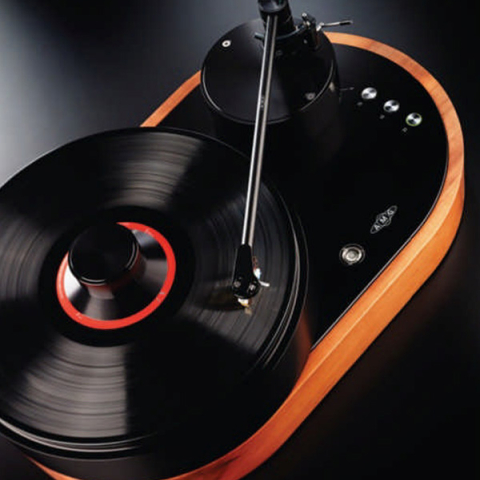
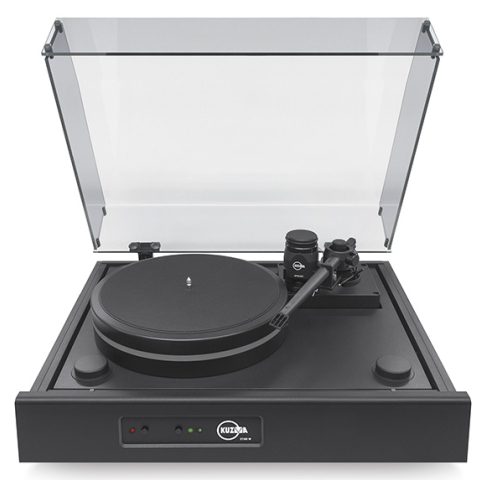
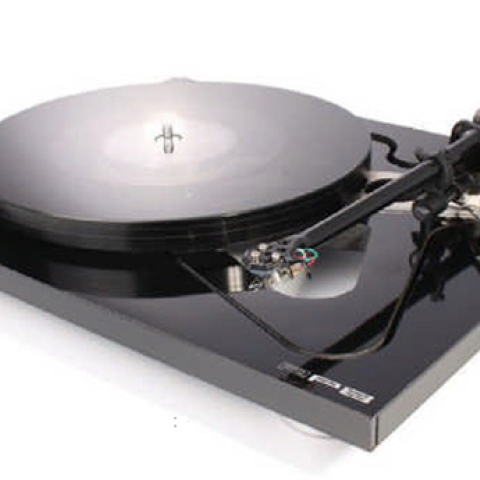
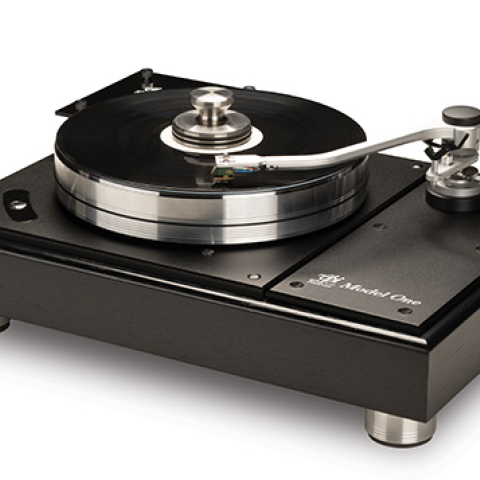
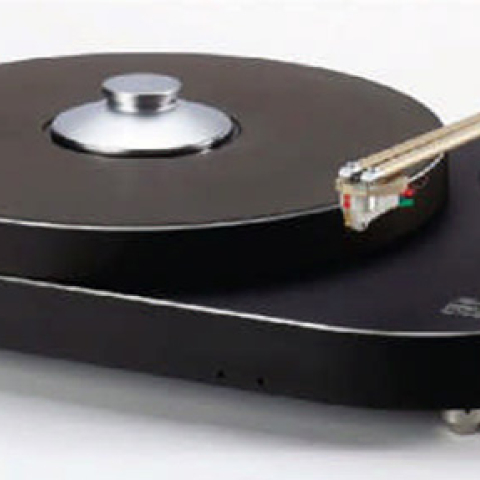
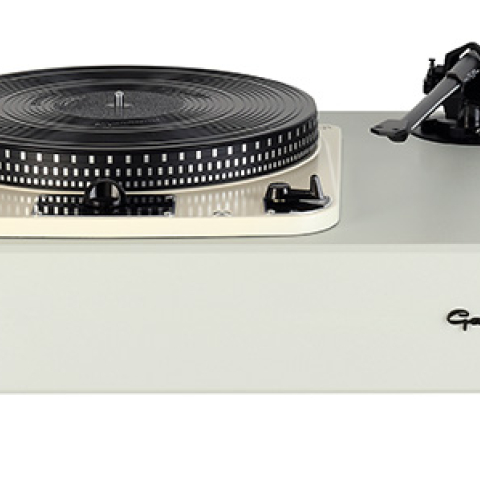
Okay, what does a turntable look like? Take your time—I'll wait. Dum de dum de dum dum dum... Oh, you're tired of this game already?
I never thought much about what a turntable looked like until I got Immedia's RPM2 in for review. After all, there are a lot of high-end turntables out there, from the venerable Linn Sondek LP12 to VPI's TNT, and few of them look like one another. Right?
Well, maybe they do, at that. Because I took one look at the Immedia and thought, Where's the rest of it? And simultaneously, This is a high-end turntable? Then I tried to pick it up. I thought it was bolted to the table—at 65 lbs, it's one heavy sucker. Finally, I sat down with a drink and thought about the quality of turntableness and my reaction to Allen Perkins' RPM2. (We're a deep lot here in Santa Fe.)
On the origins of things
Allen Perkins joined Sota Industries when turntables were still the lords of the High End. The LP12, the Oracle, the SOTA Star, the SOTA Sapphire, and the VPI HW-19 were all setting new standards of performance with each upgrade. Perkins had an idea: "Let's take it up a notch and design a 'table from the ground up." As intriguing as that notion was, it remained on the to-do list until Harry Weisfeld announced the first-generation TNT, at which point SOTA entered the super-premium turntable wars with Perkins' design for the Cosmos. After six years with SOTA, Perkins was ready to strike out on his own, and when the company was sold and then restructured, he seized his opportunity—first as a distributor for ScanTech cartridges, and almost immediately thereafter as the owner of Immedia, a company he founded to market his own designs and distribute selected products he felt deserved North American representation. And since his experiences as SOTA's customer service department had left him with some definite ideas on the subject, Perkins' first product was a turntable. "I learned a lot about what I didn't want to have in a turntable while I was working for SOTA. Since I had about a dozen 'tables per day that came to me for testing, I was able to examine a lot of 'tables for consistency. One thing I noticed was that the subassembly had minute variations from sample to sample, so I determined that when I designed another 'table I would eliminate the potential for that sort of variation. Another thing I noticed was that none of the manufactured 'tables sounded as good as my prototype, which had no cabinet—so I decided I would eliminate the cabinet from any new design.
"And since I took care of customer complaints, I knew what was going wrong in the field. I didn't want springs, I didn't want a vacuum hold-down, and I knew that I wanted to build something as simple and reliable as possible—because it was obvious to me that a company would have to spend a lot of money dealing with unhappy people if it didn't build it right in the first place."
On being and somethingness
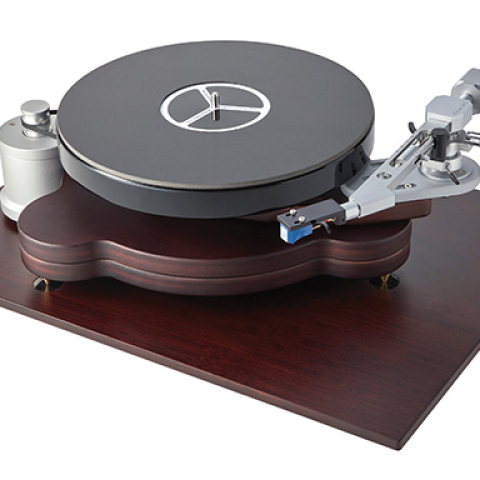
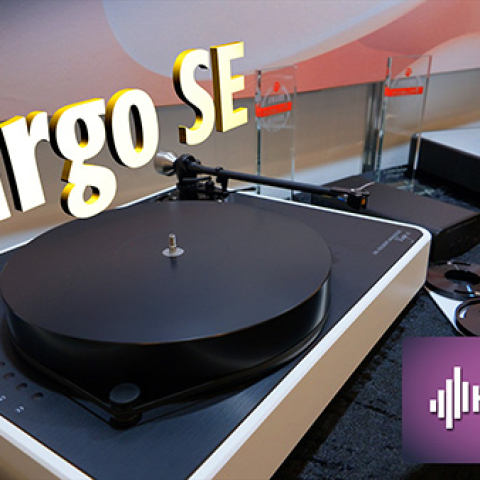
So the RPM2 doesn't have springs or a cabinet. It's constructed from a laminate of aluminum and a damping material that Perkins declines to specify. The bottom layers, to which the motor is bolted, rest upon three metal cones. There are two versions of this motor-board: In one, the motor support is acrylic, making the complete 'table cost $4995. The other version's motor mount is made out of dual-layer aluminum and costs $1000 more. You can upgrade for the difference in price at any time. "The aluminum is more rigid and it creates a better noise-sink for the motor," Perkins explains. "That combination lowers the noise floor substantially, giving you much better imaging with greater depth and detail. And deeper bass, which always gives you more room sound." Four compliant discs separate the motor mount from the rest of the 'table. The bearing is mounted to the bottom layer of the top part of the base and is bolted to a ½" aluminum plate, which is bonded to damping material, then another ¼" aluminum plate, more damping material, and another ¼" plate, to which the arm is mounted. The arm doesn't touch the damping material. "Basically, the whole structure works together as one rigid unit—getting away from what I didn't like about springs," explains Perkins. "At the amplitude where noise travels from one layer to another, the structure is isolated quite well (footnote 1). It's like having a 50-lb armboard for the arm, and then we have a very rigid motor-mount for the motor. Just the size of that plate provides a lot of leverage against any rotational movement."
Since Perkins designed the Immedia 'table to eliminate unnecessary elements, there's no plinth to conceal the different strata—they, and the gap separating the motor mount from the rest of the body, are visible as you examine the turntable head-on. The platter is also constructed from a laminate, which—again—shows.
"The platter material is like a 'mechanical diode,"' Perkins maintains. "Acrylic has a certain tonal attribute, so I decided I didn't want to use a lot of it. It is wonderfully machinable, however, so the 1/16" top layer of the platter is acrylic. The 3/8" layer beneath that is vinyl—which is what I really wanted to approximate.
"I wanted to avoid the use of a vacuum hold-down system because, if you use a hard surface, which is what I wanted to do, vacuums cause damage to the record. There's another reason I avoided vacuum clamping systems: If a record is warped, it's deformed. Pull it flat and that deformation doesn't go away, it's still there—only now it's a lateral rather than a vertical distortion. I think it sounds worse that way, especially on a suspended 'table where that side-to-side motion really gets the subassembly rocking.
"The next layer of my platter is phenolic—paper, in this case—and below the level of the turntable there is a 1/8" layer of brass, which is what the belt is driving."
A discourse on method
The point at which the belt drives the platter is important, since Perkins' bearing design more or less (ahem) revolves around it. The RPM2 uses a short bearing with very tight tolerances. If you take the belt off and spin the platter, it doesn't turn freely—it rotates only a few times. The engineering term for this kind of bearing is "class-A drag"—which means, Perkins maintains, that the bearing is less influenced by changes in the motor speed or when the belt stretches. It's a planned application of friction, which, Perkins feels, smooths the rotation. "People object that it makes the platter harder to turn, but I don't believe that a platter has to be easy to turn," he insists. "You just need a strong enough motor to turn it. If you have a torquey motor and a resistive platter, you get a more constant speed. People assume that a lack of friction means a lack of noise, but I've found that most noise comes through the spindle. The part of our spindle that touches the record isn't even part of the bearing, which makes machining quite difficult."
Footnote 1: By itself, mass cannot eliminate a vibration. Instead, as it acts a reactive element, storing energy then releasing it. Some kind of filter action is required, which means that you need a mass coupled with a compliance. In the case of the Immedia, this is provided by the damping material layers.—John Atkinson
Allen Perkins joined Sota Industries when turntables were still the lords of the High End. The LP12, the Oracle, the SOTA Star, the SOTA Sapphire, and the VPI HW-19 were all setting new standards of performance with each upgrade. Perkins had an idea: "Let's take it up a notch and design a 'table from the ground up." As intriguing as that notion was, it remained on the to-do list until Harry Weisfeld announced the first-generation TNT, at which point SOTA entered the super-premium turntable wars with Perkins' design for the Cosmos. After six years with SOTA, Perkins was ready to strike out on his own, and when the company was sold and then restructured, he seized his opportunity—first as a distributor for ScanTech cartridges, and almost immediately thereafter as the owner of Immedia, a company he founded to market his own designs and distribute selected products he felt deserved North American representation. And since his experiences as SOTA's customer service department had left him with some definite ideas on the subject, Perkins' first product was a turntable. "I learned a lot about what I didn't want to have in a turntable while I was working for SOTA. Since I had about a dozen 'tables per day that came to me for testing, I was able to examine a lot of 'tables for consistency. One thing I noticed was that the subassembly had minute variations from sample to sample, so I determined that when I designed another 'table I would eliminate the potential for that sort of variation. Another thing I noticed was that none of the manufactured 'tables sounded as good as my prototype, which had no cabinet—so I decided I would eliminate the cabinet from any new design.
So the RPM2 doesn't have springs or a cabinet. It's constructed from a laminate of aluminum and a damping material that Perkins declines to specify. The bottom layers, to which the motor is bolted, rest upon three metal cones. There are two versions of this motor-board: In one, the motor support is acrylic, making the complete 'table cost $4995. The other version's motor mount is made out of dual-layer aluminum and costs $1000 more. You can upgrade for the difference in price at any time. "The aluminum is more rigid and it creates a better noise-sink for the motor," Perkins explains. "That combination lowers the noise floor substantially, giving you much better imaging with greater depth and detail. And deeper bass, which always gives you more room sound." Four compliant discs separate the motor mount from the rest of the 'table. The bearing is mounted to the bottom layer of the top part of the base and is bolted to a ½" aluminum plate, which is bonded to damping material, then another ¼" aluminum plate, more damping material, and another ¼" plate, to which the arm is mounted. The arm doesn't touch the damping material. "Basically, the whole structure works together as one rigid unit—getting away from what I didn't like about springs," explains Perkins. "At the amplitude where noise travels from one layer to another, the structure is isolated quite well (footnote 1). It's like having a 50-lb armboard for the arm, and then we have a very rigid motor-mount for the motor. Just the size of that plate provides a lot of leverage against any rotational movement."
The point at which the belt drives the platter is important, since Perkins' bearing design more or less (ahem) revolves around it. The RPM2 uses a short bearing with very tight tolerances. If you take the belt off and spin the platter, it doesn't turn freely—it rotates only a few times. The engineering term for this kind of bearing is "class-A drag"—which means, Perkins maintains, that the bearing is less influenced by changes in the motor speed or when the belt stretches. It's a planned application of friction, which, Perkins feels, smooths the rotation. "People object that it makes the platter harder to turn, but I don't believe that a platter has to be easy to turn," he insists. "You just need a strong enough motor to turn it. If you have a torquey motor and a resistive platter, you get a more constant speed. People assume that a lack of friction means a lack of noise, but I've found that most noise comes through the spindle. The part of our spindle that touches the record isn't even part of the bearing, which makes machining quite difficult."
Footnote 1: By itself, mass cannot eliminate a vibration. Instead, as it acts a reactive element, storing energy then releasing it. Some kind of filter action is required, which means that you need a mass coupled with a compliance. In the case of the Immedia, this is provided by the damping material layers.—John Atkinson