

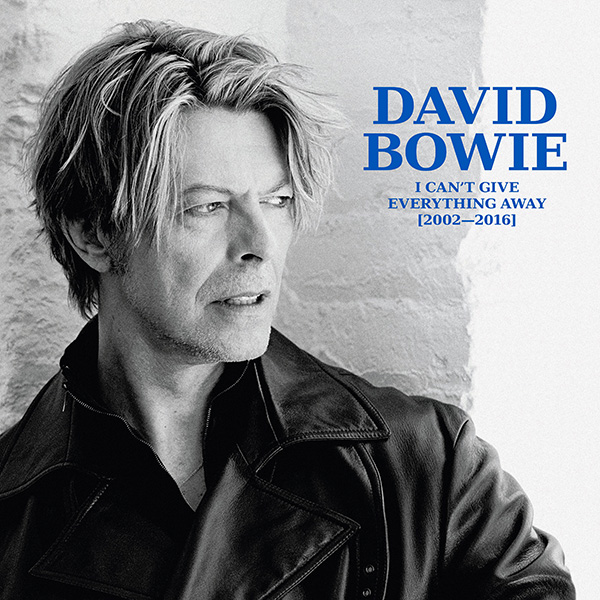
I Can't Give Everything Away is the sixth and last of the Bowie box sets that survey specific periods in the artist's career. The first was Five Years 1969–1973, released in September 2015. That was followed by Who Can I Be Now? (1974–1976), A New Career in a New Town (1977–1982), Loving the Alien (1983–1988), Brilliant Adventure (1992–2001), and finally the new set. Together, the six sets are an impressive testament to a musical giant—a heavyweight tribute figuratively and literally. You could use this last installment to pump up your biceps.
I Can't Give Everything Away is named after the last song on Bowie's last album: his last recorded work. It spans the years 2002–2016 and contains no fewer than 18 LPs, including remastered versions of two of Bowie's last three studio albums.
And no, they're not giving everything away: The set costs $499.98, though you can find it discounted.
Is this the final, definitive statement of Bowie's work? It could be. In contrast to, say, Prince and Dylan, in the main Bowie released the music he recorded. Yet interest remains extremely high. How many musicians have had an exhibition, like David Bowie Is at the Victoria and Albert Museum in London, which went on to tour 12 countries? As if that wasn't enough, the V&A recently opened a new building in East London where the Bowie collection will have a permanent home. The event was so important that it was one of the lead items on BBC News.
This latest box set includes the studio albums Heathen, Reality, The Next Day, and Blackstar; the live albums A Reality Tour and Montreux Jazz Festival, this last in its first official release; and two EPs: The Next Day Extra and No Plan. As in the previous box sets, there's a compilation album called Re:Call—eight sides of alternate versions, live tracks, and rarities. This is finished off with a hardback book filled with photographs plus essays by Tony Visconti, an ever-present presence.
 Except for Blackstar and No Plan, everything here has been remastered. The sonics on the previously issued music were pretty good to start with, so you might expect the differences to be inconsequential. On the contrary. At the mastering controls was Grammy winner John Webber, working at London's Air Studios. Webber has worked on previous Bowie projects, including Toy. He knows his craft and David Bowie's art. The changes, though obvious, are sensitive and seem true to the original intent. "Everyone Says 'Hi'," from Heathen, is a good illustration of how the remastering jobs added depth and impact. The same could be said about "Pablo Picasso," from Reality, or "Valentine's Day," from The Next Day. Reality and The Next Day were already muscular albums; these remastered versions are even more so. Rock tracks rock harder. Slower numbers benefit, too. "Dirty Boys," the second track of side 1 of The Next Day, lifts Steve Elson's discordant saxophone a little higher in the mix, accentuating its funky feel. It's subtle, not radical, but it's a good change. The remastered "Days," from Reality, positively floats in the space created for it.
The live albums throb with remastered empowerment. A Reality Tour is one of Bowie's best live albums because the tracks from Reality and Heathen were tailor-made for the live experience. A Reality Tour has been resequenced and includes tracks previously available only as CD extras, never on LP. Old and new classics were given new life. Stretched across six sides, A Reality Tour transports you to the Dublin venue where it was recorded on 22 and 23 November 2003. On "Rebel, Rebel," the opener, swagger is dialed even higher. Many favorites, including "All the Young Dudes" and "Afraid," take you there. If Earl Slick's guitar riff doesn't raise the hair on your arms, check your pulse.
The other live album, exclusive to this box, is the 31-track Montreux Jazz Festival, recorded there in 2002. Sonically, this is the weakest part of the set. Not so musically. It includes Low almost in its entirety—all but "Weeping Wall." That's a boon for those who consider that album his masterpiece.
Except for Blackstar and No Plan, everything here has been remastered. The sonics on the previously issued music were pretty good to start with, so you might expect the differences to be inconsequential. On the contrary. At the mastering controls was Grammy winner John Webber, working at London's Air Studios. Webber has worked on previous Bowie projects, including Toy. He knows his craft and David Bowie's art. The changes, though obvious, are sensitive and seem true to the original intent. "Everyone Says 'Hi'," from Heathen, is a good illustration of how the remastering jobs added depth and impact. The same could be said about "Pablo Picasso," from Reality, or "Valentine's Day," from The Next Day. Reality and The Next Day were already muscular albums; these remastered versions are even more so. Rock tracks rock harder. Slower numbers benefit, too. "Dirty Boys," the second track of side 1 of The Next Day, lifts Steve Elson's discordant saxophone a little higher in the mix, accentuating its funky feel. It's subtle, not radical, but it's a good change. The remastered "Days," from Reality, positively floats in the space created for it.
The live albums throb with remastered empowerment. A Reality Tour is one of Bowie's best live albums because the tracks from Reality and Heathen were tailor-made for the live experience. A Reality Tour has been resequenced and includes tracks previously available only as CD extras, never on LP. Old and new classics were given new life. Stretched across six sides, A Reality Tour transports you to the Dublin venue where it was recorded on 22 and 23 November 2003. On "Rebel, Rebel," the opener, swagger is dialed even higher. Many favorites, including "All the Young Dudes" and "Afraid," take you there. If Earl Slick's guitar riff doesn't raise the hair on your arms, check your pulse.
The other live album, exclusive to this box, is the 31-track Montreux Jazz Festival, recorded there in 2002. Sonically, this is the weakest part of the set. Not so musically. It includes Low almost in its entirety—all but "Weeping Wall." That's a boon for those who consider that album his masterpiece.
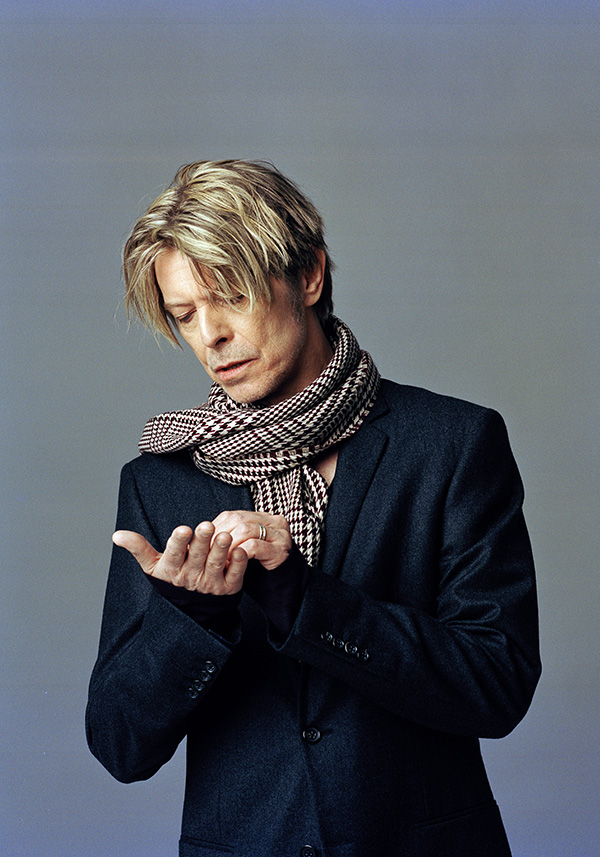
Re:Call 6 is eight sides of treats for every Bowie fanatic. The many highlights include "Wood Jackson," previously available only as the B-side of the 7" "Slow Burn." There's Bowie with other artists, such as the two tracks recorded live at Fashion Rocks with Arcade Fire, "Hop Frog" with Lou Reed, and a live rendition of "Arnold Layne" with David Gilmour. The compilation includes Bowie covers of The Kinks' "Waterloo Sunset" and Sigue Sigue Sputnik's "Love Missile F1–11." The best of several remixes is Air's, of "A Better Future," which gives that song a trip-hop vibe.
There is so much here to enjoy, explore, and love. This is undeniable proof that while Bowie's health may have been weakening during his final years, his creativity was burgeoning. This final box set is a great way to end things—if indeed this is the end.
Except for Blackstar and No Plan, everything here has been remastered. The sonics on the previously issued music were pretty good to start with, so you might expect the differences to be inconsequential. On the contrary. At the mastering controls was Grammy winner John Webber, working at London's Air Studios. Webber has worked on previous Bowie projects, including Toy. He knows his craft and David Bowie's art. The changes, though obvious, are sensitive and seem true to the original intent. "Everyone Says 'Hi'," from Heathen, is a good illustration of how the remastering jobs added depth and impact. The same could be said about "Pablo Picasso," from Reality, or "Valentine's Day," from The Next Day. Reality and The Next Day were already muscular albums; these remastered versions are even more so. Rock tracks rock harder. Slower numbers benefit, too. "Dirty Boys," the second track of side 1 of The Next Day, lifts Steve Elson's discordant saxophone a little higher in the mix, accentuating its funky feel. It's subtle, not radical, but it's a good change. The remastered "Days," from Reality, positively floats in the space created for it.
Photo: Sukita
Even before Bowie's death, which came so soon after the album's release, Blackstar stood out as a classic. Many viewed it as his goodbye album—the lyrics make that hard not to do—yet, as that BBC News V&A segment revealed, at the time of his death he was planning a musical. Yet there can be no doubt that Bowie was reflecting on life and mortality in light of his terminal cancer diagnosis. Blackstar alone is enough to counter criticisms from the likes of Keith Richards and John Martyn that Bowie was nothing but pose, with no depth. Martyn said an artist should be prepared to go out naked in front of an audience. What was Blackstar if not baring it all?















