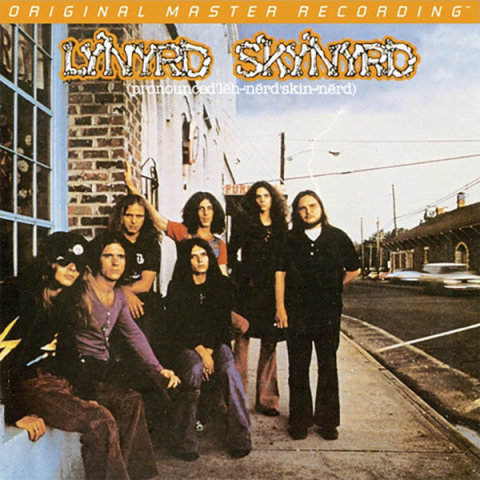
When I was a young music lover, I'd often listen to Simon and Garfunkel's Parsley, Sage, Rosemary and Thyme LP, specifically the song "Scarborough Fair/Canticle."
Are you goin' to Scarborough Fair?
Parsley, sage, rosemary and thyme.
Remember me to one who lives there,
She once was a true love of mine. That memory came back during the e-mail exchanges I had with John Atkinson and Stephen Mejias about the positives and negatives of the proliferation of regional audio shows. (JA's reflections on these shows were the subject of last month's "As We See It.")
Annual fairs were the major trade events of the High Middle Ages. The regional fairs of England and France made it possible for English wool to become Flemish cloth, which in turn could be traded for luxury goods such as silks and spices, brought overland on old Roman roads from Italian merchant ports such as Venice. But fairs were not only for professional traders. Ordinary people could shop for gowns, wines, daggers, amber jewelry, and Baltic furs.
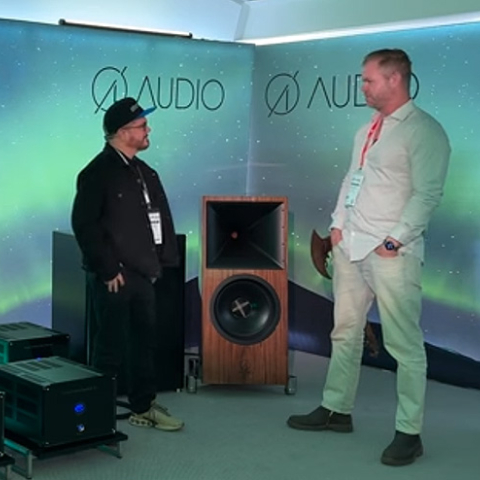
The e-mail conversation began with my telling Stephen that he'd done a great job of covering the California Audio Show in San Francisco in July. SM replied that, as much fun as it had been, there are now just too many audio shows to cover. The weekend before CAS, John Atkinson had been attending the Capital AudioFest in Maryland. Two weeks before that had been AXPONA NYC. Two weeks before that had been T.H.E. Show Newport Beach.
I entirely agree. To me, it has begun to border on the Theater of the Absurd. In a play that Pirandello might have imagined on a bad day, John Atkinson imitates the Flying Dutchman, cursed forever to wander hotel corridors floored with the Carpet from Hell, once again having a tantalizing rendezvous with MBL's US guy Jeremy Bryan (who has exhibited at every North American Show this year), hearing the same demo tracks yet again, all the while wondering when the love of a pure maiden will allow him finally to die.
And it's not only journalists who have entered Audio Show Overload Mode. Even if a manufacturer attends none of the European shows, exhibiting at one of the eight North American consumer shows, over and above the Consumer Electronics Show and the CEDIA Expo, requires major commitments of money and time.
Why so many audio shows now, and what does this mean for the future of high-end audio?
I've come to the conclusion that, about five years ago, the "ecosystem" of high-performance audio retailing passed a tipping point. Before the tip-over, the situation was one of too many retail stores chasing too few potential customers. Since the tip-over, too many manufacturers and importers have been chasing too few retail stores.
Karl Marx commented that history happens twice: first as tragedy, and then as farce. I saw the first, tragic run-through from my vantage point as a producer of classical-music recordings dependent on bricks-and-mortar retailers of same. The two biggest customers for my record label, JMR, were Tower Records and Borders—one long since gone, the other starting to liquidate 399 retail locations as I write this. I can't tell you how many meetings, telephone conference calls, and e-mail discussions I was involved in many years ago, trying to arrest the slide in classical music's market share. Does anyone who was not then in the business still remember April as "Classical Music Month"?
Five years ago, a new high-end audio trade group, A5, was trying to get established. Just as the case had been with classical music, there was a great sense of urgency, but again, no consensus on what to do. We all agreed that local, mom'n'pop stereo stores were facing extinction. Some people wanted to run, in Architectural Digest and The New Yorker, full-page print ads extolling the benefits of high-performance audio. I contended that what was needed was to refocus local dealers on the basics: getting people who were not the usual audio-club hangers-on into the listening chair.
I can't claim that one more trade group shouting encouragement from the sidelines would have made all that much difference. As I stated in "As We See It" in August 2008, it's possible that hi-fi equipment's important place in society and culture from the mid-1950s through the mid-'80s was the result of a unique confluence of demographic, societal, cultural, and technological conditions. Comparatively recent developments, especially the Internet, have made it almost impossible keep open the doors of a store dedicated to listening to music through two channels. Even New York City's flagship audio retailer, Sound by Singer, closed its signature 16th Street storefront in August 2010—an event that would have been unthinkable five years ago (footnote 1).
I think that the proliferation of audio shows suggests that the old audio-retailing ecosystem no longer can meet the needs of some of its participants. With so few dealers, what is a startup audio company or a newly appointed US importer to do to gain exposure? The answer for quite a few was: Exhibit at AXPONA NYC, even if the halls turned out to be dim and the turnout iffy—there was little else that that company or importer could do.
Is high-end audio headed back to the Middle Ages? Going forward, will it be the case that high-end audio will be a luxury good, such as kid gloves or fine silks were in the Middle Ages? Back then, your local economy could provide the necessities but not the luxuries: local beer, but not fine wine. You didn't have a local kid-gloves-and-silks store (no "stores" at all, only craftsmen), so you had to wait until the annual Saint Peter's Fair, where you dealt directly with the makers, who visited from afar for two weeks. The makers would travel a circuit of such fairs. Hmmm . . . sounds familiar.
The advantage of regional shows is that the audio consumer gets to hear many more products than any one dealer could carry. The disadvantages are that each regional audio show take place only once a year, and isn't much of a substitute for a local dealer when it comes to after-sales service. The best outcome would be for regional audio shows to establish themselves as effective outreach tools to support local dealers, and not as ends in themselves.
Footnote 1: Sound By Singer announced in August, after this issue had gone to press, that it was to open a new store, at 242 West 27th Street, New York, NY 10001.
Parsley, sage, rosemary and thyme.
Remember me to one who lives there,
She once was a true love of mine. That memory came back during the e-mail exchanges I had with John Atkinson and Stephen Mejias about the positives and negatives of the proliferation of regional audio shows. (JA's reflections on these shows were the subject of last month's "As We See It.")
Footnote 1: Sound By Singer announced in August, after this issue had gone to press, that it was to open a new store, at 242 West 27th Street, New York, NY 10001.