

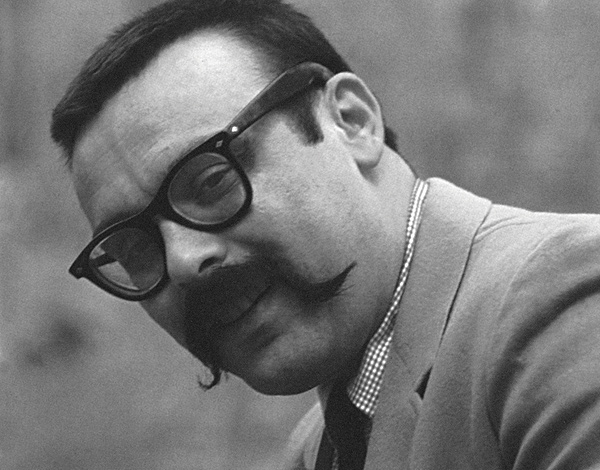
Guaraldi Photo Courtesy of Concord
The year 1965 was turbulent, pivotal, and consequential. LBJ sent soldiers to the Dominican Republic, stepped into Vietnam with both feet, and signed laws expanding voting rights and creating Medicare and Medicaid. Antiwar protests gathered steam, Bob Dylan went electric, the Beatles played Shea Stadium, Sandy Koufax pitched a perfect game, and pioneering DJ Alan Freed died (footnote 1).
The cover of the April 9, 1965, edition of Time featured Charles M. Schulz's Peanuts comic strip characters; inside was a lengthy article about the cartoonist and his creation (footnote 2). Fifteen years into its long run, Peanuts had established itself as a funny papers staple. By the end of 1965, the Peanuts gang would be rooted in the country's heart and culture.
In New York, a Mad Man at the McCann Erickson agency read that Time article and called TV producer Lee Mendelson to propose adapting Schulz's characters into an animated Christmas special, sponsored by Coca-Cola, to air on CBS. Mendelson was a man who seized opportunities. He accepted the assignment without consulting Schulz or formulating a firm plan. Thus began A Charlie Brown Christmas, a classic TV program that has aired or streamed every December since its premiere on December 9, 1965, at 7:30pm Eastern Time (footnote 3).
 Just in time for another Christmas, now a lifetime later, the Craft Recordings unit of Concord Music Group has put out a Super Deluxe reissue of the soundtrack, with four CDs and one Blu-ray disc with Dolby Atmos remixes. The CDs include almost every inch of tape recorded for the project: master takes, picture cues and other ancillary music, outtakes, session chatter. Paul Blakemore, Concord's mastering engineer, has remixed everything from the original three-track session tapes. The booklet is full of photos and Peanuts images and includes a lengthy essay by Guaraldi biographer Derrick Bang. There's also a two-LP version cut from Blakemore's 24/192 master files, and a single-CD version containing the remixed original album plus a few extras and alternate takes.
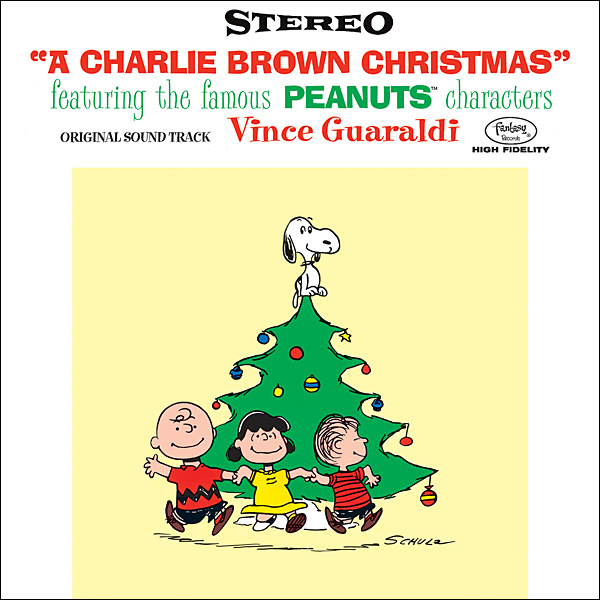 I can't say everything in the including-the-sink version is recommendable, unless you're a Guaraldi (or Peanuts) completist, but the two-LP and one-CD versions will likely please your ears and ease you gently into a peaceful holiday mood.
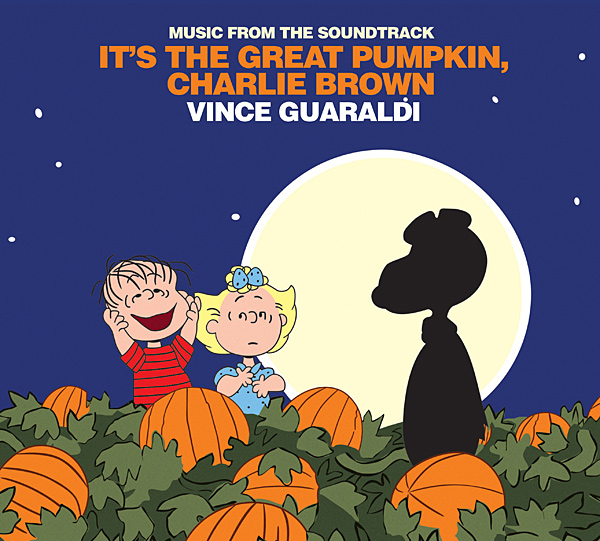 The success of A Charlie Brown Christmas led CBS to commission more Peanuts specials. Aired at Halloween 1966, the third was centered on Linus's own special Santa Claus, the Great Pumpkin. For a new reissue of the show's soundtrack album, Mendelson's children found the first-generation session tapes for It's the Great Pumpkin, Charlie Brown. Concord quickly assembled them into two-LP and single-CD releases (footnote 4).
 For those sessions, Mendelson brought in John Scott Trotter, former music director for Bing Crosby, to "bring order to the chaos" according to Bang's booklet notes. The result is less free-form jazz, more short musical cues intended to accompany animated sequences. Alas, listening to the snippets with no visual context gets tiring, so this album is, in my assessment, mostly for hardcore Guaraldi fans.
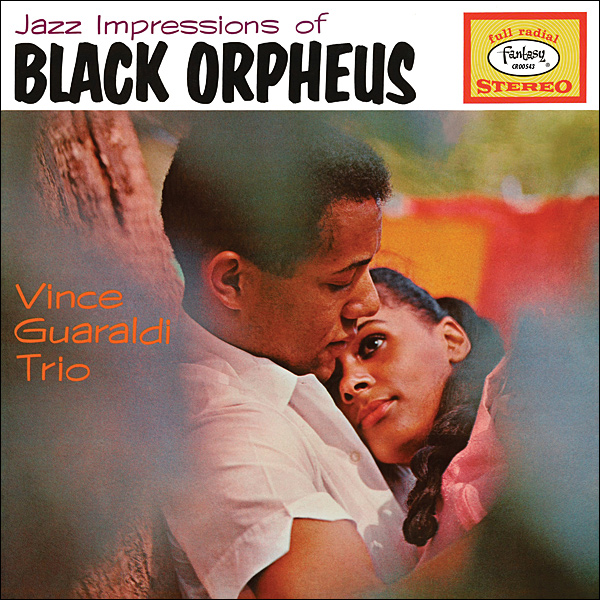 Concord has taken one more step down the Vince Guaraldi rabbit hole, reissuing a newly remastered and expanded version of the 1962 album Jazz Impressions of Black Orpheus, best known for its hit Grammy-winning single "Cast Your Fate to the Wind." The master tapes were put through the Plangent Process, which recovers the high-frequency bias signal and uses it as a timing reference to eliminate mechanical "time-smear" distortions such as wow and flutter.
This set comes in two-CD (remastered by Blakemore) and three-LP formats (LP 1 is the original album, cut directly from the master tape by Kevin Gray; LPs 2 and 3 are cut from Blakemore's remasters of the Plangent transfers), both including all the alternate takes and outtakes. It is a gem of laid-back Latin jazz, exquisitely recorded in the studios of KQED, San Francisco. The extra content is less interesting than the original album, but it's still interesting.
Concord has taken one more step down the Vince Guaraldi rabbit hole, reissuing a newly remastered and expanded version of the 1962 album Jazz Impressions of Black Orpheus, best known for its hit Grammy-winning single "Cast Your Fate to the Wind." The master tapes were put through the Plangent Process, which recovers the high-frequency bias signal and uses it as a timing reference to eliminate mechanical "time-smear" distortions such as wow and flutter.
This set comes in two-CD (remastered by Blakemore) and three-LP formats (LP 1 is the original album, cut directly from the master tape by Kevin Gray; LPs 2 and 3 are cut from Blakemore's remasters of the Plangent transfers), both including all the alternate takes and outtakes. It is a gem of laid-back Latin jazz, exquisitely recorded in the studios of KQED, San Francisco. The extra content is less interesting than the original album, but it's still interesting.
Footnote 1: Wikipedia offers a good timeline summary here. Footnote 2: Time Vol.85, No.15. Footnote 3: A lively account of the twisted road that led to the TV special is in the Deluxe Edition booklet and here. Footnote 4: One version of the LP album is shaped like a pumpkin. It may be too wide to fit on some turntables and may frighten owners of pricey phono cartridges.















