

Photos: Jim Austin
I'm sitting in a rented Nissan just off Highway 61—yes, that Highway 61—looking out at a Shell station through the bug-stained windshield and across a litter-strewn, not-yet-planted cotton field. It's late March, and I've just left Clarksdale, Mississippi, on my way to Memphis. Leaving Clarksdale made me thoughtful, so I've pulled over to jot down a few notes.
Clarksdale—specifically, the intersection of highways 61 and 49, at the town's southern edge—is the crossroads where, according to legend, Robert Johnson encountered the Devil and exchanged his soul for his legendary guitar chops. The list of musicians born in this small city (pop. 18,000) includes Sam Cooke, John Lee Hooker, Son House, and Ike Turner. Johnson lived here; so did W.C. Handy. Muddy Waters moved here as a child.
As you drive west through Clarksdale's outskirts on Highway 49, and then onto Desoto Street, aiming toward the center of town, you pass acres of broken-down shacks and mobile homes. Downtown is unprepossessing, full of empty storefronts and red-brick skeletons. There is no Starbucks. Kai Ryssdal, host and senior editor of NPR's Marketplace, said in a report on the Mississippi Delta that, "in terms of economic mobility and poverty, this stretch of land is far behind anywhere else in the developed world."
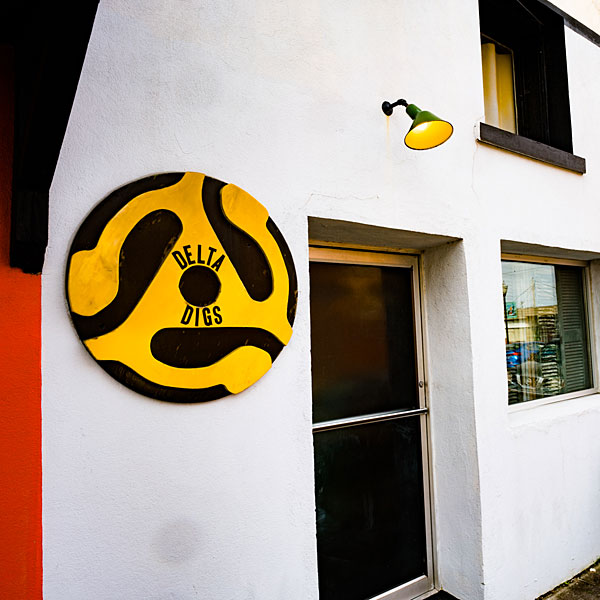
 Music, though, is ubiquitous here. At Deak's Mississippi Saxophones & Blues Emporium, bluesman Deak Harp sells harmonicas, folk art, and cold beer, and performs "open harp surgery" on diseased instruments. The barbershop was founded by the late Wade Walton, who, after a promising start playing blues, chose a steadier income. There's Bluestown Music, Cat Head Delta Blues & Folk Art, and Delta Digs, which was closed when I was there but I think it's a record store. The Delta Blues Museum occupies the renovated train depot. And then there are the juke joints.
 The first juke I came to yesterday—minutes after parking off Yazoo Avenue—was Red's Lounge. It's not a pretty place. What once was a window is now a sheet of unpainted plywood. The music calendar is scrawled in black Sharpie on an office-style whiteboard under a failing gray-white awning.
After trying Red's doorknob and finding it locked, I had one of the "what the heck am I doing here?" moments I often have while traveling. I texted an old friend for some Clarksdale advice.
The first juke I came to yesterday—minutes after parking off Yazoo Avenue—was Red's Lounge. It's not a pretty place. What once was a window is now a sheet of unpainted plywood. The music calendar is scrawled in black Sharpie on an office-style whiteboard under a failing gray-white awning.
After trying Red's doorknob and finding it locked, I had one of the "what the heck am I doing here?" moments I often have while traveling. I texted an old friend for some Clarksdale advice.
 Years after I'd escorted her for a local Teen Miss America pageant, Beth married blues-harp virtuoso Ed Johnson, aka Porkchop Slim. When Porkchop played Red's Lounge a few years ago, Beth accompanied him. She was online and wrote right back, offering sage advice: Go to Red's for the music, she wrote, but "wrap yourself in Saran Wrap and suffer through, or stand outside and try not to get knifed." But Thursday's space on the whiteboard was blank, and that locked doorknob was putting out scary vibes.
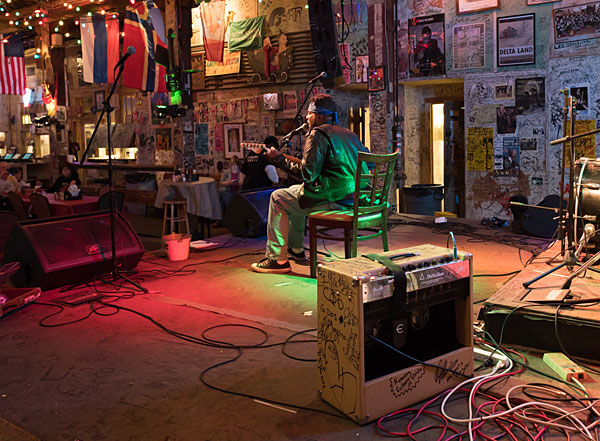
At the Ground Zero Blues Club, Thursday's attraction was Arkansas transplant Lucious Spiller, whom one critic has called a "soon-to-be legend." Spiller wears a bandana headband and has some Hendrix in him. He's no blues purist—he's opened for Bo Diddley and been known to play Prince—but Spiller can flat-out play the old-time Delta blues.
The Ground Zero was sticky but not gross. Every surface is covered in old blues posters and marked with graffiti. Where Red's seemed unimproved, GZBC is self-conscious, cultivated: juke-joint authentic, real but not infectious. Its owners include actor Morgan Freeman, born in nearby Memphis, and Bill Luckett, a local property lawyer and developer who himself has acted in half a dozen Hollywood films. Until he was voted out last May, Luckett was Clarksdale's mayor.
Years after I'd escorted her for a local Teen Miss America pageant, Beth married blues-harp virtuoso Ed Johnson, aka Porkchop Slim. When Porkchop played Red's Lounge a few years ago, Beth accompanied him. She was online and wrote right back, offering sage advice: Go to Red's for the music, she wrote, but "wrap yourself in Saran Wrap and suffer through, or stand outside and try not to get knifed." But Thursday's space on the whiteboard was blank, and that locked doorknob was putting out scary vibes.
At the Ground Zero Blues Club, Thursday's attraction was Arkansas transplant Lucious Spiller, whom one critic has called a "soon-to-be legend." Spiller wears a bandana headband and has some Hendrix in him. He's no blues purist—he's opened for Bo Diddley and been known to play Prince—but Spiller can flat-out play the old-time Delta blues.
The Ground Zero was sticky but not gross. Every surface is covered in old blues posters and marked with graffiti. Where Red's seemed unimproved, GZBC is self-conscious, cultivated: juke-joint authentic, real but not infectious. Its owners include actor Morgan Freeman, born in nearby Memphis, and Bill Luckett, a local property lawyer and developer who himself has acted in half a dozen Hollywood films. Until he was voted out last May, Luckett was Clarksdale's mayor.















