

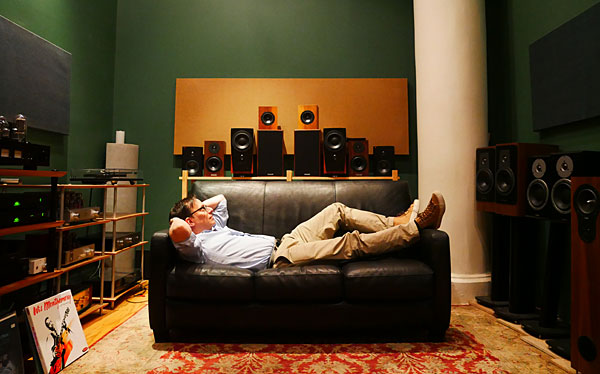
This week's industry profile tells a story about beginnings and changing times, in a conversation with Steve Cohen, a longtime employee (he doesn't have a formal job title) of the New York based hi-fi shop In Living Stereo. I started our conversation by asking Steve how he got into hi-fi. What was his background?
Steve Cohen: My dad was into music, and getting a good hi-fi system to listen to was a project that we got to witness as kids. He went through a brief phase of buying equipment until he assembled his hi-fi system. He'd drive us to Lafayette Radio, an electronics store where the salesman let my dad try reel-to-reel tape decks at home, until he finally settled on a Wollensak tape recorder.
Much later, in 1975, I worked at my brother's stereo store on Long Island, where I mostly drove gear from one place to another. It was there that I first heard Magnepans, Magnaplanars, Audio Research, Nakamichi Tape Decks, and Linn Sondek equipment. The store also sold Marantz and Tandberg receivers.
It wasn't until the mid 1980s that I regained interest in stereo gear. A friend of mine had a Naim/Linn system, and I loved the look of the small Naim 32.5 Chrome Bumper series preamp paired with the 110 amp. To me, the Naim pieces looked like they came from a museum. Their simple, minimalist designs are still some of my favorites. I slowly built up a number of home audio systems, (both tube and solid-state) then spent plenty of time tweaking accessories while listening to my favorite music.
 In the late '90s, I became a rep for Shunyata, Acoustic Zen, Analysis Plus, Gamut, Jean-Marie Reynaud, Harmonix, and Metronome +.
A couple years later, I heard about a store that had recently opened called In Living Stereo (ILS) and went to see the place. Somehow—and I can't remember how—I ended up working there full time. (Barring a stint at East Village Radio for a few years, I've since been working at ILS.)
I was friends with Jonathan Halpern, who had already worked with [ILS's] Steven Mishoe, and Steven was open to the idea of Jonathan working with us. Jonathan and I were also working the "rep angle" on a short-lived basis, and we started his brainchild, importing Shindo, together, but I soon left him to do the importing on his own, because it was a natural fit for him. Steven Mishoe had laid the foundation for an alternative hi-fi store to the more mainstream places in town, and it culminated with some truly unique equipment that brought a reputation for the store where sound mattered the most.
We three were all salespeople, and I tended to keep busy with inventory, ordering, and customer service, while Jonathan added to our catalog of offerings. These were exciting times because we were building a name for Shindo, Leben, and Auditorium 23 while also selling other more well-known equipment.
Today, I still manage inventory, sell, do a minor amount of repairs, and do plenty of turntable setups.
Jana Dagdagan: What's your personal system at home? And on-the-go?
SC: A Rega P3 2000 turntable with an Ortofon 2m Blue Cartridge, a Euphya integrated amplifier, a Denon DN790R cassette deck, an Alesis Masterlink CD burner and production studio, and Auditorium 23 speaker cables going into a pair of Tannoy 10" Gold speakers into two semi-homemade speaker cabinets. I use a Furutech power strip and am currently trying out the AudioQuest Niagara 1000 power conditioner. I also use a DIY RCA cable and a mix of original and aftermarket power cords.
If I listen to music on the go, which is not often, I just use some cheap Panasonic in-ears with my iPhone. I wouldn't even think of buying even a moderately priced pair of in-ears, because I'd just lose them immediately!
In the late '90s, I became a rep for Shunyata, Acoustic Zen, Analysis Plus, Gamut, Jean-Marie Reynaud, Harmonix, and Metronome +.
A couple years later, I heard about a store that had recently opened called In Living Stereo (ILS) and went to see the place. Somehow—and I can't remember how—I ended up working there full time. (Barring a stint at East Village Radio for a few years, I've since been working at ILS.)
I was friends with Jonathan Halpern, who had already worked with [ILS's] Steven Mishoe, and Steven was open to the idea of Jonathan working with us. Jonathan and I were also working the "rep angle" on a short-lived basis, and we started his brainchild, importing Shindo, together, but I soon left him to do the importing on his own, because it was a natural fit for him. Steven Mishoe had laid the foundation for an alternative hi-fi store to the more mainstream places in town, and it culminated with some truly unique equipment that brought a reputation for the store where sound mattered the most.
We three were all salespeople, and I tended to keep busy with inventory, ordering, and customer service, while Jonathan added to our catalog of offerings. These were exciting times because we were building a name for Shindo, Leben, and Auditorium 23 while also selling other more well-known equipment.
Today, I still manage inventory, sell, do a minor amount of repairs, and do plenty of turntable setups.
Jana Dagdagan: What's your personal system at home? And on-the-go?
SC: A Rega P3 2000 turntable with an Ortofon 2m Blue Cartridge, a Euphya integrated amplifier, a Denon DN790R cassette deck, an Alesis Masterlink CD burner and production studio, and Auditorium 23 speaker cables going into a pair of Tannoy 10" Gold speakers into two semi-homemade speaker cabinets. I use a Furutech power strip and am currently trying out the AudioQuest Niagara 1000 power conditioner. I also use a DIY RCA cable and a mix of original and aftermarket power cords.
If I listen to music on the go, which is not often, I just use some cheap Panasonic in-ears with my iPhone. I wouldn't even think of buying even a moderately priced pair of in-ears, because I'd just lose them immediately!
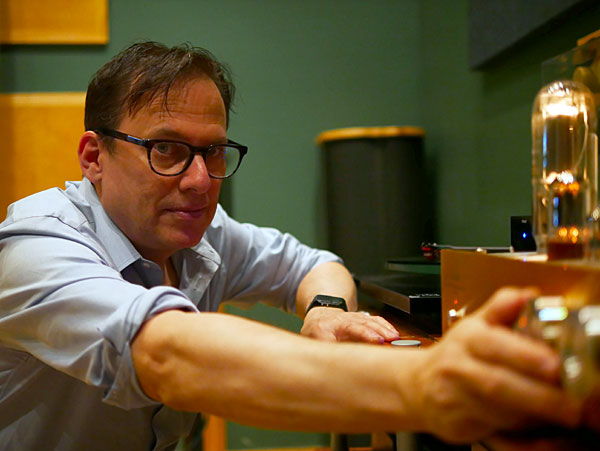 JD: In all the time you've been at ILS, have you noticed any changes in the industry?
SC: Regarding retail in hi-fi, I can only speak from my experiences at ILS, which in itself is an island as far as hi-fi stores go. On top of that, we are a specialty store and, as such, we do not have a large volume of quantitative experiences to talk in general terms about the market as a whole.
When I first started at ILS, we had more entry-level folks coming in for audio systems, and the store catered to two-channel and—man, I gotta say it—home theater. As our economy fluctuated from 2002, we lost plenty of our entry-level to lower-midrange customers to what I have to believe were just harder times. Then you'd have to factor in younger folks who've grown up with portable digital devices and have not (for the most part) followed in the Baby Boomers' footsteps of following the ritual of getting a more classically oriented hi-fi system.
To make matters even more complex, the role of music in many people's lives has changed over the years, and it would have regardless of what I am about to say.
The days of the Beatles, Stones, and Jimi Hendrix, are long gone. Back then you'd have an artist that really stood out as a singularity. Especially when I think about the Beatles. The Beatles, in my mind, were the band that probably caused the most controversy within our communities, because rock music was very controversial. You either liked it or pretty much hated it! The topic of rock music was often divided along the lines of parents and children, along with how long you could grow your hair—if you were a guy! This very singular topic of rock, personified by the Beatles, was an ongoing discussion (or non-discussion) for years, but what mattered most was that people were moved to their core about where they stood on it. In many ways, the issue of music is just not as penetrating or as important as it once was in our country.
Music had an important ritualistic place in the home, and the priority it took over the many ways you could spend your time was significant. Over the years, the importance of music has waned, comparatively speaking, because of the growth of TV and the Internet. Also, the music industry itself veered so far from their original willingness to take chances with truly new music, like they did in the '60s and the '70s—and I'm referring to popular music here. Anybody remember the song by Arthur Brown named "Fire", or Napoleon XIV's "They're Coming To Take Me Away", or Led Zeppelin's long version of "Whole Lotta Love"? These are all songs that would never get play on commercial radio today.
As we move from the year 2002 to the present day, we've seen the sale of CD players decrease to nearly none, turntables have become the most popular as the Baby Boomers' kids are showing more interest in them, and D/A converters sell more than CD players, but nowhere near as much as turntables do. Speakers are the most popular purchase and, to a certain degree, still the first item that our customers look for in an upgrade.
JD: In all the time you've been at ILS, have you noticed any changes in the industry?
SC: Regarding retail in hi-fi, I can only speak from my experiences at ILS, which in itself is an island as far as hi-fi stores go. On top of that, we are a specialty store and, as such, we do not have a large volume of quantitative experiences to talk in general terms about the market as a whole.
When I first started at ILS, we had more entry-level folks coming in for audio systems, and the store catered to two-channel and—man, I gotta say it—home theater. As our economy fluctuated from 2002, we lost plenty of our entry-level to lower-midrange customers to what I have to believe were just harder times. Then you'd have to factor in younger folks who've grown up with portable digital devices and have not (for the most part) followed in the Baby Boomers' footsteps of following the ritual of getting a more classically oriented hi-fi system.
To make matters even more complex, the role of music in many people's lives has changed over the years, and it would have regardless of what I am about to say.
The days of the Beatles, Stones, and Jimi Hendrix, are long gone. Back then you'd have an artist that really stood out as a singularity. Especially when I think about the Beatles. The Beatles, in my mind, were the band that probably caused the most controversy within our communities, because rock music was very controversial. You either liked it or pretty much hated it! The topic of rock music was often divided along the lines of parents and children, along with how long you could grow your hair—if you were a guy! This very singular topic of rock, personified by the Beatles, was an ongoing discussion (or non-discussion) for years, but what mattered most was that people were moved to their core about where they stood on it. In many ways, the issue of music is just not as penetrating or as important as it once was in our country.
Music had an important ritualistic place in the home, and the priority it took over the many ways you could spend your time was significant. Over the years, the importance of music has waned, comparatively speaking, because of the growth of TV and the Internet. Also, the music industry itself veered so far from their original willingness to take chances with truly new music, like they did in the '60s and the '70s—and I'm referring to popular music here. Anybody remember the song by Arthur Brown named "Fire", or Napoleon XIV's "They're Coming To Take Me Away", or Led Zeppelin's long version of "Whole Lotta Love"? These are all songs that would never get play on commercial radio today.
As we move from the year 2002 to the present day, we've seen the sale of CD players decrease to nearly none, turntables have become the most popular as the Baby Boomers' kids are showing more interest in them, and D/A converters sell more than CD players, but nowhere near as much as turntables do. Speakers are the most popular purchase and, to a certain degree, still the first item that our customers look for in an upgrade.
 JD: Has the traditional hi-fi salesman role evolved (or devolved) in any way?
SC: At ILS, we really try to have something for almost everyone, but we are viewed as a high-end audio store. People expect to get attentive service and nuanced answers about gear. They also expect direct answers about the other logistics involved in buying an audio system.
Over the years, I'm sure that audio salesmen have had to evolve with the times. Today there's digital and wireless streaming, and turntables are back again, which is all new to many of us, so yes, the job description has changed, but, as salesmen, our fundamental willingness to help our customers should not have.
JD: What do you love about this industry?
SC: The audio industry strives to make music more engaging, which is great. It's a very competitive industry so there is a steady stream of small improvements along the way. Of course there is no generalizing because there is so much equipment out there. I get to hear a lot of music and get to meet so many wonderful people, while working at the store.
JD: Conversely, what do you not love about this industry?
SC: What I don't love about so many industries today: what inflation has done to the prices of everything. That said, we are always selling from our own experiences in curating quality gear to meet the complete needs of our customers.
JD: Has the traditional hi-fi salesman role evolved (or devolved) in any way?
SC: At ILS, we really try to have something for almost everyone, but we are viewed as a high-end audio store. People expect to get attentive service and nuanced answers about gear. They also expect direct answers about the other logistics involved in buying an audio system.
Over the years, I'm sure that audio salesmen have had to evolve with the times. Today there's digital and wireless streaming, and turntables are back again, which is all new to many of us, so yes, the job description has changed, but, as salesmen, our fundamental willingness to help our customers should not have.
JD: What do you love about this industry?
SC: The audio industry strives to make music more engaging, which is great. It's a very competitive industry so there is a steady stream of small improvements along the way. Of course there is no generalizing because there is so much equipment out there. I get to hear a lot of music and get to meet so many wonderful people, while working at the store.
JD: Conversely, what do you not love about this industry?
SC: What I don't love about so many industries today: what inflation has done to the prices of everything. That said, we are always selling from our own experiences in curating quality gear to meet the complete needs of our customers.
In the late '90s, I became a rep for Shunyata, Acoustic Zen, Analysis Plus, Gamut, Jean-Marie Reynaud, Harmonix, and Metronome +.
A couple years later, I heard about a store that had recently opened called In Living Stereo (ILS) and went to see the place. Somehow—and I can't remember how—I ended up working there full time. (Barring a stint at East Village Radio for a few years, I've since been working at ILS.)
JD: In all the time you've been at ILS, have you noticed any changes in the industry?
JD: Has the traditional hi-fi salesman role evolved (or devolved) in any way?
SC: At ILS, we really try to have something for almost everyone, but we are viewed as a high-end audio store. People expect to get attentive service and nuanced answers about gear. They also expect direct answers about the other logistics involved in buying an audio system.
Over the years, I'm sure that audio salesmen have had to evolve with the times. Today there's digital and wireless streaming, and turntables are back again, which is all new to many of us, so yes, the job description has changed, but, as salesmen, our fundamental willingness to help our customers should not have.
JD: What do you love about this industry?
SC: The audio industry strives to make music more engaging, which is great. It's a very competitive industry so there is a steady stream of small improvements along the way. Of course there is no generalizing because there is so much equipment out there. I get to hear a lot of music and get to meet so many wonderful people, while working at the store.















