

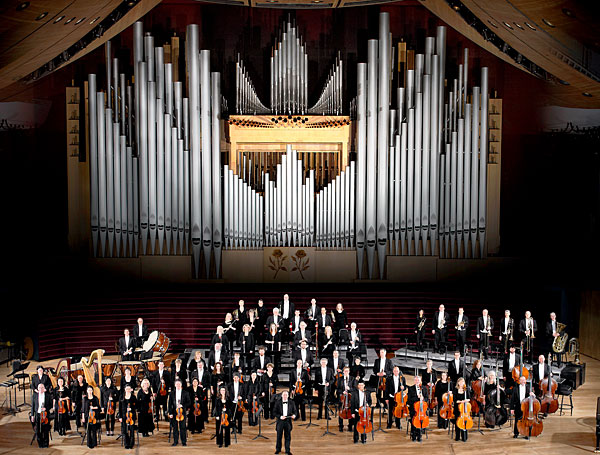
We are aware that much of what we have to say about reproduced sound in these pages goes completely over the heads of a lot of our readers, simply because they have not heard live, un-amplified music recently enough (if ever) to relate their own listening experiences to our observations. These are the people who tend to have developed a strong mental image of what hi-fi ought to sound like, and it is not surprising that that image should bear little if any resemblance to reality. In most cases, this image of hypothetical perfection involves a broadly sweeping sense of spaciousness, awesome power, floor-shaking low end and silky, velvety highs—rather similar, one might say, to the sound of a Magnificent Magnavox with a couple of extra octaves at each end.
This dream of sublimity, if nurtured for long enough, can completely warp an audiophile's judgment to the extent that it becomes the Ultimate Truth, the standard by which the sound of live music is to be judged. The real thing then is "lacking high end," has "poor imaging," and is so veiled that "all the inner detail is missing." Yet those are the people who tend to make the biggest fuss about "accuracy" in music reproduction.
We think it is time for them (and that means You, if you are one of whom we speak) to either put up or shut up. If you have not heard live, un-amplified music for at least a year, we cannot communicate with you, and you haven't the proverbial snowball's chance of assembling a system that begins to approach the sound of the real thing.
You have three choices. Either admit that you really don't, give a damn about fidelity and are merely looking for a fantasy-fulfilment system. (And don't bother to renew your Stereophile subscription, because we can't help you.)
Or, admit that you don't know what to listen for and trust our advice, because we do.
Or, as your third choice, take the money you were setting aside for another misguided component purchase and use it to pay your way to a live symphony orchestra concert. Choose an orchestra that is good enough that it has been commercially recorded at least once, and before making the arrangements, write to the orchestra manager (by title; you don't need his name) and ask him what seating location most customers seem to prefer for the sound of the orchestra. (You can pay more for status and not hear as well.)
Just so the music won't bore you to sleep within 10 minutes, try to choose a program containing at least one major work written between 1825 and 1935—from late Beethoven to late Ravel—as compositions written during that period are generally best for showing off the full orchestra's potential as a producer of magnificent sounds. If possible, obtain a season program beforehand and pick your concert from that.
While listening, close your eyes, think of the stage as the space between stereo loudspeakers, and analyze every aspect of the sound—its balance, high-end content, imaging, etc.—as you would a stereo reproduction. Note how often you can actually hear instruments that you can see being played, how much you can tell about the hall from its sound alone, and how much depth and perspective is actually audible when you rely on ears alone. Note the variety of sounds produced by the various brass instruments—from a round, mellifuous tone to a jagged rending. Note particularly the sound of massed violins with its peculiar combination of sweetness and edginess. Note the complete effortlessness of crescendos, the dew-drop clarity of the sound.
If the live listening experience is to be of any help to you in reproduced-sound evaluation, you must learn to dissect the total sound into its component parts while observing how they fit together. It is also necessary to keep reminding yourself that, regardless of what you feel to be "wrong" with the sound, what you are hearing is the Real Thing—the original by which the reproduction must be judged. It is, thus, more "right" than you are ever likely to hear it from a reproducing system.
If you come home with the feeling that you really prefer the sound of your system, you may be a lost cause. If, on the other hand, you feel that what you heard is what you want to hear at home, you're with us, we're with you, and we can share a common goal. You may then send us your ticket stub and a Xerox of the program (Not the whole thing, just the page showing what was played.) and we will send you, free, an Analytical Listener Certification Card (footnote 1). You will have taken the first step towards becoming the kind of listener we write Stereophile for, and will deserve credit for having done it. (Although this is not a credit card, it will come in handy for intimidating other audio buffs who haven't been near the Real Thing since the local band played for compulsory high-school assembly.)
Of course, you don't have to be a reformed philistine to get an ALC Card. If you're a regular concertgoer and would like a card, send us the requisite stubs and program copy and you'll get yours. (That doesn't read as intended..) You're our kind of reader. We wish there were more. Maybe you can help us find some more....—J. Gordon Holt
Footnote 1: Stocks of these cards have long since run out.—Ed.
Footnote 1: Stocks of these cards have long since run out.—Ed.















