

I've never been a mono-phile. Yes, mono is better than electronically reprocessed stereo. And yes, for some of the early stereo recordings, where the engineer smacked one of the horns in the left speaker and the other in the right, it's better to hear everyone in the center. And, finally, there are cases, most notably on many of The Beatles' albums, where the musicians supervised the mono mix and ignored the stereo, making the mono, in a sense, the authoritative version. But in general, those albums that were recorded in stereo, I prefer to hear in stereo.
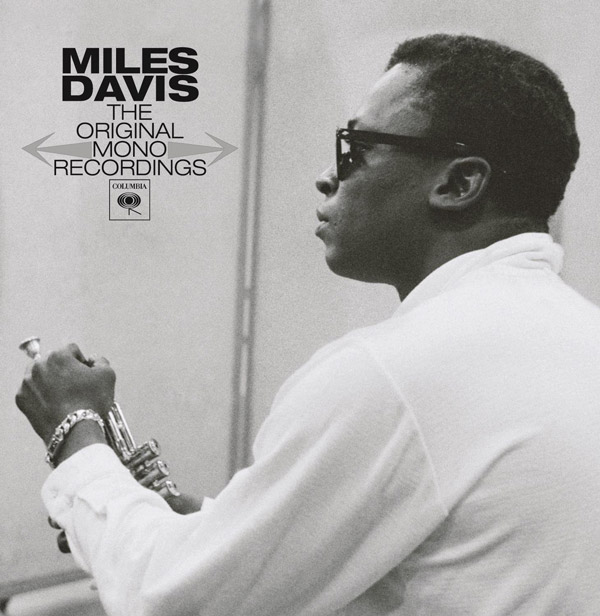
But the latest excavation from the Miles Davis archive, The Original Mono Recordings, nine CDs of the nine albums made for Columbia from 1955–63, is an exception, a set worthy of attention—though not so much because the discs are in mono.
The value of this boxed-set is that Columbia Legacy's chief engineer, Mark Wilder, has gone through all the master tapes (the "A" reels and the "B" backups), picked the better version of each track on each album (sometimes it turned out to be the B), then compared it with the track on an original mono LP, and dialed in tweaks (EQ, frequency balance, compression, etc.) to make the tape sound as much as possible like the vinyl. (Tape ages; a pristine LP doesn't.)
As a result, most of the albums in this set—Round About Midnight, Miles Ahead, Milestones, Jazz Track (which includes the soundtrack of ), Porgy and Bess, Kind of Blue, Sketches of Spain, Someday My Prince Will Come, and Miles and Monk at Newport—sound better than any previous CD reissue.
There are exceptions. Kind of Blue sounds about the same as the stereo CDs, because it's mixed down from the same 3-track tape (the mono masters are, by some accounts, worn out; by other accounts, missing). And, as a personal taste, I prefer orchestral recordings—Porgy, Sketches, and Miles Ahead, all done with Gil Evans—spread out.
But even those big-band albums have some advantages because of Wilder's tweaking. Most of all, the bass is much clearer and thwackier; the mono remastering brings alive a whole rhythmic layer that hasn't been so audible in any reissue, analog or digital (except for the audiophile LP pressings by Classic Records, Acoustic Sounds, and Mobile Fidelity).
Wilder tells me in an email that he did his tape-to-vinyl comparisons using a 9-input monitor preamp with level adjustments. His other gear included Duntech Princess speakers, a Krell FPB-300 amp, and a Denon DP 72L turntable with a Shure V15 cartridge and Bryston phono stage. He heard the tape on an Ampex ATR, or Studer reel-to-reel, whichever sounded better.
The set's booklet contains Wilder's mastering notes for each album. Here's what he wrote about Miles Ahead: "Surprisingly, the original master was in very good shape. But when we listened to the master on the playback machine, it sounded a little thin and hard compared to the original album pressing. So we used a softer-sounding tube equalizer to standardize the bass and reduce the mid-range throughout." (That, by the way, sums up the sonic difference between this CD of Miles Ahead and previous digital reissues, including one that Wilder mastered.)
For Sketches of Spain: "The sound was even throughout and compared well to the original LP. The only equalization was a small adjustment in the bass to achieve the same tonal quality in the bottom few octaves that existed on the original mono LP."
It's this kind of care that you hear on this boxed set. And, of course, the music is some of the greatest jazz ever.















