

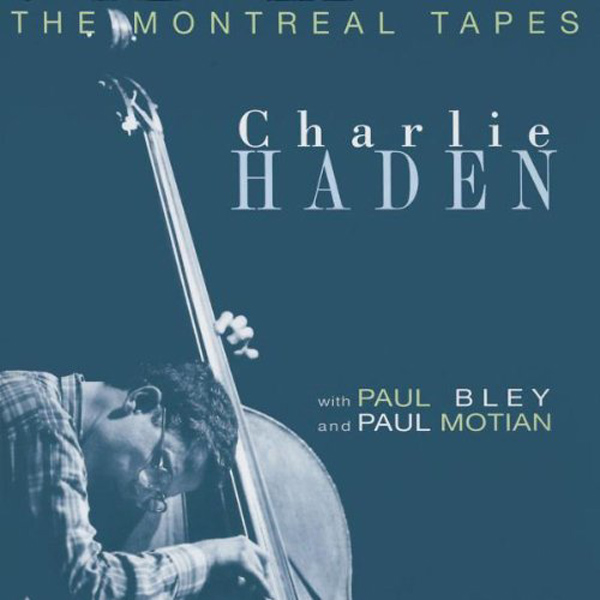
Paul Bley is featured on The Montreal Tapes, with Charlie Haden and Paul Motian.
I missed the chance to send off an R.I.P. to the jazz pianist Paul Bley, who died on January 3, at the age of 83, so I'm catching up with this advance notice of a free memorial concert to be held this Thursday night, February 11, featuring piano solos by seven of his acolytes—most notably Ethan Iverson and Frank Kimbrough, whom I've lauded on this page many times. The memorial concert—which also features Rob Schwimmer, Aaron Parks, Lucian Ban, Jacob Sacks, and Matt Mitchell—will be held at 8:00 pm, in the Greenwich House Music School at 46 Barrow Street, New York City.
Though little known outside cloistered jazz circles, Bley ranked among the music's most influential improvisers and, in one crucial episode, an historic enabler. In the fall of 1958, Bley was the 26-year-old leader of the house band at the Hillcrest Club, in Los Angeles. One night, his bass player, Charlie Haden, brought in three musicians, whom he'd recently met, to sit in: trumpeter Don Cherry, drummer Billy Higgins, and alto saxophonist Ornette Coleman. Bley fired the rest of his existing band, hired Haden's friends, and thus sparked the change of the century.
Bley had come from Montreal through New York, where he'd played with Charlie Parker, Charles Mingus, Max Roach, and other East Coast pioneers. Classically trained with avant-garde leanings, he was waiting for jazz to catch up to the mid-20th century. He met Gil Evans, George Russell, and other composers who wrote music that roamed outside traditional chord changes—until it hit the bandstand, where horn players would take their solos like Parker-wannabes and turn the date into just another bebop blowing session. Ornette Coleman was playing the way Bley had been hearing in his head. Given the chance to play his own music six nights a week, with a band sympathetic to his methods, Ornette developed his sound, and felt inspired to compose still more material, so that by 1959, when Atlantic Records signed the Ornette Coleman Quartet (the Hillcrest group minus Bley, as Ornette decided to drop the chordal presence of a pianist, a move that Bley understood), the revolution—The Shape of Jazz to Come, as their first album was called—popped out of the box fully conceived.















