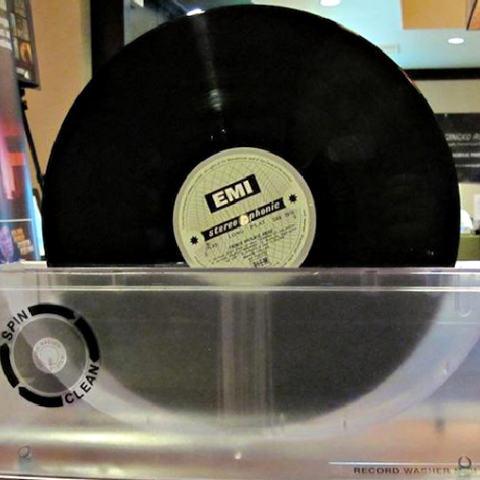
By the time you read this (probably a month after it is written, judging by the speed with which the US mails speed second-class matter on its appointed rounds), Capitol Records will have announced the first bit of really good news for the high-fidelity perfectionist in years: the release of imported disc pressings—taped, cut, and stamped in Europe. London has been importing for years—all the Londons you buy are pressed by Decca in England. But this will be the first opportunity we will have of sampling the products of some of London's overseas competitors.
Some time ago, we mentioned the fact that the British EMI releases of the same works that Angel was releasing in this country had considerably better sound than the do mestic versions. Since then, we have auditioned some more EMI discs, and while we have run across a couple that were pretty sad-sounding, we confirmed our initial impression that the majority of these discs do have cleaner sound, wider range, and quieter surfaces than their domestic counterparts. Now, with this initial release of about 800 imported discs to choose from, Stereophile readers will be able to find out for themselves what we've been talking about.
Capitol was very unhappy about what we said about their Angel releases, according to a letter from their legal department. But we suspect that they are going to be even unhappier when the record critics in American publications start reviewing the imported discs. We can guess what the critics will say.
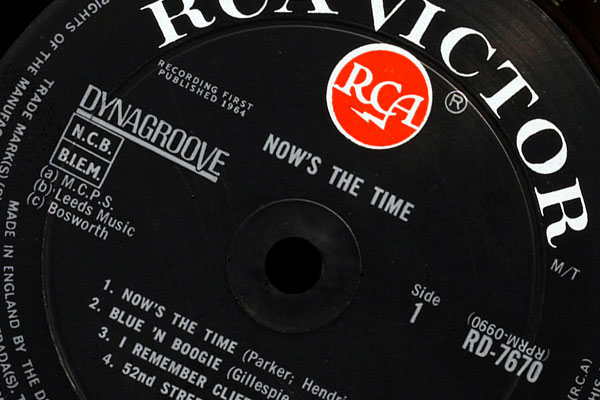
Most of these imports will almost universally be criticized for "overly distant, hazy, unfocused, boomy, muffled, ill-defined sound." We can predict this with almost 100% certainty, for the simple reason that practically none of our critics have even so much as raised an eyebrow about the increasing shrillness and thinness of our own domestic discs. Not until Dynagroove, with some of the most shockingly strident sound ever committed to discs, did any of the record critics suggest that, perhaps, these discs might be a little too brilliant. The fact that practically all our domestic discs have tipped-up high ends has not penetrated to these people at all, but when the first Capitol imports start coming in, no critic worth his salt is going to be able to miss the fact that they do have less highs and more deep bass than our domestic releases.
We are willing to bet, though, that virtually every record critic will assume that the domestic discs are right and the imports wrong, and will crow triumphantly about the advanced state of the recording art in the US. Before they climb out too far on a limb, though, we hope they will pause for a moment to consider:
1) How cleanly the imported discs reproduce in the inner grooves, without the assist of Dynagroove techniques;
2) How similar the "boomy" bass of these discs sounds to the bass from a good tape reproduced on professional equipment; and
3) how much quieter the surfaces are on these discs, when compared to domestic ones having the same dynamic range. Their surfaces should not be compared with those of Dynagroove discs, because any one can produce quiet-sounding discs by reducing the dynamic range and raising the average level to the point where the disc must be played at a lower volume control setting.
We commend Capitol for making this move to bring better-quality discs to us, even at the risk of making their own discs sound rather sick by comparison. But we do hope the European firms producing these discs will have the courage to stick by their guns despite the roasting they will get from most American record critics, because these imports are the last hope for the disc medium as a source of high-fidelity program material. If their manufacturers succumb to the temptation to tailor their discs to the American norm, it will no longer be possible to buy discs that can do justice to a really good high-fidelity system.
If, however, the imports manage to establish themselves as the standard by which domestic discs are judged, it is entirely possible that the RIAA curve may again come to have some meaning, and that the money spent on good phono equipment may not have been wasted after all.—J. Gordon Holt
2) How similar the "boomy" bass of these discs sounds to the bass from a good tape reproduced on professional equipment; and
3) how much quieter the surfaces are on these discs, when compared to domestic ones having the same dynamic range. Their surfaces should not be compared with those of Dynagroove discs, because any one can produce quiet-sounding discs by reducing the dynamic range and raising the average level to the point where the disc must be played at a lower volume control setting.