

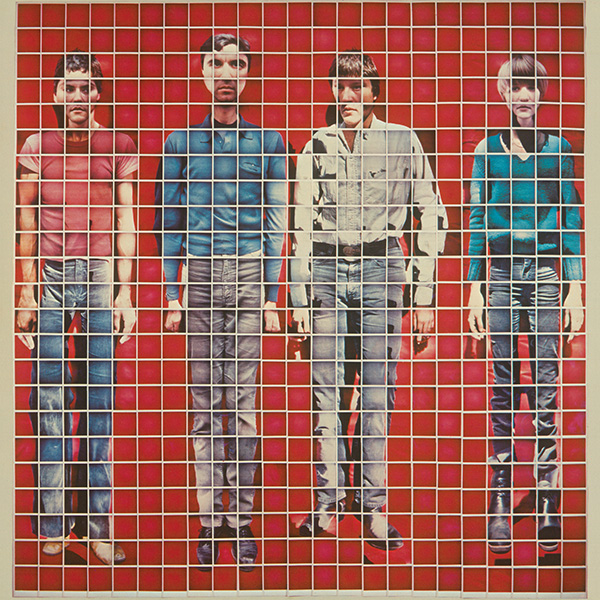
For a lot of bands, the second album is intimidating. There are numerous examples of sophomore slumps, which sometimes lead to a band's quick end. Talking Heads didn't just avoid a sophomore slump; they scored their first top-40 hit and put their career on solid, sky-is-the-limit footing. Through their innate talent and curiosity, relentless hard work, and some good luck, their second effort—More Songs About Buildings and Food—was a smashing success.
Capitalizing on the modest buzz created by their debut, Talking Heads: 77—"Psycho Killer" got some FM airplay and notoriety—the band hit the road. They toured the US and Europe almost constantly in 1977 and 1978. In late winter, they paused for two months to make their next album.
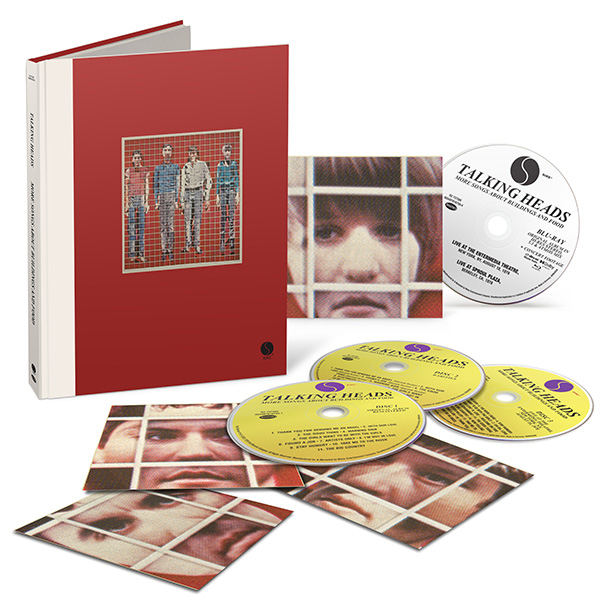
More Songs is the focus of a new, deluxe four-disc (three-CD, one Blu-ray) reissue from Rhino Records, part of an ongoing celebration of the 50th anniversary of the band's founding. Its design and content is similar to last year's Talking Heads: 77 reissue. Disc 1 is a remaster of the original album, by Ted Jensen at Sterling Sound Nashville. Disc 2, "Rarities," contains out-takes and alternate mixes. Disc 3 contains a live show from August 10, 1978, at the Entermedia Theater, NYC, which is now called Village East. The Blu-ray disc holds 24/96 stereo, 5.1 surround, and Dolby Atmos versions of the album plus two videos of live performances, from the Entermedia Theater concert and a longer set at Sproul Plaza, UC Berkeley, most likely on September 18, 1978. (The reissue is also available in four-LP and two-LP versions.)
Bassist Tina Weymouth described More Songs ... as the "Irish twin" to 77 because many of its songs were written in the band's formative years but not included on the first album. Maybe so, but More Songs stands apart with more sophisticated, quirky production, courtesy of Brian Eno.
By the time he took on this project, Eno was already famous for producing David Bowie's Berlin albums, being a founding member of Roxy Music, and making a series of ambient-music albums with a strong cult following. Talking Heads met Eno during their first tour of the UK, in May 1977. According to essays by Weymouth, drummer Chris Franz (also Weymouth's husband), guitarist/singer David Byrne, and guitar/keyboard player Jerry Harrison, there was an immediate connection, musical, creative, and personal. The band's contract with Sire Records allowed them to pick their producer. Eno's lack of hits did not bother them.
Talking Heads manager Gary Kurfirst scored the band a unique opportunity: the first recording sessions in the new Compass Point Studios in the Bahamas, owned by Island Records founder Chris Blackwell. For a NYC-based band, the chance to spend late winter in the warm Caribbean was irresistible. Blackwell's offer included a steep discount because some parts of the studio were still under construction.
Band members recall a joyous, creative, peaceful time, with time in the studio, swimming in the ocean, and local music and food. Their booklet essays describe quick, efficient sessions, Eno running things with a light hand but making important suggestions, the most important being slowing the tempo of "Take Me to the River," moving its sound and feel away from the Al Green original. Between the unique tempo and Eno's interesting sound "treatments," the song caught the ears of radio listeners and scored Talking Heads their first top-40 hit. In his essay, Byrne calls that success "both pleasant and slightly annoying"—annoying because their first big hit wasn't an original composition.
The mellow vibe didn't diminish the intensity of the originals on More Songs. Most had been written long before, so they were already well-rehearsed. Byrne's vocals were more assured than on 77, displaying a wider range of stylings and trademark quirks. The band's playing was tighter, building on the already cohesive, lean and mean sound of 77. The band arrived at the studio locked in, and then they took it another step.
Eno's production was also next level. He brought several synthesizers and sound-effects devices with him and was already an expert in the studio. After the band laid down the music and vocal tracks, Eno worked alone with engineer Rhett Davies, applying his "treatments" and making stereo mixes. The booklet includes images of the tape track sheets, sometimes indicating which synthesizers or sound-effect devices were used, sometimes just labeled "Eno" on one or more tracks.
 Long-time Talking Heads engineer E.T. Thorngren and Harrison made the 5.1 and Atmos mixes. Especially with the Atmos mixes ("folded down" to 5.1 on my system), it's easy to hear Eno's "treatments" separate from the band's instruments and voices. Byrne's guitar parts are more audible, bringing out some interesting hooks and fills, sometimes doubled or with other effects applied. Even with the minimalist soundfield spread out in this way, the songs cohere and hold up because the band was so tightly on beat and in tune. Thorngren and Harrison smartly made the vocals and guitar leads stand out, gluing everything together.
Listening to the individual parts in the multichannel mix gave me a better appreciation of the stereo mix, which is tightly knit and designed to spotlight the best things about each song, even when there's a lot going on. Weymouth described bringing home cassettes of the rough mixes and dancing around the island bungalow she and Franz shared. If they cut the rug hard, they deemed the song successful.
The live sets feature a road-honed band, familiar with their music and skilled at adding little twists and hooks that keep it interesting and fresh sounding. The videos are a mixed bag. The Berkeley performance is plagued with dropouts and some tuning issues. Still, it's a neat time capsule. The NYC concert has better audio and playing; it was the smart choice for the live CD.
Long-time Talking Heads engineer E.T. Thorngren and Harrison made the 5.1 and Atmos mixes. Especially with the Atmos mixes ("folded down" to 5.1 on my system), it's easy to hear Eno's "treatments" separate from the band's instruments and voices. Byrne's guitar parts are more audible, bringing out some interesting hooks and fills, sometimes doubled or with other effects applied. Even with the minimalist soundfield spread out in this way, the songs cohere and hold up because the band was so tightly on beat and in tune. Thorngren and Harrison smartly made the vocals and guitar leads stand out, gluing everything together.
Listening to the individual parts in the multichannel mix gave me a better appreciation of the stereo mix, which is tightly knit and designed to spotlight the best things about each song, even when there's a lot going on. Weymouth described bringing home cassettes of the rough mixes and dancing around the island bungalow she and Franz shared. If they cut the rug hard, they deemed the song successful.
The live sets feature a road-honed band, familiar with their music and skilled at adding little twists and hooks that keep it interesting and fresh sounding. The videos are a mixed bag. The Berkeley performance is plagued with dropouts and some tuning issues. Still, it's a neat time capsule. The NYC concert has better audio and playing; it was the smart choice for the live CD.
Long-time Talking Heads engineer E.T. Thorngren and Harrison made the 5.1 and Atmos mixes. Especially with the Atmos mixes ("folded down" to 5.1 on my system), it's easy to hear Eno's "treatments" separate from the band's instruments and voices. Byrne's guitar parts are more audible, bringing out some interesting hooks and fills, sometimes doubled or with other effects applied. Even with the minimalist soundfield spread out in this way, the songs cohere and hold up because the band was so tightly on beat and in tune. Thorngren and Harrison smartly made the vocals and guitar leads stand out, gluing everything together.
Listening to the individual parts in the multichannel mix gave me a better appreciation of the stereo mix, which is tightly knit and designed to spotlight the best things about each song, even when there's a lot going on. Weymouth described bringing home cassettes of the rough mixes and dancing around the island bungalow she and Franz shared. If they cut the rug hard, they deemed the song successful.
The live sets feature a road-honed band, familiar with their music and skilled at adding little twists and hooks that keep it interesting and fresh sounding. The videos are a mixed bag. The Berkeley performance is plagued with dropouts and some tuning issues. Still, it's a neat time capsule. The NYC concert has better audio and playing; it was the smart choice for the live CD.















