

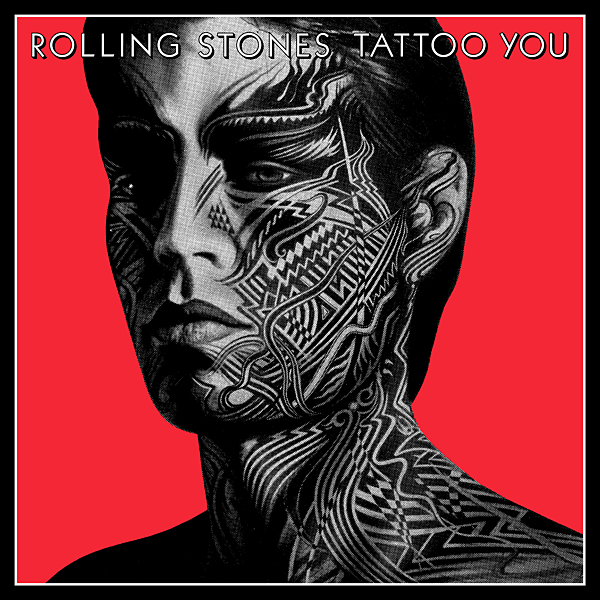
Tattoo You is near and dear to me. It came out in August 1981, just before I entered 10th grade, the age when a person's rock'n'roll aesthetic begins to take shape. This album was formative.
I knew about the Rolling Stones mainly through the Hot Rocks compilation, from listening on radio to hits from Some Girls (which came out when I was too young and sheltered in leafy suburbia to understand the urban grit and decadence described in its lyrics), and from Emotional Rescue, which I owned, and which I thought (and still think) lacks interesting music in the grooves to match the cool cover. I figured the Stones might already be too old to rock.
Tattoo You proved me wrong and rocketed the Stones into the MTV '80s. From the first spin, I dug everything about this record. I still do. It rocks, it rolls, and side 2 has quieter, intense, textured sorta-ballads—and there's Sonny Rollins on sax! It was varied, smartly sequenced, well-paced, and wow, did Bob Ludwig cut that original LP loud!
It was the loudest thing on my turntable at the time, dynamic and punchy in all the right rock'n'roll ways. Charlie Watts's drums popped out of my New Advent loudspeakers like sound-rockets. Bill Wyman's bass spread around the floor and compelled my feet to move. Mick Jagger's vocals sneered at me, front and center. And the wonderful Stones twin-lead guitars were shooting arrows from the sides.
It turns out that Tattoo You is a complex, glorious amalgamation of collected parts. Some tracks were birthed back in Kingston, Jamaica, during the Goats Head Soup sessions and some during sessions in Munich, Germany, for It's Only Rock 'n' Roll. Most began during the Emotional Rescue sessions in Paris and were set aside in favor of the less-compelling tracks on that album.
The 40th Anniversary reissues of Tattoo You include the 5-LP Super Deluxe version reviewed here. The first LP is a new cut of the original album. The second contains nine newly released tracks from the same batch of 1970s recording sessions. LPs 3–5 document the live concert at Wembley Stadium on June 25, 1982.
The first two LPs were cut by Bernie Grundman from Steve Marcussen's high-resolution digital master files. LPs 3–5 were cut by Naweed Ahmed, at Katara Studios in Doha, Qatar, from digital files mastered by Mazen Murad. Plating, pressing, and manufacturing were at GZ Media in the Czech Republic. Also included is an amply illustrated, 124-page 12×12 hard-cover book and a lenticular cover image on the album box: Look one way and it's Mick's tattoo'd head; shift the image and it's Keith's.
As a physical artifact, this is a heavy, pretty thing. The book contains dozens of color photographs, a detailed, context-setting essay and track-by-track survey, interviews with coproducer Chris Kimsey and cover photographer Hubert Kretzschmar, and an essay about the 1981–82 tour, all written by Jeff Slate. The LP packaging is handsomely printed heavy cardboard—but that's a defect, not a virtue: The records are stuffed into cardboard inner sleeves that grip them tightly; almost every platter was visibly scuffed on first removal. At this level of deluxe, soft, plastic-lined inner sleeves are mandatory.
The extra musical content is a mixed bag. Most of the studio tracks on the second LP sound like incomplete cast-asides, but on side A, "Fiji Jim" and a neat cover of "Drift Away"—a hit for soul singer Dobie Gray—stand out. On side B, "Come to the Ball," from the Goats Head Soup sessions stands above the rest, featuring tasty Mick Taylor slide-guitar licks. "Fast Talking, Slow Walking," from the It's Only Rock 'n' Roll sessions, also features Taylor. It's also good.
The Wembley concert sounds like the book essay's description of the tour's stadium shows. The band remembered being spread out on a huge stage, with Jagger and the guitarists running and dancing way out on the side ramps, far out of sight of Charlie's drum riser. The band is not particularly tight, and Ronnie Wood's guitar is often buried in the mix. Ian "Stu" Stewart and Chuck Leavell add texture and depth on keyboards along with sax men Gene Barge and Bobby Keys. But the overall feeling is of distance: too much space between the band members for them to lock in all the time and too little intimacy with the huge crowd.
The 1982 album Still Life, which was tightly edited together from numerous stops on the US tour, better captures the energy of the Rolling Stones at their best at that time. Of the songs that overlap Still Life, the American performances and recordings are better. That said, the Wembley concert has more songs, including some deep-catalog gems like "Let It Bleed," "She's So Cold," and the Stones' excellent cover of "Just My Imagination (Running Away with Me)."
Soundwise, these platters are a letdown. The album and bonus studio tracks were cut from hypercrunched digital tracks, which renders them fatiguing at rock'n'roll listening levels and shaves the pop and smash off Charlie's drums. The original Ludwig-cut LP is superior in every way, the standing definition of what a rock LP should sound like. The live material is less crunched; its washed-out sound seems more the result of the original recording and mixing than the mastering and cutting.
It's a pity because this album is such a rocker. Would it have been that much more trouble to cut a stand-out LP from either the master tape or a noncrunched "flat" transfer? The smart buyer will save some coin and get the CD set. Why pay extra for nothing better?















