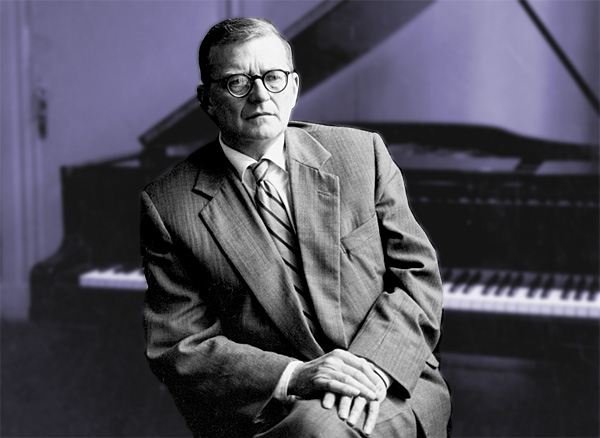
Dmitri Shostakovich (1906–1975) was hardly the first composer to run headfirst into opposition from political authorities. In his case, however, the pushback was so extreme that it affected everything he wrote thereafter.
In early 1936, after the style and subject matter of his opera Lady Macbeth of Mtsensk clashed with the so-called proletarian aesthetic of Russian dictator Joseph Stalin (1878–1953), Shostakovich was denounced by the official state newspaper, Pravda. From then on, his symphonies reflected either his defiance of decades of Socialist realism, or attempts to appease the authorities while still speaking his truth.
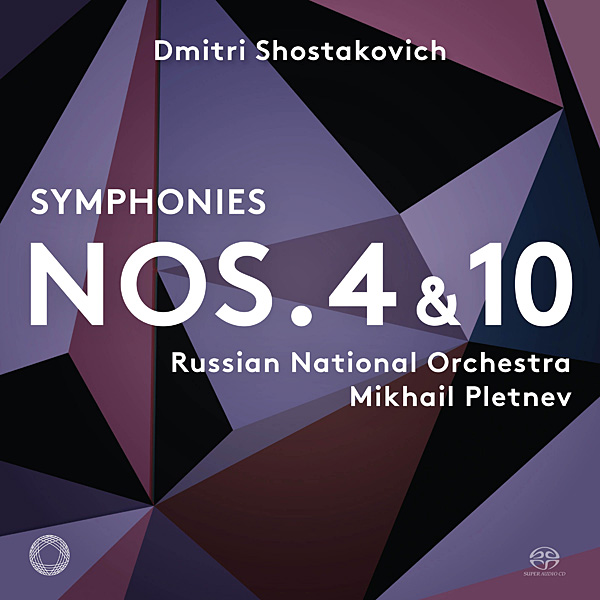
There's no better way to understand Shostakovich's despair and anger than to listen to his Symphony 4 in two vastly different recordings: one by Mikhail Pletnev and the Russian National Orchestra, which also includes Symphony 10 (2 SACD/CDs, DSD download, Pentatone PTC 5186647); the other by Andris Nelsons and the Boston Symphony Orchestra, paired with Symphony 11 (2 CDs, 24-bit/96kHz download, Deutsche Grammophon 002859502).
 It's hard to reconcile the energy of Symphony 4, its composition roughly contemporaneous with the premiere of Lady Macbeth, with Pletnev's performance. Whether because of fears of persecution or pressure from the party-line Union of Soviet Composers, Shostakovich withheld this extremely dissonant and complex symphony until well after Stalin's death. When at last it was premiered, in 1962, audiences heard a long, nightmarish first movement that begins with a cry of alarm, and sounds as if an unstoppable, crushing weight has descended on the listener. After a curiously bizarre middle-movement scherzo, the final movement's relentlessness suggests that the human spirit itself has been crushed. Uplifting it is not.
Pletnev's opening march feels like a slog. The music demands a faster pace, but Pletnev holds back. While he may be trying to convey Shostakovich's nearly unbearable dismay at what had come down on both him and the Russian people, his beautiful-sounding RNO never fully captures the composer's cry. The contrast with Nelsons's BSO performance—his first movement is more than 9:30 shorter, and his orchestra never sounds as incongruously smooth and lush as Pletnev's—is vast. There is palpable fury in this reading by Nelsons, whose escalating intensity is breathtaking. DG's sound may not be as smooth as Pentatone's, but the recording knocks you over with its huge, explosive bass and blaring brass. Nelsons's conclusion is memorably iridescent and haunting.
It's hard to reconcile the energy of Symphony 4, its composition roughly contemporaneous with the premiere of Lady Macbeth, with Pletnev's performance. Whether because of fears of persecution or pressure from the party-line Union of Soviet Composers, Shostakovich withheld this extremely dissonant and complex symphony until well after Stalin's death. When at last it was premiered, in 1962, audiences heard a long, nightmarish first movement that begins with a cry of alarm, and sounds as if an unstoppable, crushing weight has descended on the listener. After a curiously bizarre middle-movement scherzo, the final movement's relentlessness suggests that the human spirit itself has been crushed. Uplifting it is not.
Pletnev's opening march feels like a slog. The music demands a faster pace, but Pletnev holds back. While he may be trying to convey Shostakovich's nearly unbearable dismay at what had come down on both him and the Russian people, his beautiful-sounding RNO never fully captures the composer's cry. The contrast with Nelsons's BSO performance—his first movement is more than 9:30 shorter, and his orchestra never sounds as incongruously smooth and lush as Pletnev's—is vast. There is palpable fury in this reading by Nelsons, whose escalating intensity is breathtaking. DG's sound may not be as smooth as Pentatone's, but the recording knocks you over with its huge, explosive bass and blaring brass. Nelsons's conclusion is memorably iridescent and haunting.
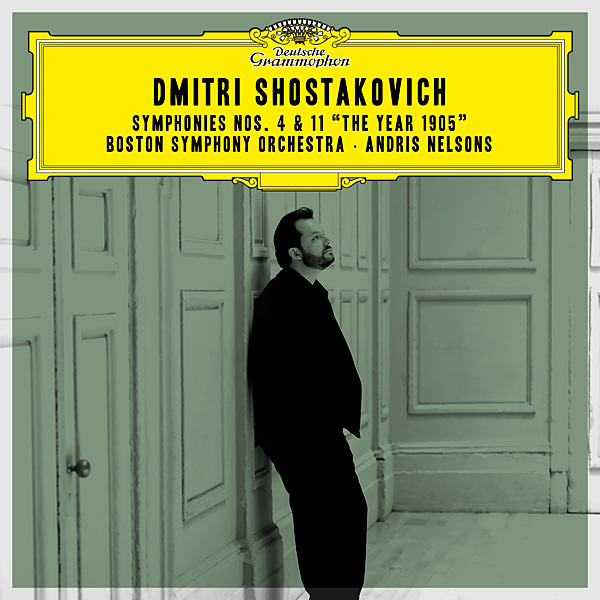 Nelsons's pairing, Symphony 11, is an equal triumph. Subtitled The Year 1905, this programmatic work depicts the Bloody Sunday massacre of unarmed citizens in St. Petersburg who, led by a priest, were carrying a protest petition to Czar Nicholas II when they were mown down by the Czar's Cossack troops. After the first movement, The Palace Square, sets the stage, the ensuing bloodbath, The 9th of January, overwhelms with its power and devastation. Following the third-movement funeral march, In Memoriam, the symphony concludes with The Tocsin, as even more graphic musical depictions of violence warn of the Russian Revolution to come.
Nelsons nails Shostakovich's retelling of events in aural cinéma-vérité. The wide soundstage, set back from the speakers, convincingly conveys the depth and boundaries of Boston Symphony Hall's shoebox acoustic as explosion after explosion depicts the schisms that led to the 1917 Revolution.
Like Pletnev's recording of Symphony 4, his Symphony 10 leaves something to be desired. In this music written shortly after Stalin's death, Pletnev convincingly conveys the pain of the Russian people and of Shostakovich under Stalin's rule, and the continuing impact of totalitarian subjugation of the Russian psyche. Nonetheless, after Nelsons's all-out performances, we're left with the sense that even more could have been said.
The pain and fury that Pletnev shortchanges abounds in the most recent release in this survey, Gianandrea Noseda's superb rendition of Symphony 8 with the London Symphony Orchestra (SACD/CD, DSD download, LSO Live LSO0822). Recorded in DSD256, and auditioned in advance DSD64 files, this powerhouse performance fully unleashes the emotions that Shostakovich encapsulated in musical notation.
Nelsons's pairing, Symphony 11, is an equal triumph. Subtitled The Year 1905, this programmatic work depicts the Bloody Sunday massacre of unarmed citizens in St. Petersburg who, led by a priest, were carrying a protest petition to Czar Nicholas II when they were mown down by the Czar's Cossack troops. After the first movement, The Palace Square, sets the stage, the ensuing bloodbath, The 9th of January, overwhelms with its power and devastation. Following the third-movement funeral march, In Memoriam, the symphony concludes with The Tocsin, as even more graphic musical depictions of violence warn of the Russian Revolution to come.
Nelsons nails Shostakovich's retelling of events in aural cinéma-vérité. The wide soundstage, set back from the speakers, convincingly conveys the depth and boundaries of Boston Symphony Hall's shoebox acoustic as explosion after explosion depicts the schisms that led to the 1917 Revolution.
Like Pletnev's recording of Symphony 4, his Symphony 10 leaves something to be desired. In this music written shortly after Stalin's death, Pletnev convincingly conveys the pain of the Russian people and of Shostakovich under Stalin's rule, and the continuing impact of totalitarian subjugation of the Russian psyche. Nonetheless, after Nelsons's all-out performances, we're left with the sense that even more could have been said.
The pain and fury that Pletnev shortchanges abounds in the most recent release in this survey, Gianandrea Noseda's superb rendition of Symphony 8 with the London Symphony Orchestra (SACD/CD, DSD download, LSO Live LSO0822). Recorded in DSD256, and auditioned in advance DSD64 files, this powerhouse performance fully unleashes the emotions that Shostakovich encapsulated in musical notation.
 When it premiered, in 1944, Symphony 8 stunned the Russian authorities. The shocking impact of this music's pessimism felt like a smack in the face to a struggling country that lost 27 million people in WW II—so much so that the symphony was condemned for its "unhealthy individualism," and remained virtually unplayed in the USSR for many years.
Noseda holds nothing back, his first movement depicting terrible sadness and suffering. Thanks to superior engineering and conducting, the recording's huge dynamic range and concomitant sense of depth enhance the abilities of conductor and orchestra to translate orchestral color into feeling. The performance leaves the mouth agape as it builds to a huge explosion, then collapses into post-annihilation exhaustion.
The second movement may scamper along, but it concludes with a feeling of profound emptiness. Next comes the unforgettable third movement, whose seemingly ceaseless march is punctuated by cries and, eventually, another huge explosion. When its furious pace cedes to depression, we feel it deeply. The Eighth may end on a note of consolation, but everything preceding its closing bars offers anything but. Anyone who is alarmed by the resurgence of fascism and racial divisions worldwide will find their feelings echoed in this tremendous performance.
When it premiered, in 1944, Symphony 8 stunned the Russian authorities. The shocking impact of this music's pessimism felt like a smack in the face to a struggling country that lost 27 million people in WW II—so much so that the symphony was condemned for its "unhealthy individualism," and remained virtually unplayed in the USSR for many years.
Noseda holds nothing back, his first movement depicting terrible sadness and suffering. Thanks to superior engineering and conducting, the recording's huge dynamic range and concomitant sense of depth enhance the abilities of conductor and orchestra to translate orchestral color into feeling. The performance leaves the mouth agape as it builds to a huge explosion, then collapses into post-annihilation exhaustion.
The second movement may scamper along, but it concludes with a feeling of profound emptiness. Next comes the unforgettable third movement, whose seemingly ceaseless march is punctuated by cries and, eventually, another huge explosion. When its furious pace cedes to depression, we feel it deeply. The Eighth may end on a note of consolation, but everything preceding its closing bars offers anything but. Anyone who is alarmed by the resurgence of fascism and racial divisions worldwide will find their feelings echoed in this tremendous performance.
It's hard to reconcile the energy of Symphony 4, its composition roughly contemporaneous with the premiere of Lady Macbeth, with Pletnev's performance. Whether because of fears of persecution or pressure from the party-line Union of Soviet Composers, Shostakovich withheld this extremely dissonant and complex symphony until well after Stalin's death. When at last it was premiered, in 1962, audiences heard a long, nightmarish first movement that begins with a cry of alarm, and sounds as if an unstoppable, crushing weight has descended on the listener. After a curiously bizarre middle-movement scherzo, the final movement's relentlessness suggests that the human spirit itself has been crushed. Uplifting it is not.
Pletnev's opening march feels like a slog. The music demands a faster pace, but Pletnev holds back. While he may be trying to convey Shostakovich's nearly unbearable dismay at what had come down on both him and the Russian people, his beautiful-sounding RNO never fully captures the composer's cry. The contrast with Nelsons's BSO performance—his first movement is more than 9:30 shorter, and his orchestra never sounds as incongruously smooth and lush as Pletnev's—is vast. There is palpable fury in this reading by Nelsons, whose escalating intensity is breathtaking. DG's sound may not be as smooth as Pentatone's, but the recording knocks you over with its huge, explosive bass and blaring brass. Nelsons's conclusion is memorably iridescent and haunting.
Nelsons's pairing, Symphony 11, is an equal triumph. Subtitled The Year 1905, this programmatic work depicts the Bloody Sunday massacre of unarmed citizens in St. Petersburg who, led by a priest, were carrying a protest petition to Czar Nicholas II when they were mown down by the Czar's Cossack troops. After the first movement, The Palace Square, sets the stage, the ensuing bloodbath, The 9th of January, overwhelms with its power and devastation. Following the third-movement funeral march, In Memoriam, the symphony concludes with The Tocsin, as even more graphic musical depictions of violence warn of the Russian Revolution to come.
When it premiered, in 1944, Symphony 8 stunned the Russian authorities. The shocking impact of this music's pessimism felt like a smack in the face to a struggling country that lost 27 million people in WW II—so much so that the symphony was condemned for its "unhealthy individualism," and remained virtually unplayed in the USSR for many years.
Noseda holds nothing back, his first movement depicting terrible sadness and suffering. Thanks to superior engineering and conducting, the recording's huge dynamic range and concomitant sense of depth enhance the abilities of conductor and orchestra to translate orchestral color into feeling. The performance leaves the mouth agape as it builds to a huge explosion, then collapses into post-annihilation exhaustion.
The second movement may scamper along, but it concludes with a feeling of profound emptiness. Next comes the unforgettable third movement, whose seemingly ceaseless march is punctuated by cries and, eventually, another huge explosion. When its furious pace cedes to depression, we feel it deeply. The Eighth may end on a note of consolation, but everything preceding its closing bars offers anything but. Anyone who is alarmed by the resurgence of fascism and racial divisions worldwide will find their feelings echoed in this tremendous performance.