

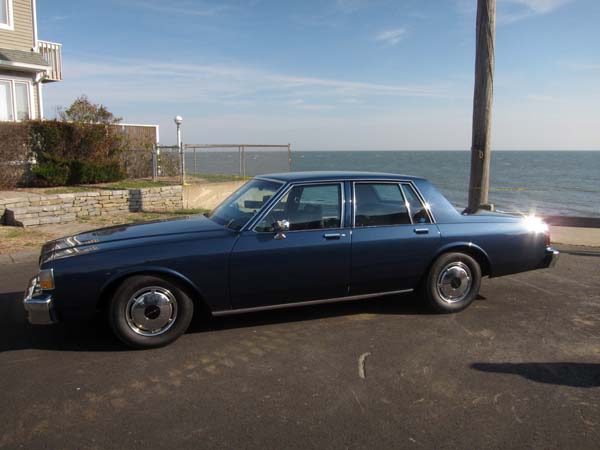
All photos: Micah Sheveloff.
“Big loud blue sedan” is the text message I receive as our Metro-North commuter train eases into the sleepy Milford, Connecticut station. I pull on my coat, grab my bag of CDs, step out of the train and onto the clean platform. It’s precisely 11:39am on Sunday, November 20, and there’s not a cloud in the sky.
The text message is considerate, but unnecessary: Even from the platform, my view compromised by the station’s waiting room, I can hear the handsome, steady purr of the engine, see the polished chrome of the bumper scattering sunlight in a million directions. The car—a 1988 Chevrolet Caprice 9C1—is a deep metallic blue, almost black, and it’s pristine. As I open the door, I leave fingerprints on the glass and chrome.
The car’s interior has been restored to mint condition and offers no hint of the powerful audio system contained within. For the moment, the stereo is playing softly and I can’t make out the song; the system sounds strangely ordinary. But this is no surprise: It would be out of character for Micah Sheveloff to attempt to impress me from the start. He’s subtler and more thoughtful than that. We’d been discussing this outing for months: Sheveloff would demonstrate his car’s custom sound system while we toured Milford and New Haven; we’re lucky to have settled on this bright, clear Sunday, only days before the car goes into storage for the long winter ahead. Micah extends a hand.
 The song, completely new to me, is “Dis is Da Drum,” the title track from Herbie Hancock’s 1994 record, a vibrant collage of Latin rhythms, hip-hop, jazz, electronic, and funk. And as the volume rises, the music replaces our words, our thoughts, and the sounds of the outside world; it becomes the soundtrack to everything we now see and feel. The experience is not unlike listening to a good set of headphones: momentarily disorienting, but also wonderfully immersive, freeing, moving.
I remember in 1977 when GM launched an ad campaign for the Impala/Caprice entitled “The New Chevrolet.” I recall huge ads, profile shots—a very clean, boxy design. For some unexplainable reason, I took to the car way back then. After years of working on automobiles—including many exotics from all over the world, I decided to purchase a “box-style Chevy” of my very own. The 9C1 denomination is reserved for the police package cars, which were adorned with heavy duty everything and an anemic but torque-heavy 350ci V8, rather than the 305ci that came standard in the civilian cars. I restored the deep blue beast with the initial purpose of using it as a demo platform to sell the very first Alpine aftermarket GPS navigation systems.The car is large and uncompromising, marked by sharp angles and long lines. Perfect, I imagine, for hiding some serious audio gear. And perfect for Micah’s personal philosophy of delivering the most accurate reproduction of music while maintaining the vehicle’s original form.
 The second track we listen to is Joni Mitchell’s “Sex Kills,” another song that I’ve never heard, and impressive for its guitar work, recording quality—there’s a great sense of space around the big, powerful drums—and, of course, Mitchell’s poignant lyrics.
And the gas leaks
The second track we listen to is Joni Mitchell’s “Sex Kills,” another song that I’ve never heard, and impressive for its guitar work, recording quality—there’s a great sense of space around the big, powerful drums—and, of course, Mitchell’s poignant lyrics.
And the gas leaksAnd the oil spills
And sex sells everything
And sex kills The neighborhood around us is a fairytale of yellow leaves and manicured lawns, pumpkins and decorative baskets, a life most people will never know. Micah turns left and heads straight for the water. Once we reach the Long Island Sound, we step out of the car to admire the view. Sunlight bounces off the choppy water, while seagulls hang almost motionless in the icy blue sky. Weeks ago, this area was trampled by Hurricane Irene. Nearby, a handmade street sign announces “Irene Drive.”
 We get back into the car and head along Bayview Beach. The song is “It’s So Easy to Fall in Love,” and it’s delivered with satisfying impact, percussion instruments sounding surprisingly realistic.
***
Life led Micah to Rich’s Car Tunes in Boston, where, through owner Rich Inferrera, Micah gained a great appreciation for high-quality workmanship. “I’m not sure if you noticed the processor in the trunk—how neatly the cables were done—it’s that kind of thing that I took from working at Rich’s shop. Everything we did there was about intense craftsmanship. Wire harnesses had to be perfectly neat and fabrication was always absolutely as good as we could make it. We also did a lot with ‘incognito’ installations, which hid an aftermarket radio behind the face of the OEM radio to prevent theft.”
We get back into the car and head along Bayview Beach. The song is “It’s So Easy to Fall in Love,” and it’s delivered with satisfying impact, percussion instruments sounding surprisingly realistic.
***
Life led Micah to Rich’s Car Tunes in Boston, where, through owner Rich Inferrera, Micah gained a great appreciation for high-quality workmanship. “I’m not sure if you noticed the processor in the trunk—how neatly the cables were done—it’s that kind of thing that I took from working at Rich’s shop. Everything we did there was about intense craftsmanship. Wire harnesses had to be perfectly neat and fabrication was always absolutely as good as we could make it. We also did a lot with ‘incognito’ installations, which hid an aftermarket radio behind the face of the OEM radio to prevent theft.”
 Life took another turn, this time to Burlington, Vermont, where Micah landed a job at a hi-fi dealership called Audio Den. In his three years in Vermont, Micah turned the Audio Den into a viable destination for car audio, but also gained valuable experience in the world of home audio. So successful were he and his partners at selling Thiel gear that the company’s Kathy Gornik and Jim Thiel came out for a visit. A strong and enduring relationship was born. It was then that Micah learned about phase- and time-coherent speaker designs and soon fell in love with Thiel, the brand, and its philosophy.


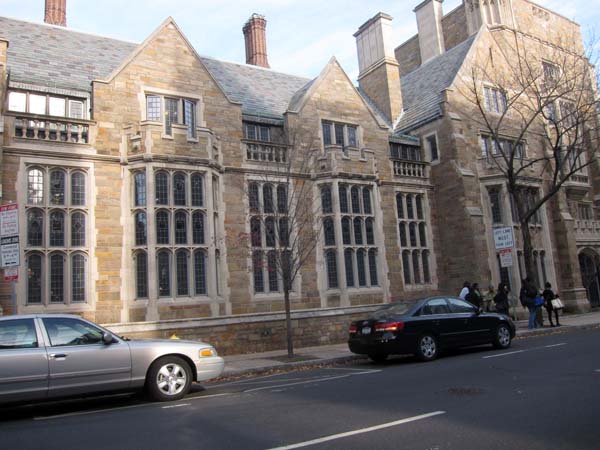
 All of this goes through my mind as we drive by a rocky beach, a fisherman stepping into the choppy water, a young couple sitting happily on a wooden bench, an old couple taking a walk, the music serving as the perfect soundtrack.
We drive on, turn left, and park in a lot with a view of green grass, bare trees, and the water. Appropriately, we listen to “Driving with the Breaks On.” Micah adjusts the EQ and subwoofer control, taps the settings a few times, listens. Whereas earlier the bass was overripe, it is now tight and well-controlled. When Micah’s satisfied with the sound, he explains that the system has been optimized for the driver’s seat. We switch seats and listen again. In the driver’s seat, I hear an expanded soundstage, greater image focus, and a more compelling overall presentation. If I were driving, we would probably crash. This is much more like listening at home to the hi-fi; it occurs to me that the car is a mobile listening room.
All of this goes through my mind as we drive by a rocky beach, a fisherman stepping into the choppy water, a young couple sitting happily on a wooden bench, an old couple taking a walk, the music serving as the perfect soundtrack.
We drive on, turn left, and park in a lot with a view of green grass, bare trees, and the water. Appropriately, we listen to “Driving with the Breaks On.” Micah adjusts the EQ and subwoofer control, taps the settings a few times, listens. Whereas earlier the bass was overripe, it is now tight and well-controlled. When Micah’s satisfied with the sound, he explains that the system has been optimized for the driver’s seat. We switch seats and listen again. In the driver’s seat, I hear an expanded soundstage, greater image focus, and a more compelling overall presentation. If I were driving, we would probably crash. This is much more like listening at home to the hi-fi; it occurs to me that the car is a mobile listening room.
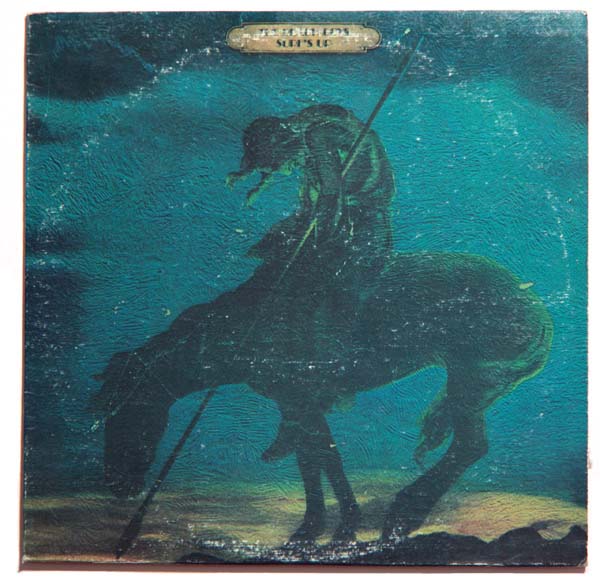 As the soft autumn sun begins its early descent, we make our way toward the Caprice’s garage, a charming, quiet building, surrounded by trees—one would never suspect the sort of power resting inside. We end our listening with an absolute feast of percussion, “World Machine,” by Level 42, and finally with the Beach Boys’ classic, “Disney Girls,” a wonderful song and one introduced to me by Micah when Stereophile editor John Atkinson and I visited back in the summer of last year.
Open cars and clearer stars
As the soft autumn sun begins its early descent, we make our way toward the Caprice’s garage, a charming, quiet building, surrounded by trees—one would never suspect the sort of power resting inside. We end our listening with an absolute feast of percussion, “World Machine,” by Level 42, and finally with the Beach Boys’ classic, “Disney Girls,” a wonderful song and one introduced to me by Micah when Stereophile editor John Atkinson and I visited back in the summer of last year.
Open cars and clearer starsThat’s what I’ve lacked
But fantasy world and Disney girls
I’m coming back















