

"They lack the original analog warmth." "The AI-powered 'demixing' process has produced a clearer sound with better separation." "The new mixes lose the magic of his father's original '60s mixes." "The selective use of compression is pure heresy."
Opinions vary, but like everything connected to The Beatles, charged arguments over Giles Martin's ongoing remastering of, and sonic tinkering with, the band's hallowed recording catalog are unending. To be fair, potentially changing the band's sonic profile to something more "modern" was always a no-win proposition, with zero chance of pleasing everyone. With that as a given, George Martin's son has shown that he's hyperaware that any monumental changes to the sound of Beatles' albums or singles would likely incite a rebellion. Any Coke–vs–New Coke situation would also likely endanger his burgeoning career as the Beatles' chosen sonic whisperer. To my ears, he has avoided outright remixing mistakes and in many cases has made slight but audible improvements.
The first three Beatles Anthology volumes, released in 1995 and 1996, have now been reissued on vinyl and CD exactly as they were, with no additions or deletions. A small amount of the material from the original trio of releases (23 tracks out of 155 total between the three original Anthologys) has been sonically tweaked by Martin. Most of the changes involve "stereo processing," which according to the liner notes is "a subtle spread of the mono signal—not to be confused with 'electronic reprocessed stereo' used in the 1960s & 1970s." The results are not dramatic, but they are audible to close listeners, particularly in live tracks like "She's a Woman" (Anthology 2, Live in Tokyo) where the dynamic range has also been increased. Such tweaks add body to several home- or studio-recorded tracks including a home demo and a studio take of "Strawberry Fields Forever" (Anthology 2). While purists may want to hear traces of the horrors of that '60s abomination "electronic reprocessed stereo," this is clearly stereo processing on another level.
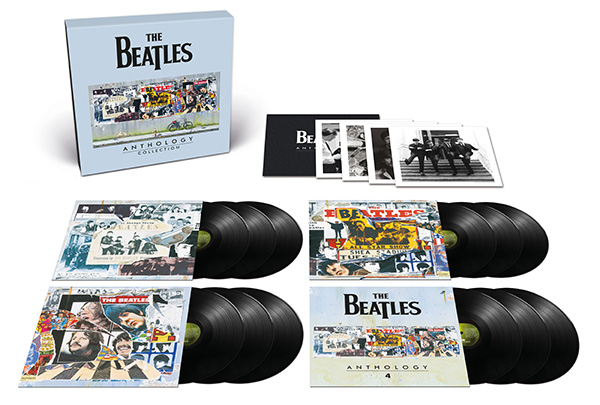
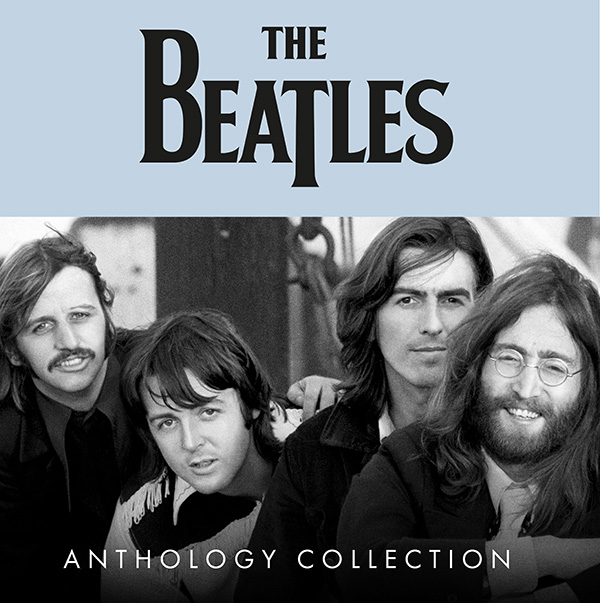 The big selling point for longtime fans in this massive new reissue (12 LPs, $374.00; 8 CDs, $109) is the addition of a 36-track Anthology 4 (also available as a stand-alone CD for $29.99), which contains 13 previously unreleased session outtakes from 1963 to 1969 as well as new mixes of The Beatles' Anthology-associated hit singles: the Grammy-winning "Free as a Bird" and "Real Love." Among the unreleased tracks, one billed as (first version, take two) of "Nowhere Man" and a rehearsal version of "All You Need Is Love" hint at the band's fabled creative process. Speaking purely of sound, Paul McCartney's bass and Ringo Starr's drums, brought forward in both the new single mixes and the stereo processing mixes, continue to be the biggest winners from Giles Martin's sonic endeavors.
Speaking of the perpetually underrated Richard Starkey—Ringo Starr—who's best known as the band's good sod and subtle leavening agent, he, like his bandmates, embarked on a solo career near the end of the famed quartet's brief lifespan. His catalog of 21-and-counting post-Beatles solo recordings has been a very mixed bag. After a quick stumble through a pair of middling albums—the big band era standards-filled Sentimental Journey (1970) and his first made-in-Nashville "country" album, Beaucoups of Blues (1970)—both of which can charitably described as "earnest," Starr got serious about making a rock album in 1973. Richard Perry, best known for producing
Carly Simon's breakthrough single "You're So Vain," came aboard as producer. The other three Beatles added musical contributions, as did an all-star army of collaborators including members of The Band, Marc Bolan (T. Rex), Billy Preston, Harry Nilsson, Jim Keltner, and James Booker. Tracked at Sunset Sound in Los Angeles, the resulting album, Ringo, is easily the high point of his solo career. It reached Number 2 on the Billboard 200 US albums chart on the strength of a pair of singles, "Photograph," which he co-wrote with George Harrison, and "Oh My My," another co-write, this one with Vini Poncia. Both remain career high points.
The big selling point for longtime fans in this massive new reissue (12 LPs, $374.00; 8 CDs, $109) is the addition of a 36-track Anthology 4 (also available as a stand-alone CD for $29.99), which contains 13 previously unreleased session outtakes from 1963 to 1969 as well as new mixes of The Beatles' Anthology-associated hit singles: the Grammy-winning "Free as a Bird" and "Real Love." Among the unreleased tracks, one billed as (first version, take two) of "Nowhere Man" and a rehearsal version of "All You Need Is Love" hint at the band's fabled creative process. Speaking purely of sound, Paul McCartney's bass and Ringo Starr's drums, brought forward in both the new single mixes and the stereo processing mixes, continue to be the biggest winners from Giles Martin's sonic endeavors.
Speaking of the perpetually underrated Richard Starkey—Ringo Starr—who's best known as the band's good sod and subtle leavening agent, he, like his bandmates, embarked on a solo career near the end of the famed quartet's brief lifespan. His catalog of 21-and-counting post-Beatles solo recordings has been a very mixed bag. After a quick stumble through a pair of middling albums—the big band era standards-filled Sentimental Journey (1970) and his first made-in-Nashville "country" album, Beaucoups of Blues (1970)—both of which can charitably described as "earnest," Starr got serious about making a rock album in 1973. Richard Perry, best known for producing
Carly Simon's breakthrough single "You're So Vain," came aboard as producer. The other three Beatles added musical contributions, as did an all-star army of collaborators including members of The Band, Marc Bolan (T. Rex), Billy Preston, Harry Nilsson, Jim Keltner, and James Booker. Tracked at Sunset Sound in Los Angeles, the resulting album, Ringo, is easily the high point of his solo career. It reached Number 2 on the Billboard 200 US albums chart on the strength of a pair of singles, "Photograph," which he co-wrote with George Harrison, and "Oh My My," another co-write, this one with Vini Poncia. Both remain career high points.
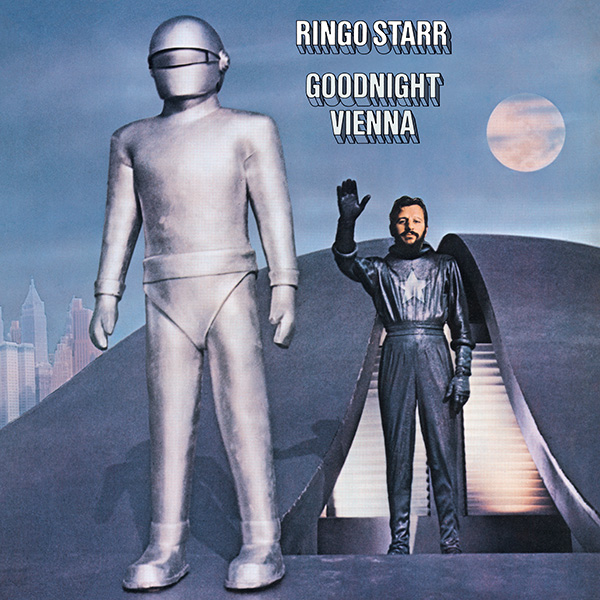 While several later albums including Time Takes Time (1992) and Postcards from Paradise (2015) also have their moments, the follow-up to Ringo, 1974's Goodnight Vienna, with Lennon, Elton John, and Dr. John assisting, is the other most memorable Starr solo collection. With the Lennon-penned title track "(It's All Down to) Goodnight Vienna," and Elton John contributing the John/Taupin number "Snookeroo," this album, much like its predecessor, benefits greatly from the work of Starr's famous friends.
For the first time in the U.S. since 1980 (Goodnight Vienna) and 1986 (Ringo), Starr's best solo records have been reissued on vinyl by UME without bonus tracks nor remastering. While the sound is acceptable on these LPs, which were pressed at Conectiv-Mexico, none are better-sounding than the originals. The reissues, though, are all pressed on colored vinyl. Ringo is the color of molten lava, and Goodnight Vienna is in purple/brown "psychedelic waves."
Often derided as the least-essential Beatle, Ringo deserves credit for maintaining a wide circle of devoted musical colleagues and for getting better at knowing what he can sing and what he can't sing. The irrepressible Ringo, constantly flashing the two-fingered peace sign, has never taken himself or his career too seriously, which may be why, at 85, he's still on the road, having fun and knocking them dead.
While several later albums including Time Takes Time (1992) and Postcards from Paradise (2015) also have their moments, the follow-up to Ringo, 1974's Goodnight Vienna, with Lennon, Elton John, and Dr. John assisting, is the other most memorable Starr solo collection. With the Lennon-penned title track "(It's All Down to) Goodnight Vienna," and Elton John contributing the John/Taupin number "Snookeroo," this album, much like its predecessor, benefits greatly from the work of Starr's famous friends.
For the first time in the U.S. since 1980 (Goodnight Vienna) and 1986 (Ringo), Starr's best solo records have been reissued on vinyl by UME without bonus tracks nor remastering. While the sound is acceptable on these LPs, which were pressed at Conectiv-Mexico, none are better-sounding than the originals. The reissues, though, are all pressed on colored vinyl. Ringo is the color of molten lava, and Goodnight Vienna is in purple/brown "psychedelic waves."
Often derided as the least-essential Beatle, Ringo deserves credit for maintaining a wide circle of devoted musical colleagues and for getting better at knowing what he can sing and what he can't sing. The irrepressible Ringo, constantly flashing the two-fingered peace sign, has never taken himself or his career too seriously, which may be why, at 85, he's still on the road, having fun and knocking them dead.
The big selling point for longtime fans in this massive new reissue (12 LPs, $374.00; 8 CDs, $109) is the addition of a 36-track Anthology 4 (also available as a stand-alone CD for $29.99), which contains 13 previously unreleased session outtakes from 1963 to 1969 as well as new mixes of The Beatles' Anthology-associated hit singles: the Grammy-winning "Free as a Bird" and "Real Love." Among the unreleased tracks, one billed as (first version, take two) of "Nowhere Man" and a rehearsal version of "All You Need Is Love" hint at the band's fabled creative process. Speaking purely of sound, Paul McCartney's bass and Ringo Starr's drums, brought forward in both the new single mixes and the stereo processing mixes, continue to be the biggest winners from Giles Martin's sonic endeavors.
Speaking of the perpetually underrated Richard Starkey—Ringo Starr—who's best known as the band's good sod and subtle leavening agent, he, like his bandmates, embarked on a solo career near the end of the famed quartet's brief lifespan. His catalog of 21-and-counting post-Beatles solo recordings has been a very mixed bag. After a quick stumble through a pair of middling albums—the big band era standards-filled Sentimental Journey (1970) and his first made-in-Nashville "country" album, Beaucoups of Blues (1970)—both of which can charitably described as "earnest," Starr got serious about making a rock album in 1973. Richard Perry, best known for producing
Carly Simon's breakthrough single "You're So Vain," came aboard as producer. The other three Beatles added musical contributions, as did an all-star army of collaborators including members of The Band, Marc Bolan (T. Rex), Billy Preston, Harry Nilsson, Jim Keltner, and James Booker. Tracked at Sunset Sound in Los Angeles, the resulting album, Ringo, is easily the high point of his solo career. It reached Number 2 on the Billboard 200 US albums chart on the strength of a pair of singles, "Photograph," which he co-wrote with George Harrison, and "Oh My My," another co-write, this one with Vini Poncia. Both remain career high points.
While several later albums including Time Takes Time (1992) and Postcards from Paradise (2015) also have their moments, the follow-up to Ringo, 1974's Goodnight Vienna, with Lennon, Elton John, and Dr. John assisting, is the other most memorable Starr solo collection. With the Lennon-penned title track "(It's All Down to) Goodnight Vienna," and Elton John contributing the John/Taupin number "Snookeroo," this album, much like its predecessor, benefits greatly from the work of Starr's famous friends.
For the first time in the U.S. since 1980 (Goodnight Vienna) and 1986 (Ringo), Starr's best solo records have been reissued on vinyl by UME without bonus tracks nor remastering. While the sound is acceptable on these LPs, which were pressed at Conectiv-Mexico, none are better-sounding than the originals. The reissues, though, are all pressed on colored vinyl. Ringo is the color of molten lava, and Goodnight Vienna is in purple/brown "psychedelic waves."
Often derided as the least-essential Beatle, Ringo deserves credit for maintaining a wide circle of devoted musical colleagues and for getting better at knowing what he can sing and what he can't sing. The irrepressible Ringo, constantly flashing the two-fingered peace sign, has never taken himself or his career too seriously, which may be why, at 85, he's still on the road, having fun and knocking them dead.















