

While we will not pretend for a moment that the millennium of high fidelity has arrived, we are finally having to face up to a fact that has been staring us in the face and nudging us in the ribs increasingly rudely of late: The state of the art of sound reproduction has gotten to be pretty damned sophisticated. Perfection is just as unattainable as it was almost 100 years ago when Thomas Edison was diddling with different diaphragm materials on his phonograph because some sounded better than others.
Most of today's reproducing equipment is good enough that, while there will undoubtedly be further improvements, it is unlikely that we will ever again see dramatic breakthroughs in reproduced realism that are comparable to the introduction of electronic (or, electric, if you will) recording, stereophonic sound, or electrostatic loudspeakers. (We specifically exclude the LP disc from that list because its major contribution was compactness—vinyl discs and comparable recording equipment could have improved the sound of 78s as much if not more.)
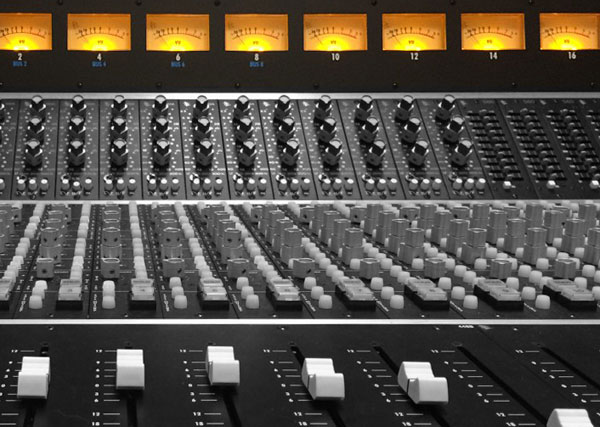
But while home reproduction of sound was improving all these years, look what's been happening to the software we must depend on for program material to play through these super systems! Orchestras are recorded in multiple mono, with instruments "placed" by selective channel balancing. Recording studios have, almost universally, converted their mixing consoles to solid-state at a time when increasing numbers of solid-state designers are recognizing tubed components as the ones to beat (or to equal) the classical recording companies are still evaluating their efforts through amplifiers and loudspeakers that perfectionists would have scorned 10 years ago, and announce to the world at large that since a recording is a "work of art unto itself" and thus bears no relation to the live-music experience, they are no longer even striving for musical realism—ie, high fidelity. Is it any wonder then that all the money we invest in better and better reproducing equipment continues to bring us so little satisfaction in terms of sound.
In other words, while we applaud the continuing efforts of designers to come up with ever-better home hi-fi components, and intend to follow their advances with interest (reporting them herein as usual), we cannot ignore any longer the fact that it is the recordings, not the playback equipment, that are the limiting factor in the sound that we hear at home. And it is what goes on at the recording end of the audio chain that is going to occupy an increasing amount of our time and resources for the foreseeable future.
This is not to say that we will lose interest in the reproducing equipment. As we said, perfection is not yet here, and the few truly excellent-sounding recordings we can lay our hands on, like the Fulton/Ark and the Mayorga/Sheffield discs, will continue to sound better as the playback equipment improves. We'll continue to keep you informed of what's going on in the hardware field, but we are also going to mount a concerted effort to do something about the recordings of performers and works of more substantial stature, which is where the worst offenses against musical fidelity are committed.
It has in fact struck us that, even among recordings of the same company, the most abysmal crimes are committed against what the company believes to be the most potentially saleable releases. Thus, Columbia can release a magnificent recording of Mahler's First Symphony with Bruno Walter and the "Columbia Symphony Orchestra" (an Italian pickup orchestra) in one month and two positively ear-shattering recordings by Leonard Bernstein and the New York Philharmonic Orchestra the next month (footnote 1).
We all know by now that much of what ails commercial recordings—particularly the products of the major companies—is the result of tampering with the sound for various and sundry reasons, and it is easy to blame this on a cynical corporate disregard for quality or, worse, self-conscious toadying to the misguided tastes of the average record buyer or the magazine critics who show their scorn for "hi-fi" by trying to judge recorded quality on a $199.95 player. But any direct personal contact with the people who produce those recordings makes it immediately obvious that most of them do care, and are trying to turn out genuinely good recordings.
With them, the crux of the problem would appear to be that they are not really hearing the sound that they are putting on their discs, either because they have not taken the trouble to train their ears to function as sharply as do those of the average Stereophile subscriber, or because they are blissfully unaware that standards of home music reproduction have risen dramatically during the past 10 years.
It is no longer just the audio maniac with the $10,000 system who is complaining to those record companies about their shoddy sound, it is also the people who own FMI 80s, EPI 100s and Dyna A-25s. Yet the individual consumer who writes a complaining letter to a major record company is greeted either by a politely noncommittal "thank you for your comments" form letter or, as though he is an obvious crackpot—"After all, most of our customers like our products!"—his complaints are beyond serious consideration. We are going to try to change all that.
It may not be easy. Major record companies, like other major companies, suffer from a tremendous burden of corporate inertia. Once they start doing something in a certain way, it takes great effort on their part to change things, so they must be completely convinced that change is necessary. And despite noble proclamations about artistry and the serving of music, it is the primary function of a big recording company to make money for its stockholders. Thus, in order for us to get any positive response from these companies to our pleas for better recordings, we will first have to prove that better recordings would boost sales, and then prove to them that their recordings could be better than they are now.
What will make this all the more difficult is the fact that the record companies have ample evidence, in their files of consumer mail and record reviews, to prove that the public and the critics do like what they're doing now, and it won't be easy to convince them that critics can be wrong (as witness the buzzahs with with they greeted the first of RCA's appalling "Dynagroove" releases), and that many buyers will like what the critics say is good. But since it appears that no domestic record company has even tried to produce a no-holds-barred, ungimmicked symphonic recording during the past 15 years, there is no way of knowing how the critics and the buyers would react to such a thing were they to encounter it. We are going to try and make that happen.
To this end, we are going to start by mailing letters to the major record companies, asking for answers to some of the questions we all ask ourselves from time to time when we audition a new recording. Where we go from there will depend on whether their response indicates an interest in cooperating with us, or whether they dismiss us as insolent spokesmen for the lunatic fringe. We will publish our letters, as well as the replies, for the edification of all.
We will also be investigating such things as what happens when you replace the solid-state electronics of an excellent recorder like the Revox A-77 with tube electronics patterned after the Audio Research SP3A-1, why it is that some of the most sought-after custom recording studios in the country are using tube-type electronics, and why manufacturers of professional tape recorders consider a frequency response of ±2dB to be "adequately smooth" when most of us can readily hear a broadband deviation of less than ±0.5 dB.
Who knows, maybe all discs could be as realistic as the Mayorga/Sheffield releases. We shall see what we can do about it.—J. Gordon Holt
Footnote 1: That was before Mahler was "pop."
Footnote 1: That was before Mahler was "pop."















