I was introduced to
Scotch Tapes, “the worst hi-tech music label ever,” on December 9, by a
Twitter post from
Jagjaguwar. Oneida would be releasing a limited-edition
cassette through Scotch Tapes. This was interesting news to me, first because
I’ve been fascinated with the idea of a “cassette tape revival,” and second because Oneida is a well-established name in the world of underground rock bands. Why would Oneida release work on a format that had been all but forgotten by the music industry? Why cassettes?
As soon as I had asked myself the stupid question, the obvious answer came to me: Why not? Then I went to the Scotch Tapes site, took a look at the Oneida cassette, and was hit by another obvious answer: It’s really cool. A live set taken from a 2002 performance in Italy, the Oneida release is an explosion of color and sound, limited to just a handful of copies. Like many of Scotch Tapes’ offerings, it sold out in just a few days.
Browsing
The Tape Store, I tripped over several strange, wonderful band names:
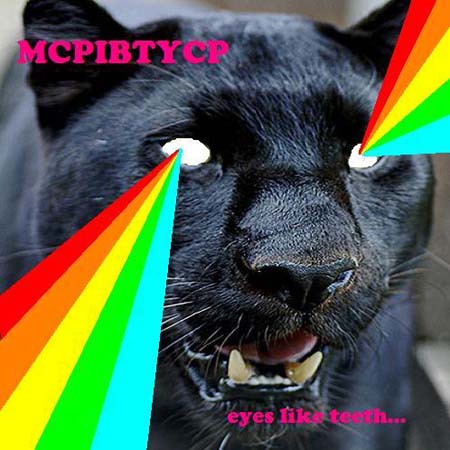
My Cell Phone Is Better Than Your Cell Phone (MCPIBTYCP),
Tayside Mental Health,
Whore Business,
Crappy Dracula,
Coconut Coolouts,
Terror Bird. I was intrigued! A quick visit to several of these bands’ Myspace pages confirmed that I’d stumbled upon something special. Three days passed before I could tear myself away from Terror Bird’s dark, damaged piano lines and otherworldly vocals. An e-mail exchange with label owner, Al Bjornaa, reinforced my feeling that this sudden wave of cassette tapes wasn’t really a “revival,” but an overdue acknowledgement of a culture that never really left.
On October 8, Scotch Tapes celebrated its one year anniversary. In
a Myspace blog post, Bjornaa discusses the joys of exceeding expectations, working with his heroes, and making new friends. I get the sense that running an independent cassette tape label in 2009 is an especially fulfilling endeavor, one that fosters meaningful relationships and provides both manufacturer and consumer with an obvious sense of pride. These are, after all, handmade goods: colorful, creatively packaged, and with artwork often designed by the musicians themselves. For a certain type of collector and fan, the limited-edition cassette tape provides a heightened connection to a favorite band. Because of this, cassettes, like vinyl LPs, may very well result in greater
art. Unlike with compact discs, the listener cannot easily skip from track to track. Unlike with downloads, songs are inextricably tied to albums. Albums, at their best, are complete thoughts, each song a chapter of a novel or a face in a photograph. The nature of the limited-edition cassette tape strengthens the bond between song and album, as well as that between artist and audience. But I’m afraid I’m getting all highfalutin about it. In
a response to the PopMatters’ feature, “
Reconsidering the Revival of Cassette Tape Culture,” Al Bjornaa makes a simple case for the value of cassettes:
People seem to dig tapes. Can’t that be a good enough reason for keeping them around?
Can’t it?
At the start of my revitalized interest in cassettes, I posted
a thread in our forum. First, I wanted to share my enthusiasm for what seemed to be an exciting, albeit small, development in the music industry. Second, I wondered if we could come up with ideas as to why such an old, impractical technology would be embraced today. The predictable animosity ensued, but in that animosity, something else became clear: Cassettes, as capsules for expression and communication, do an extremely good job of hitting their targets. That is, through cassettes, artists speak almost directly to their intended audience; others won’t care, or will remain unaware of the art’s existence. And there’s something simple and pure about that. In all of the contempt for a harmless, old-fashioned format, some people seemed to forget the most important thing:
music. I asked the question, “If your favorite musician released a new piece of work on cassette, in unique, hand-designed packaging, limited to 50 copies, would you want to own it?”
The cynics offered no response. I guess that means “No.” Unless it means “Yes.” But whatever.
Of course there’s something else involved. The choice to release and listen to music on cassette is to some degree a statement against modern technology. Visit the Myspace page for Al Bjornaa’s solo project, MCPIBTYCP, and you’ll find the following statement:
MY CELL PHONE IS BETTER THAN YOUR CELL PHONE thinks technology needs to be taken in smaller doses. The Human Race is becoming an actual race...with no real end and no real prize.
And that’s a sentiment I find very attractive. Technology is moving faster than most people can handle. When does technology become redundant? If we can’t keep up with it, does it matter? If it’s superseded by the time we've discovered it, should we even bother? What’s the point of being on the cutting edge, if little on the cutting edge lasts very long? I’ve always said that I’m simply searching for something that
lasts; whether it be art, music, or relationships,
quality lasts. Certain audiophiles may question my allegiance to sound, but high-end audio is about nothing if not quality—quality sound, yes, but also quality
experiences, in general.
Sound isn’t everything.
While I can easily imagine the future of music being filled with
digital downloads,
streamers, and
servers, I have no reason to expect that artists will ever choose convenience or practicality over quality. And the artists that I most admire are those that refuse to relinquish control of their work. Instead, they demand to do it themselves. And as an active listener, I have no problem with searching out those artists. The rewards are great. And, sure, I’m choosing to add more
stuff to my home, but stuff is only clutter when it’s of no value. Cassette tapes, then—on average, seven or eight bucks a piece—are beautiful pieces of
art that offer an extraordinary level of quality and promise to provide lasting enjoyment. I’m looking forward to discovering outstanding new music through the cassette tape format, adding quality to my life, even if it means I’m being old-fashioned.