

Analog #246: AudioQuest Niagara 7000 Low-Z Power Noise-Dissipation System
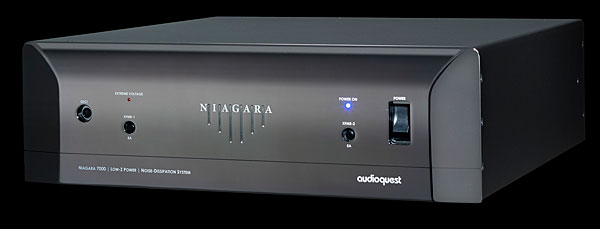
Are you old enough to remember when the wires connecting speakers to even the most expensive and sophisticated electronics were 16-gauge, multistrand lamp cord, and the terminals on speakers and amplifiers were just little screws? Sometimes those screws wouldn't even secure all of the wires' strands, but as long as loose strands from one screw didn't touch loose strands from the other, it was good enough . . . and back against the wall went your bookshelf speakers.
Analog Corner # 247: Dr. Feickert Firebird turntable, Viva Fono MC phono preamplifier, AcroLink and Fono Acustica interconnects
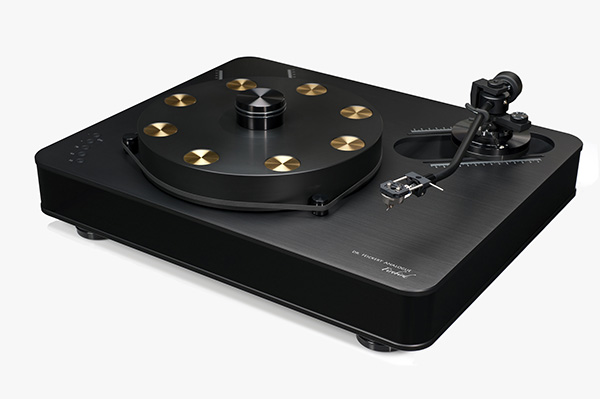
Dr. Feickert Analogue's top-of-the line turntable, the Firebird ($12,500), is a generously sized record player designed to easily accommodate two 12" tonearms. Its three brushless, three-phase DC motors, arranged around the platter in an equilateral triangle, are connected to a proprietary controller in a phase-locked loop (PLL); according to the Firebird's designer, Dr. Christian Feickert, a reference signal from just one of the motors drives all threethus one motor is the master while the other two are slaves. (Man, today that is politically incorrect, however descriptively accurate.)
Analog Corner # 305: Degritter record cleaner & Aidas Gala Gold LE cartridge
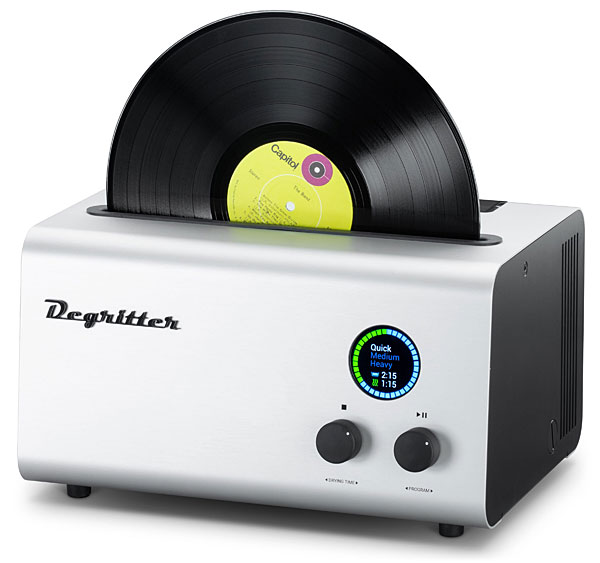
Cavitation revolutionized record cleaning more than a decade ago, when Reiner Gläss's Audiodesksysteme introduced its original fully automatic machine. Mr. Gläss's innovative machine, which automatically spun the record in ultrasonically cavitated water, then dried it with fans, at first was plagued with reliability issues, and because it is sealed, it was not easy to repair.
Analog Corner #198: More Power To Ya! The Shunyata Hydra Triton
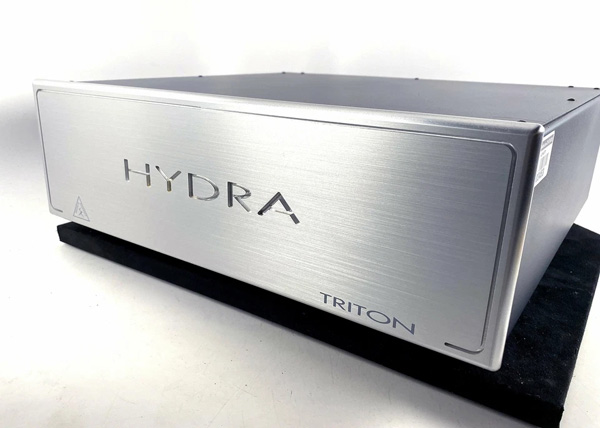
We interrupt our regularly scheduled analog programming for this important message: Shunyata Research's proprietary DTCD Analyzer finally proves that power cords, power conditioners, circuit breakers, even fuses measure differently, and that perhaps these measured differences are what audio enthusiasts hear when they swap out these elements in their systems.
Analog Corner #199: Wadax Does Analog Digitally

Michael Fremer by Jeff Wong
Other than for archiving and iPod use, is there any good reason to digitize vinyl playback? Pure Vinyl's Rob Robinson thinks so. His software offers RIAA and dozens of digital-domain equalization curves that he claims are inherently superior to any analog-domain filtering.Analog Corner #200: The Soundsmith Goes Direct-Cut; Soundsmith Sussurro phono cartridge
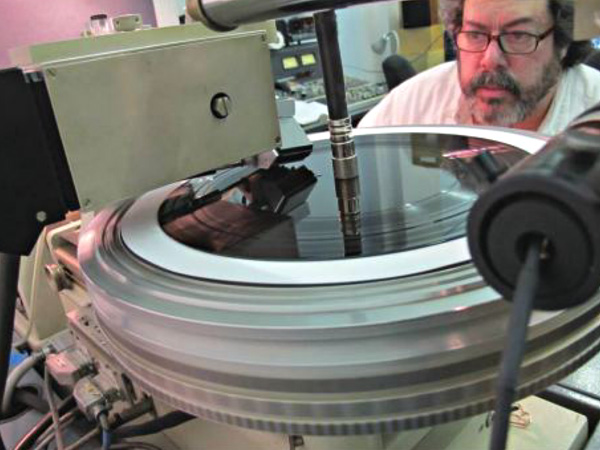
Peter Ledermann's head rose from his Neumann SX-74 cutting lathe. He looked concerned. "The platter stopped turning the other day and I'm not exactly sure why," he said. "It started working again, but you know, these things are old..."
Analog Corner #202: CD takes on LP and Atlas takes on Titan

The vinyl revival was bound to produce a backlash. On February 10 2012, Science Friday, a weekly NPR program, ran a segment titled "Why Vinyl Sounds Better than CD, or Not." Both guests said "or Not" without really explaining why. The show made me even more crazy than usual.
Analog Corner #203: A Whole Lotta Analog Stuff!

The latest product from Graham Slee is the Reflex M ($1240). Like the company's previous designs, the lightweight Reflex M is housed in a small aluminum case and is powered by an outboard 24V DC power supply. RIAA equalization is applied actively within the negative feedback loop.
Analog Corner #204: The Onedof Turntable, a Smooth Operator
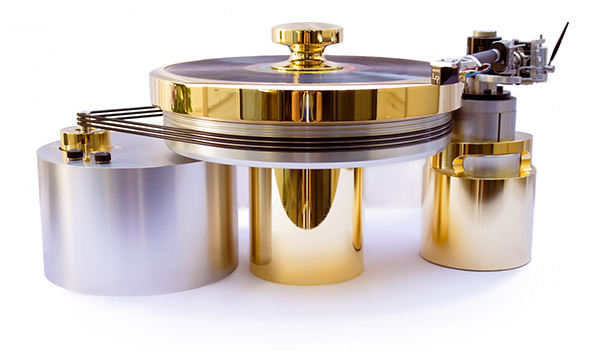
Will yet another $150,000 turntable fly in 2012? I'm speaking metaphorically, of course, but if any designer could make a turntable literally fly, it would be the Onedof's designer, Aleks Bakman.
Analog Corner #205: H&S Ice Blue phono cartridge, Manley Chinook phono preamplifier

AnalogPlanet.com has gone live. Allan Toussaint should title an album. Elvis Costello should write a song. I'm running the website, and will continue to write this monthly column for Stereophile, as well as equipment reviews (though fewer of the latter).