Think Pieces

Sort By:  Post Date TitlePublish Date

Bob Katz on Loudspeaker Isolation

(Photo by Mary Kent)

Of late, Stereophile has written a lot about vibration-isolating footers under loudspeakers. The idea of isolating loudspeaker vibrations from floors is controversial. Many (perhaps most) designers believe that dynamic loudspeakers in particular—those with significant moving mass in their cones—should be rigidly connected to the floor as is typically done with spikes. A rigid connection of the speaker to the floor reduces the Newton-1 reactive motion of the cabinet in response to the motion of the cones, heavy woofers in particular. Cabinet motion could be expected to smear the loudspeaker's sound.

Humidity, Concert Hall Sound & Spectral Tilt

I want to talk about the acoustics of live music and recordings. As I write this I'm back in Boston for a week, re-calibrating my ears with (excuse the expression) the "absolute sound" of live music in various concert halls. On Friday the Boston Symphony played symphonies by Mozart and Shostakovich, producing (as always) magnificent sound with the aid of Symphony Hall's near-legendary acoustics.

Improving on Perfection?

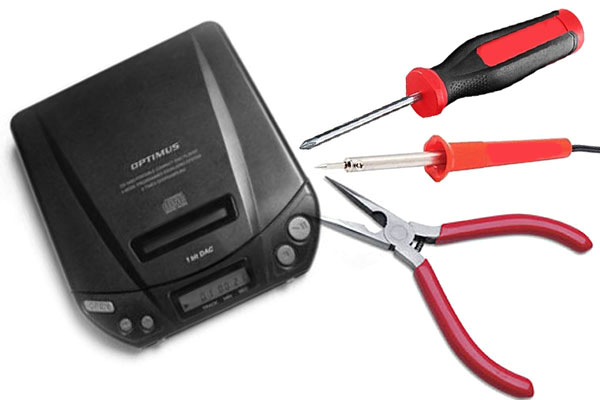
Most audiophiles are aware of the modification and add-on aftermarket. A few have learned the hard way that modifier competence varies from primitive magic and sales hype to real engineering skill. Some modifiers are serious audiophiles who are also good technicians; others are scam artists whose only goal is to make a quick buck on the latest fad. If you have only a rudimentary understanding of electronics, you may not be able to make a distinction. Even the most jaded and battle-hardened among us can still be hooked and reeled in by a slick sales presentation.

A High-Resolution Audio Primer

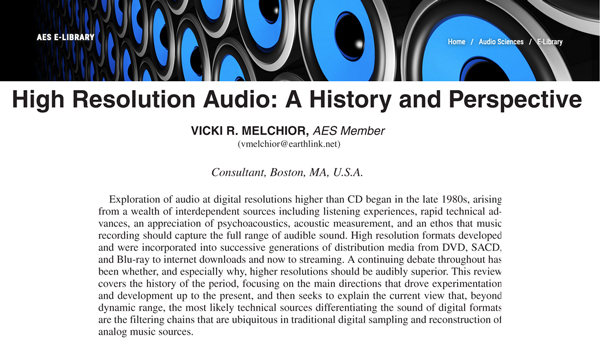
January's Industry Update included a report on a scientific article presented at last year's AES meeting, in which the authors used test tones and a modest audio system (albeit in an anechoic chamber) to prove that listeners can discriminate between high-rez and CD-rez audio. This is important because scientific evidence of an audible difference between high-rez and CD-rez music is considered weak by some, even as anecdotal evidence grows stronger by the day.

As I pondered this, I recalled a recent paper I'd seen in the Journal of the Audio Engineering Society but hadn't yet read. "High Resolution Audio: A History and Perspective," which the AES has made available free online, does precisely what the title says: reviews the history of digital audio beyond CD-rez and frames the issue of high-rez audio's audible superiority on the basis of the available evidence.

Why Do Any of This At All?

I've just returned home from one of the greatest concerts of my life, and felt absolutely compelled to share my thoughts with you. Yo-Yo Ma performed all six of J.S. Bach's Cello Suites, from memory, over a mesmerizing two-and-a-half hours at Red Rocks Amphitheatre, in Morrison, Colorado. It was a truly special experience.

Cables & the Case for Solder

When you graduate from mass-market hi-fi to high-end audio, one of the first things you notice is that audiophile gear dispenses with the gadgets and gimmicks that clutter up the front panels of most stereo receivers and integrated amplifiers. The dominant philosophy in mass-market design is that features sell products: the more functions a product has, the more desirable it will seem in the store. High-end designers, on the other hand, prefer the KISS approach: Keep It Simple, Stupid!

The Improvement Disease

It has been said that the high-end audio industry has a weakness which perversely has also helped to maintain its growth. The evolutionary process whereby designs are improved, upgraded, and supplanted at regular intervals keeps everyone interested, and of course affords reviewers useful employment. On the other hand, once a purchase has been made there may be resentment on the part of owners who find that, by the time their choice has become established and awarded sufficient review recommendation, a product upgrade is already in the pipeline.

Living with the Lamms

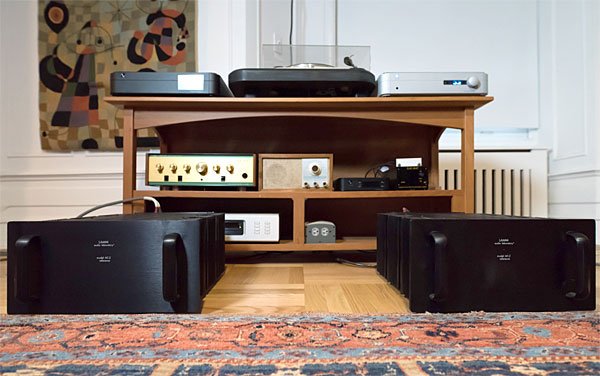
Although I've never tried one, I think "lifestyle" audio systems are a bit of a joke. My in-laws' decade-old Bose Wave Radio sounds good for what it is, although its obvious flaws—boomy, undefined lower mids masquerading as bass, a frustrating lack of sonic and musical resolution, etc.—become grating fairly quickly. These days, there are far more accomplished and expensive lifestyle systems out there, but because I haven't tried them I won't comment on them, except to say that I'm not really interested.

Advertisement
Advertisement
Advertisement