
J. Gordon Holt

Sort By:  Post Date TitlePublish Date

Fostex M22RP/S M-S microphone
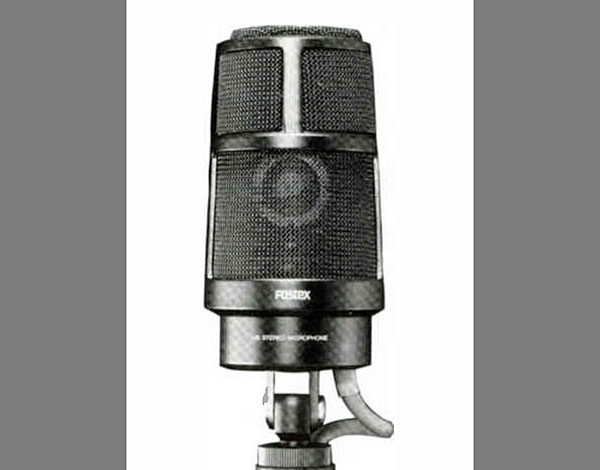
Coincident stereo miking (footnote 1) has two advantages and one disadvantage. Its advantages are that it gives the most stable, specific imaging of any mike technique, and its outputs can be summed for mono reproduction without loss of quality. Its disadvantage is that, in most of its configurations, it tends to produce an overly narrow, shallow soundstage.

Test Your Hi-FiQ

How do you rate as an audio expert? Test yourself on these 25 questions.

All of the following are multiple-choice questions, dealing with things that every audio hobbyist should know, either before or after completing the test. Most of them are easy, but take your time in answering and don't jump to conclusions. Some of the questions are quite tricky, and wrong answers will be subtracted from your final score, so read them and the possible answers carefully before committing yourself. Don't guess if you aren't fairly sure.

Workin' on the Railroad

Most audiophiles know Mobile Fidelity as the record company with the philosophy of resurrecting old, important, recorded performances and re-releasing them with (hopefully) the kind of sound they should have had in the first place. Few audiophiles are aware that Mobile Fidelity is also the name of a (different) recording company which collects sound effects in four channels for motion picture and television post-production.

The Revolution That Never Was

Not too many years ago, high-fidelity movement was being hailed from all quarters (and many halves) as a revolution. In the sense that it took the country storm, and made billions of dollars for many entrepreneurs during heyday, it was indeed a revolution. But now the public has grown tired of high fidelity and is turning other electronic diversions—video, video games, and computering. And what, as of this summer of 1982, do we have to show for the high-fidelity revolution?

Advertisement
Advertisement
Advertisement