Dick Olsher

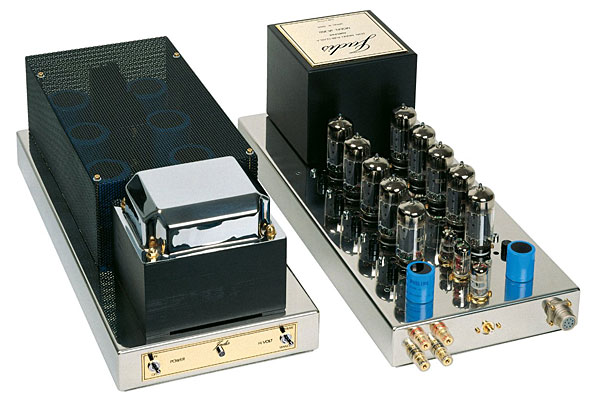
Pass Laboratories Aleph 0 monoblock power amplifier

The Aleph Null, or 0, represents Nelson Pass's maiden product under the Pass Laboratories banner. When he left Threshold several years ago, Pass had the luxury of starting over with a clean slate, and decided immediately that he wanted to design a single-ended MOSFET amp. The result is aptly named after Georg Cantor's first transfinite number: Aleph Null, the gateway to higher-order infinities. Just as Cantor's transfinite mathematics stretched minds with its novel conceptual view of the infinite, the Pass Aleph 0 tantalizes the imagination with a new dimension in the future of solid-state amplification: a single-ended output stage.
Continue Reading »

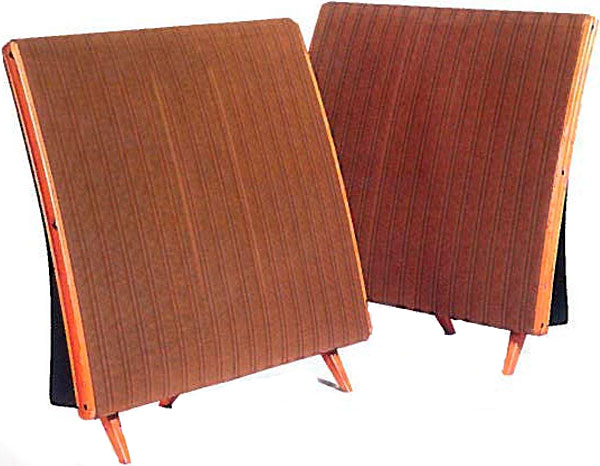
Magnepan MG-20 loudspeaker

Magnepan founder Jim Winey could be considered the patriarch of planar loudspeakers. His innovative leadership of and commitment to the technology over the past 20 years have propelled Magnepan to a position of preeminence in the speaker business. You won't find any hybrids rolling off the production line at Magnepan's corporate headquarters in White Bear Lake, Minnesota. The entire Magnepan line is devoted strictly to planars that use ribbon tweeters and quasi-ribbon midranges and woofers—not a stray dynamic woofer in the lot!
Continue Reading »

Dick Olsher Dahlia speaker

Do-It-Yourself (DIY) loudspeaker projects are quite common in the UK, where details about several excellent designs, including a recent one by Martin Colloms, have been published for public domain consumption. Stateside, the situation is rather grim, where only an occasional subwoofer project (always popular) makes it into the commercial magazines.
Continue Reading »

Museatex Hybrid 6 loudspeaker

I find quite appealing the image invoked by Museatex to describe its Real Time Ripple Effect (RTRE) loudspeaker line: a stone rippling the surface of a "still pond on a warm summer afternoon." Replace the stone with a voice-coil attached to the center of a stretched Mylar diaphragm and you begin to get a glimpse of the RTRE technology's conceptual beauty and promise. The idea of cohesively covering at least the midrange and treble with a single driver, without crossover filters, quickens my audio pulse.
Continue Reading »

Lindsay-Geyer Highly Magnetic Cables

Why cable again?

Well, the obvious reason is that it has been a while since my last foray into Cableland (July 1988). Many new products have been introduced in the interim, so it appeared appropriate to once again open Pandora's Box. Those of you who still remember my speaker cable article of 2½ years ago will recollect the considerable controversy that evolved from that project.

Some of the response was quite predictable, though the venom with which it was laced was not. The manufacturers of those outrageously priced "garden-hose"–type cables that I failed to rave about were more than just perturbed.

Continue Reading »

Quad ESL loudspeaker

High fidelity took a giant step forward in 1956 with Peter Walker's introduction of the Quad ESL. Walker's research efforts had been motivated by his firm belief in the superiority of the electrostatic dipole over the box loudspeaker, but actually to take the economic plunge and market such a speaker was surely an act of bravery. After all, those were the pre-stereo, pre-audiophile days of the mid '50s, and the public's tastes and expectations were relatively unsophisticated. The average front end was abominable by today's standards, so that making definitive assessments of loudspeaker quality was a difficult task at best.
Continue Reading »

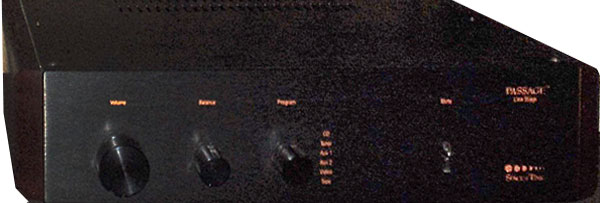
TARA Labs Space & Time Passage preamplifier

Better known for their speaker cables and interconnects, The Absolute Reference Audio Labs (TARA Labs) has quietly branched out into electronics and loudspeakers. Their Passage is a line-level–only preamp. I actually favor such a modular approach to preamp design. Standing as we are at the dawn of the digital audio age, the breakup of the traditional preamp into separate phono and line-level stages represents a more flexible, cost-effective design approach.
Continue Reading »

New England Audio Resource NEAR-50M loudspeaker

666near50m.jpgNew England Audio Resource's NEAR-50M is a cyborg: metal innards in a wooden body. It represents NEAR's top statement in the firm's Metal Diaphragm Technology speaker line, which features the "NEAR-Perfect" driver cone. Metal—in this case an anodized aluminum alloy—is much more rigid than paper or plastic. Hence, a driver with a metal cone acts more nearly as a true piston. When it comes to loudspeaker cones, breaking up is not hard to do. When that happens, the cone flexes in a complex pattern, generating harmonic distortion. A typical plastic or paper 8" woofer may experience its first breakup mode at a frequency as low as 500Hz. The NEAR 8" metal-cone woofer's first breakup mode is said to be well above 2kHz, and their 4" metal-cone midrange does much better than that.
Continue Reading »
Advertisement
Advertisement
Advertisement