Analog Corner

Sort By:  Post Date TitlePublish Date

Analog Corner #300: Boulder 2108, Consolidated Audio Monster Can

The two biggest sonic jolts I've experienced involving phono preamps were from two very different ones: the Petr Mares's Connoisseur 2.0 and Boulder's 2008, which was reviewed in the July 2002 Stereophile. The first was hand-built, single-ended, housed in a wooden case, limited to 100 units, and, when I got to hear it in the mid-1990s, cost around $6000, or about $10,000 in today's dollars. The other was a feature-laden, double-chassis monument to flexibility and surface-mount high technology. It featured beautifully finished, flush-mounted mirrored buttons your fingers just wanted to press.

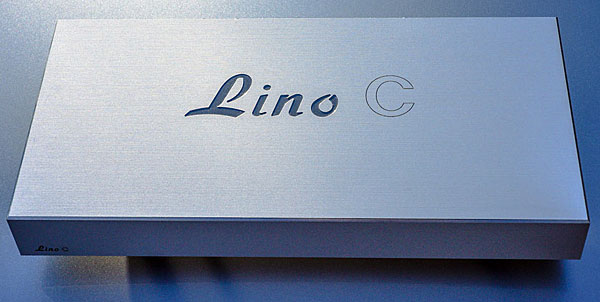
Analog Corner #286: Channel D Lino C 2.0 phono preamplifier

Install a new component in your system and there's usually a period of adjustment as you get used to the difference in sound—especially if the new product costs much less than your reference. Channel D's new Lino C 2.0 balanced phono preamplifier costs $2499, yet my ears instantly accepted its combination of drop-dead, noise-free backgrounds and lack of obvious colorations or sonic personality. I didn't hear it—I heard only my Ortofon A95 cartridge, with which I'm well familiar, as amplified by far more costly phono preamps.

Analog Corner #295: Rega Planar 10 turntable, RB3000 tonearm, Apheta 3 phono cartridge

Lately it seems that the more Rega charges for one of its turntables, the less you get—and from Rega's performance perspective that's a good thing.

While some turntable designs pile on the mass, hoping to tame resonances and better isolate the record from the outside world, Rega has long advocated ultralow-mass designs. What's up with that?

Analog Corner #231: Palmer Audio 2.5 turntable & Audio Origami PU7 tonearm

Palmer Audio's 2.5 turntable, with its laminated plinth of Baltic birch and metallic features, looks Scandinavian but is made in the UK. It shares a few conceptual similarities with the turntables made by Nottingham Analogue, another British brand. The review sample had the optional side panels of cherrywood veneer.

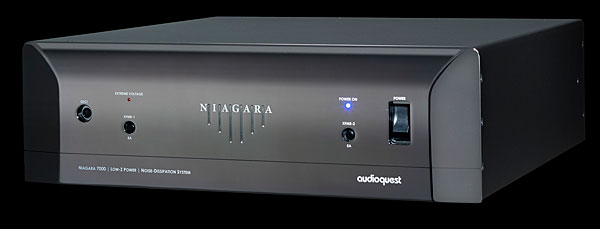
Analog #246: AudioQuest Niagara 7000 Low-Z Power Noise-Dissipation System

Are you old enough to remember when the wires connecting speakers to even the most expensive and sophisticated electronics were 16-gauge, multistrand lamp cord, and the terminals on speakers and amplifiers were just little screws? Sometimes those screws wouldn't even secure all of the wires' strands, but as long as loose strands from one screw didn't touch loose strands from the other, it was good enough . . . and back against the wall went your bookshelf speakers.

Analog Corner #233: Pear Audio Blue Kid Thomas turntable & Cornet 2 tonearm

Pear Audio Analogue's Peter Mezek can keep you up all night spinning fascinating turntable tales. Had my mind not been numbed by Sunday evening, October 12, the last day of the 2014 Rocky Mountain Audio Fest, I might have insisted that he do just that.

Over dinner that evening he regaled Pear Audio's North American importer, Michael Vamos of Audio Skies, and me with turntable stories dating back to the late 1970s and the Linn Sondek LP12, which, until the early '80s, he distributed in Czechoslovakia. In the mid-'80s, Mezek was involved in the development and distribution of the Rational Audio turntable, designed for Mezek by Jirí Janda (pronounced Yeerzhee Yahnda), who died in 2000. For those of you old enough to remember, Janda, a founder of NAD, designed that company's 5120 turntable; among other features, it had a flat, flexible, plug-in tonearm that you could easily swap out, much as you can with VPI's current models.

Analog Corner #239: Swedish Analog Technologies tonearm

Late in the fall of 1982, Los Angeles turned ugly for me. I'd finished my work on Tron and despite the Academy Award nomination for Best Sound (which went to the mixing team, not the sound supervisor), it was obvious that nothing else was coming my way anytime soon. To earn a living, I had to reinvent myself.

So there I was in Las Vegas, at the 1983 Consumer Electronics Show, schlepping heavy bags filled with press kits, each containing an audio cassette of a dozen radio commercials for a car-stereo store that I'd voiced and produced, along with a résumé-bio and endorsements from clients.

Analog Corner #236: Clearaudio Maestro V2 phono cartridge

Clearaudio began making moving-coil cartridges in the 1970s, and only later got into the moving-magnet business. Moving-magnet cartridge designers must now be mindful that most of today's tonearms are of medium to high mass and that therefore, to be compatible, their MMs must be of low to medium compliance and of higher mass than those of the 1960s and '70s.

Analog Corner #230: Transfiguration Proteus MC phono cartridge

I've lost track of how many Transfiguration cartridges I've reviewed over the years. In all that time I've never met their designer, Immutable Music's Seiji Yoshioka, but every year he sends me an exceptionally tasteful holiday greeting card. I've never reciprocated. The truth isn't always pretty.

The Transfiguration cartridges I've reviewed, too, have always conveyed a midrange musical truth that hasn't been flashy or pretty. But it's always been honest and convincing, particularly of the reality of voices. If you said that the Transfigurations lacked character, you wouldn't be wrong—unless you intended it as a criticism.

Analog Corner #217: Sutherland Engineering Insight phono preamplifier

Veteran phono-preamplifier designer Ron Sutherland has been partial, of late, to battery power. Getting off the grid can produce superb results, as demonstrated by his Hubble phono preamp ($3800), powered by 16 alkaline batteries.

I favorably reviewed the Hubble in the February 2010 issue, and remember loving most everything about it—particularly its drop-dead-quiet backdrops, its solid, weighty bottom end, and its fully fleshed-out instrumental textures. I was less enthused by its somewhat soft, muted high-frequency transients, though of course tastes and associated gear will differ. I need more grit, particularly for rock; you may not.

Advertisement
Advertisement
Advertisement