Audacious Audio

Sort By:  Post Date TitlePublish Date

Audio Research SP-10 preamplifier

It says something for the state of technology that, after a quarter of a century, there still is no authoritative explanation for why so many high-end audiophiles prefer tubes. Tubes not only refuse to die, they seem to be Coming back. The number of US and British firms making high-end tube equipment is growing steadily, and an increasing number of comparatively low-priced units are becoming available. There is a large market in renovated or used tube equipment—I must confess to owning a converted McIntosh MR-71 tuner—and there are even some indications that tube manufacturers are improving their reliability, although getting good tubes remains a problem.
Sennheiser HD800 headphones

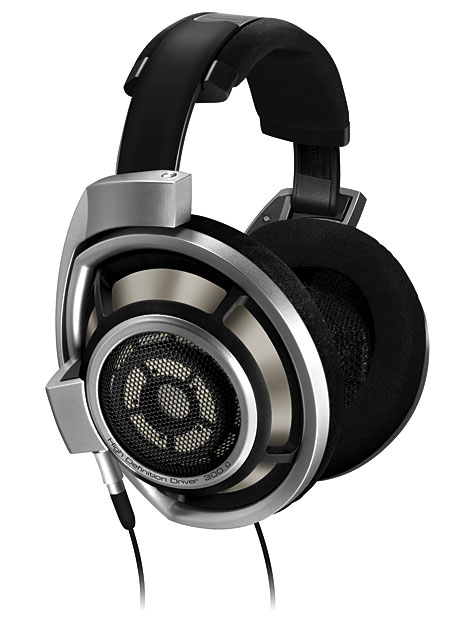
Sennheiser's long-awaited (seven years) HD800 sure isn't subtle—at least, not in appearance. The HD800's large earpieces are made from a combination of absorbing composites and functional metal accents, and are huge. Of course, they have to be to house the 56mm ring-radiator transducers—and to mount them so they're firing "back" to your ears from the front. Also not subtle is the price: $1399.95.

Boulder 1021 disc player

As we approach the end of the 21st century's "oughts" decade, many feel that playing music from a discrete physical medium is positively 20th century. Much of my own music enjoyment now comes from computer files, often high-resolution, streamed to my high-end rig via a Logitech Transporter or Bel Canto USB Link 24/96. It is perhaps a paradox, therefore, that high-end audio companies are still devoting so much effort to developing expensive, state-of-the-art disc players. In April I very favorably reviewed Meridian's superb 808i.2 CD player–preamplifier, which costs $16,995 as reviewed, and Michael Fremer is about to review the ultimate Scarlatti SACD playback system from another English company, dCS. The $80,000 price tag of the Scarlatti makes the subject of my review this month, the Boulder 1021, seem relatively affordable at $24,000.

Mark Levinson ML-7A preamplifier

Before launching into Stereophile's first-ever report on a Mark Levinson product, an important point needs to be clarified. Although Mark Levinson products were originally made by Mark Levinson, they are no longer. Au contraire, Mark Levinson products are now being made by Madrigal, Ltd., which bought Mark Levinson Audio Systems' assets and trademark two years ago. Mark Levinson's products, as distinguished from Mark Levinson products, are now being manufactured by a company called Cello. But the subject of this report, the Mark Levinson ML-7A preamplifier, is a product of Madrigal, Ltd., not of Cello. Now that I've made that all perfectly clear, we may proceed.

Musical Fidelity Titan power amplifier

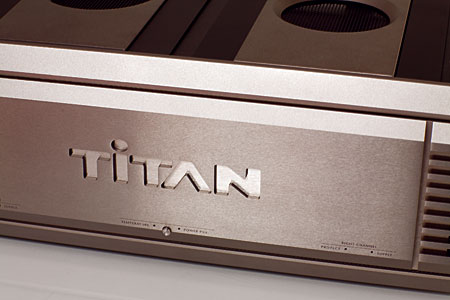
Musical Fidelity's founder, Antony">http://www.stereophile.com/features/575/index3.html">Antony Michaelson, arrived at my house to help me set up the two chassis of his sleek, limited-edition, $30,000 Titan power amplifier. (The task requires at least two people.) A week later, a representative of Musical Fidelity's US importer, KEF America, dropped by to listen and to deliver three of Musical Fidelity's new V-series products: a phono preamp, a DAC, and a headphone amp. All three fit comfortably into a small paper bag; the price of the three was $700.

Listening #78

A new integrated amplifier called the Lars Type 1, which made its debut at the 2009">http://blog.stereophile.com/ces2009/lars_by_lars">2009 Consumer Electronics Show, has given my notion of a dichotomy between mainstream audio and alternative audio a severe beating. In that sense, the Lars Type 1 has been a life-changing product, although the change took longer than expected for me to digest.

Klipsch Palladium P-39F loudspeaker

It ain't the stuff you don't know that trips you up, it's the stuff you know that ain't so. When, at the 2007 CEDIA Expo, I encountered Klipsch's startlingly new Palladium P-39F loudspeaker ($20,000/pair), I was impressed by its looks. Tall (56"), as beautifully contoured as the prow of a canoe, and clad in striking zebra-stripe plywood, the P-39F is possibly the best-looking speaker Klipsch has ever made.

Esoteric P-2 CD transport

The whole idea that different CD transports have different sonic characteristics when driving the same digital-to-analog converter is a vexing problem. It is easy to prove that even the cheapest CD players recover the data stored on most CDs with bit-for-bit accuracy, thus disproving the widespread and erroneous belief that errors in the digital code are commonplace and affect presentation aspects such as imaging, soundstage depth, textural liquidity, etc (footnote 1). If the datastream driving the digital converter is comprised of the same sequence of ones and zeros, regardless of the transport, what other factors could account for the sonic differences between CD drives reported by many listeners?

Snell Acoustics Type A Reference loudspeaker

The Type A has served as Snell Acoustics' flagship loudspeaker since 1974. The Type A Reference System reviewed here is the sixth update of the late Peter">http://www.stereophile.com/floorloudspeakers/378snell/index4.html">Peter Snell's original three-way floorstanding design, and is the most radical departure from Snell's">http://www.stereophile.com/floorloudspeakers/378snell">Snell's original. Gone is the pair of "upright bricks of polished wood and stretched cloth" (footnote 1) that delighted decorators because they functioned best against a wall. Today's Type A Reference $18,999 price tag (footnote 2) purchases two tall midrange-tweeter towers, two huge subwoofers, two short but heavy enclosures housing the outboard passive crossover networks, and a small electronic crossover.

SME Model 20/12 turntable & 312S tonearm

Much has happened in the analog world since I reviewedhttp://www.stereophile.com/analogsourcereviews/796">reviewed; SME's flagship Model 30/2 turntable for the March 2003 Stereophile (footnote 1). Back then, spending $25,000 on a turntable (without tonearm) was an odd extravagance intended only for those seriously committed to the format, and who already owned large LP collections. Although new LPs were being pressed in growing numbers, the resurgence of vinyl was still spotty, and the long-term prognosis for the old medium remained in question.

Advertisement
Advertisement
Advertisement