Budget Component Reviews

Sort By:  Post Date TitlePublish Date

Musical Fidelity V90-DAC D/A processor

They can't sound very good—they're not big enough. As we all know, in hi-fi, big products mean big performance. Musical Fidelity's V90 series can't be any good. They don't cost enough. With your golden ears, you must pay through the nose.

The V90 components turn all this around. They are tiny. Inexpensive. Beautifully built.

Music in the Round #67

It seems more and more that I'm reviewing equalization products in this column, and that such components are less often dealt with in the magazine's formal equipment reports. But it's not as if the problems created by room acoustics affect only multichannel systems. Stereophile has not ignored the topic—see the many reviews of physical and electronic room-treatment products posted on this website—but months can pass without publication of a review of such a component. Meanwhile, multichannel devotees such as I seem to talk about almost nothing else—and here's why.

Audio Alchemy Digital Decoding Engine v1.0

No, the $399 price listed in the specification block isn't a misprint. And yes, the Audio Alchemy Digital Decoding Engine v1.0 is indeed a full-function outboard digital processor. And since this is the August issue, not April, you can stop worrying that this review is some kind of joke.

The $399 Digital Decoding Engine is for real.

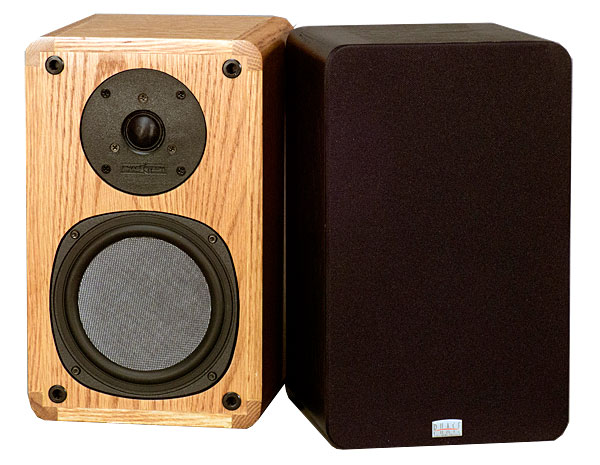
Celestion 3 loudspeaker

666celestian3.250.jpg"Why does John Atkinson devote so much of his time to loudspeakers selling for under a [sic] $1000?" wrote a correspondent to The Audiophile Network bulletin board in August, there being a clear implication in this question that "more expensive" always equates with "better" when it comes to loudspeakers. While it is true that the best-sounding, most neutral loudspeakers possessing the most extended low-frequency responses are always expensive, in my experience this most definitely does not mean that there is an automatic correlation between price and performance. I have heard many, many expensive loudspeakers whose higher prices merely buy grosser sets of tonal aberrations. For those on modest budgets, provided they have good turntables or CD players, a good pair of under-$1000 loudspeakers, coupled with good amplification, will always give a more musical sound than twice-the-price speakers driven by indifferent amplification and a compromised front end.

End of discussion.

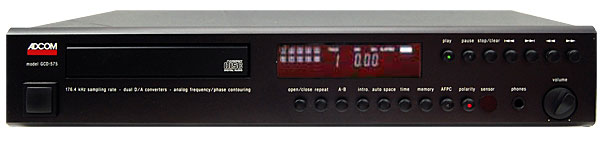
Adcom GCD-575 CD player

I once told Larry Archibald it might be worth, say, a 10% loss in sound quality with CD not to have to jump up and turn over the damned record. Sometimes a CD saves you from popping up twice—Mahler's Fifth or Bruckner's Seventh on a single disc instead of three LP sides—or three times—Mozart's Magic Flute on three CDs instead of 6 LP sides. That might be worth a 15% sacrifice.

Rotel RCD-955AX and RCD-965BX CD players

On the mantel sat a stuffed Culo snake from Nuevo Laredo, with a red rubber tongue in freeze-frame flick. Above the bookcase hung the mounted head of a wild poi dog, killed in self-defense in Sri Lanka with only a Phillips-head screwdriver. A table-lamp made from a shellac'd, puffed-up frog wearing a sombrero and playing the contrabassoon bathed the room in a soft cream glow.

Parasound Halo P 5 2.1-channel D/A preamplifier

Asked how to make a guitar, the celebrated luthier Wayne Henderson offered a straight-up answer: "Just get a pile of really nice wood and a whittling knife. Then you just carve away everything that isn't a guitar." (footnote 1)

The making of a preamplifier seems more or less the opposite. You start with a simple volume control and a couple of jacks, then add whatever you think constitutes a preamplifier. Choices might include electronic source switching, line-level gain, phono-level gain and equalization, tone controls, tone-defeat switches, a balance control, a headphone jack, an iPod input, and maybe even a digital-to-analog converter with a USB receiver. The sky is pretty much the limit.

The Entry Level #39

In his article on the future of audio engineering in this issue, John La Grou tells us—succinctly and correctly, I think—that we are rapidly moving from a culture of handheld devices to one of headworn devices. He postulates that by perhaps as early as 2025, rather than being actively sought out, most audio/video media will be delivered, like milk or the newspaper—but delivered not to our front doors, but more or less straight to our brains. Fascinating? Sure. Frightening? Kinda, yeah.

ASUS Xonar Essence One Muses Edition D/A processor–headphone amplifier

Back in the summer of 2009, USB-connected D/A processors that could operate at sample rates greater than 48kHz were rare. Ayre Acoustics had just released its groundbreaking QB-9, one of the first DACs to use Gordon Rankin's Streamlength code for Texas Instruments' TAS1020 USB 1.1 receiver chip. Streamlength allowed the chip to operate in the sonically beneficial asynchronous mode, where the PC sourcing the audio data is slaved to the DAC. But high-performance, USB-connected DACs like the Ayre were also relatively expensive back then, so in the January 2010 issue of Stereophile I reviewed a pair of soundcards from major computer manufacturer ASUS , the Xonar Essence ST and STX, which, at $200, offered a much more cost-effective means of playing hi-rez files on a PC.
Advertisement
Advertisement
Advertisement