Budget Component Reviews

Sort By:  Post Date TitlePublish Date

PSB Image 4T loudspeaker

I have a passion for great speaker designs at affordable prices, and with modern driver, crossover, and cabinet technologies making innovative strides, many serious high-end speaker designers are turning their attentions to coming up with the next great budget speaker. All audiophiles need affordable speakers, whether to recommend to friends to lure them into our hobby or to set up multiple, less costly systems in our own houses. I currently run a main reference system, a vacation-house system, a recording-studio system, a computer system, a portable system I take to parties, a car system, and an office system. I insist on having music playing constantly, wherever I am, unless my wife or son tells me to turn it off—which happens increasingly often these days.

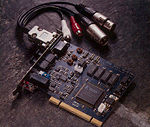
RME Digi96/8 Pro computer soundcard

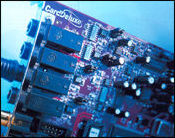
In the early days of digital audio, I remember talking with Dr. Tom Stockham, the developer of the groundbreaking Soundstream system used then by Telarc. As well as using a 50kHz sample rate, the excellent-sounding Soundstream stored its 16-bit data on large drum-shaped Winchester drives connected to a minicomputer. Twenty years later, the advent of ultra-high-density magnetic storage media and fast microprocessor chips has put high-resolution digital audio manipulation and storage within reach of anyone with a modern PC or Mac. And facilitating the transformation of the PC into a high-quality DAW has been a new generation of soundcards, such as the Digital">http://www.stereophile.com//digitalsourcereviews/280/">Digital Audio Labs CardDeluxe I reviewed in September 2000 and the subject of this review, the German RME Digi96/8 Pro.

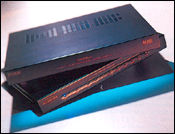
MSB Link DAC III D/A converter

Prelude
I fell in love with the original Link DAC, as was obvious from my">http://www.stereophile.com//digitalsourcereviews/234/">my review in the January 1999 Stereophile. I said that "the Link redefines entry into high-quality digital sound," as it provided excellent sound and 24-bit/96kHz conversion for the remarkably low price of $349. It is as firmly ensconced in Class C of "Recommended Components" as it is in my weekend system, where it tames the digital signals from my DMX receiver and my trusty old Pioneer PD-7100 CD player.

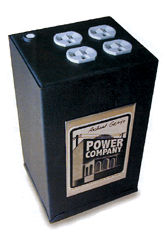
Richard Gray's Power Company 400S AC line conditioner

The Richard Gray's Power Company 400S arrived on the audiophile scene last year with a bang. Weighing in at a hefty 20 lbs and at $700 a pop, this four-outlet power conditioner, according to the paperwork, "effectively 'positions' audio, video, and home theater equipment 'electronically closer' to your utility company transformer, without introducing any type of series electronic 'traps' or capacitors into the circuit, which we feel degrade the performance of certain equipment, and severely limit the amount of current they can handle."

Acoustic Energy Aegis One loudspeaker

In this issue's "Letters" column, you will find comments from readers who are bothered by what they perceive to be this magazine's emphasis on reviewing very expensive technology. Yes, we do cover a lot of cutting-edge technology, and it is, of necessity, expensive. But our experience has been that that technology invariably trickles down to products that real people can actually afford.

PSB Alpha A/V loudspeaker

The original PSB Alpha was reviewed for Stereophile by Jack English in July 1992 (Vol.15 No.7). A modest-looking two-way priced at just $199/pair, it combined a reflex-loaded 6.5" woofer using a plastic-doped paper cone with a 0.5" plastic-dome tweeter. JE summed up the Alpha by saying it "is simply one of the best buys in audio, providing a musically satisfying sound...a sensational audio bargain." It went on to become one of the best-selling audiophile speakers ever, with over 50,000 pairs sold.

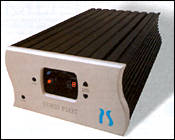
PS Audio P300 Power Plant

Although advertising copywriters would have us believe otherwise, there is not a lot of true innovation in audio. Most audio products are based on well-established principles, perhaps refined in detail and execution. Of course, some products do take novel approaches, but they tend to be too off-the-wall to be taken seriously, or simply don't do the job as well as more conventional products. What's really exciting is to encounter a product that is audaciously original in concept, yet makes so much sense that you wonder why no one even thought of it before (footnote 1).

Yamaha @PET RP-U100 personal receiver

Convergence is a widely used buzzword in today's consumer-electronics industry. However, other than using my PC's soundcard in the office to play back MP3-encoded music and plugging the Mac in my listening room into my reference system in order to experience Riven with the highest possible sound quality, I've kept a low profile in this area.

Advertisement
Advertisement
Advertisement