Budget Component Reviews

Sort By:  Post Date TitlePublish Date

PSB Alpha P5 loudspeaker
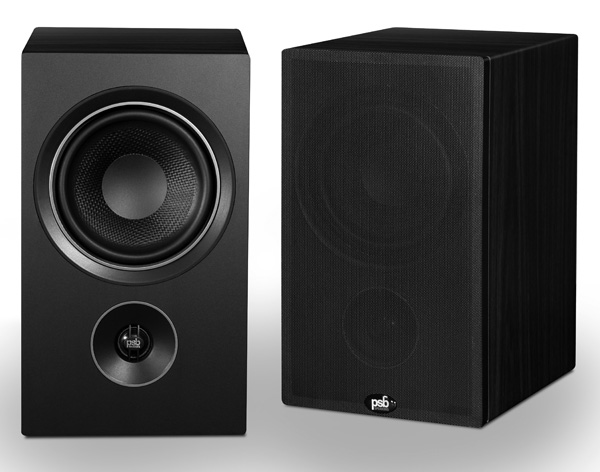
It is said that while any competent engineer can design a superb loudspeaker if allowed an unlimited bill of materials, the true test is being able to produce a great-sounding, budget-priced speaker out of parts that cost a mere handful of dollars. With PSB's Alpha series of bookshelf speakers, Canadian engineer Paul Barton has illustrated this truism many times over the years.

Schiit Audio Aegir power amplifier

Class-D audio amplifiers: What's the argument for them? Class-A audio amplifiers: What's the argument against them? Class-AB amplifiers: Why does everybody make them? Each of these amplifier output architectures has strengths and weaknesses. Each will interface more or less successfully with a given loudspeaker in a given room. Each has a distinctive sonic signature. Consequently, as knowledgeable audiophiles with a laundry list of system-building goals, we are required to choose the amplifier type that best suits our speakers, our room, and our individual musical-aesthetic predilections.

Vanatoo Transparent One Encore powered loudspeaker system

Has Serinus been demoted? You might well ask. This month, instead of reviewing a $58,000 stereo amplifier, I'm tackling a $599 powered loudspeaker system.

Truth be told, I'm always on the lookout for products that deliver outstanding sound at bargain prices. And since I maintain in my living room a modestly priced system built around powered speakers—this in addition to the far costlier system in my dedicated listening room—it's an easy fit for me to evaluate low-priced products in a real-world context.

Pro-Ject Audio Systems Stream Box S2 Ultra network bridge

I have reviewed several network-connected music servers in recent years, from Antipodes, Aurender, and NAD. All performed well but are relatively expensive, and their associated player apps didn't equal Roon's user friendliness in terms of interface, organization of the library, and inclusion and updating of metadata. So when Roon Labs introduced their own server, the Nucleus+, I first reviewed and then purchased it, along with a lifetime subscription to Roon. But at $2498 without an internal drive for storing music files, the Nucleus+ is still relatively expensive, and even Roon's less-powerful Nucleus costs $1398. I was still on the lookout for a server that would be more accessible to our budget-minded readers.

Emotiva Audio Airmotiv T2 loudspeaker

Visit any consumer audio show these days and you'll see rooms full of systems costing from six to seven figures. Manufacturers like to put their best foot forward, and demoing systems with loudspeakers designed to sell for $50,000/pair and up (often up) seems an obvious way to go.

It's also common for an audio company to launch its flagship models first, and only later release more affordable products, for a wider range of buyers. The hope is that the promotional shine of the dream products will be reflected onto the budget models.

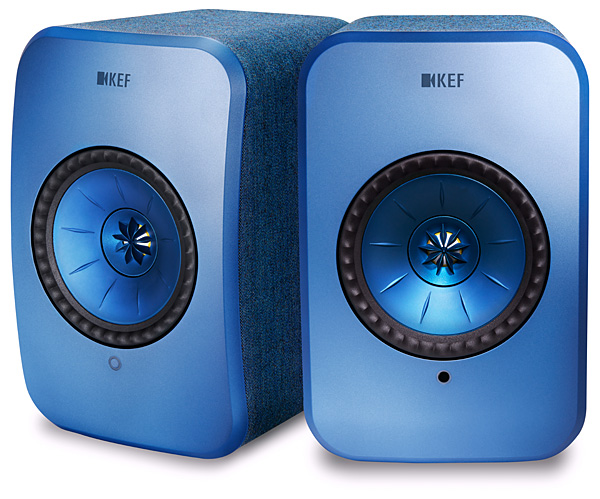
KEF LSX wireless loudspeaker system

I keep getting older. By the time you read this, I will be genuinely old. When I was genuinely young, I bellyached, "Wires are the worst part of hi-fi—there's gotta be a way to get rid of them." I first made that statement when audio electronics and loudspeakers both still nestled inconspicuously in proper bookcases. Back then, people sitting on the sofa weren't forced to stare at diverse audio boxes and ungainly wires.

Pro-Ject Pre Box S2 Digital D/A headphone amplifier

I first met Pro-Ject Audio Systems' founder and president, Heinz Lichtenegger, in 2016, at the US launch of the Austrian company's The Classic turntable. His passion for all things hi-fi was so intense I thought his head might explode. Gleeful in his mission to bring high-end audio to the people at less than typical high-end prices, Lichtenegger and Pro-Ject can fairly claim bragging rights for their entry-level Debut Carbon (DC) ($460 and up), one of the world's best-selling turntables.

Klipsch Reference Premiere RP-600M loudspeaker

If you've ever dipped your toe into some form of high-performance motor sport, you know: The best race-car engines spin torque and exhale horsepower—with intoxicating ease. They're engineered to be responsive. Depress the clutch, toe the throttle, and watch the tachometer instantly pin itself. Engage the clutch—your chest contracts and your head gets light. Then later . . .

Back in your Ford Fiesta, its revving engine sounds distant, muffled. Your body can't feel the powerplant's power. In gear, the Ford feels soft and hesitant, not responsive.

Advertisement
Advertisement
Advertisement