Historical

Sort By:  Post Date TitlePublish Date

The Flexible Firms

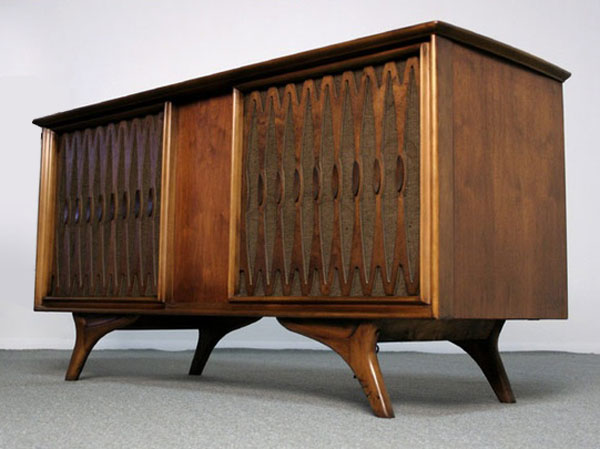
Some years ago, we attended a hi-fi show in New York City where one of the exhibitors was RCA Victor. Their presence there would have been forgotten were it not for the fact that their exhibit, featuring their own discs played on their own line of phonographs, was producing some of the filthiest sound at the entire show. And that, in the proverbial nutshell, is why you never see reports in Stereophile on equipment made by RCA, Philco or General Electric.

Late Again!

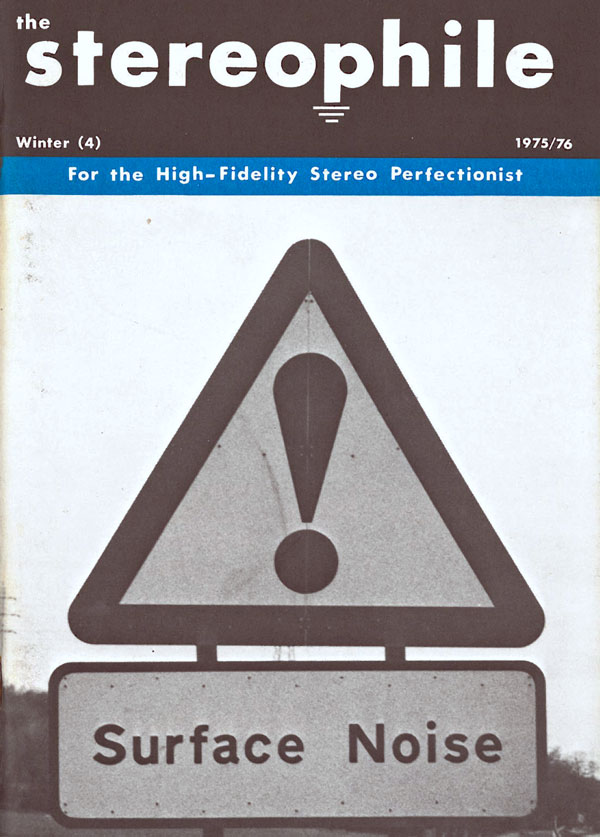
Editor's Note: In Stereophile's second decade of publication, things were starting to unravel, with long gaps between each issue. There were just seven issues published between January 1974 and January 1978. The late Harry Pearson has gone on record that he founded The Absolute Sound in 1973 part because he was tired of waiting for the next issue of Stereophile to reach his mailbox. In this "As We See It" essay from the "Surface Noise" issue in August 1976, founder J. Gordon Holt owns up to it appearing 8 months late!

Meridian's Bob Stuart

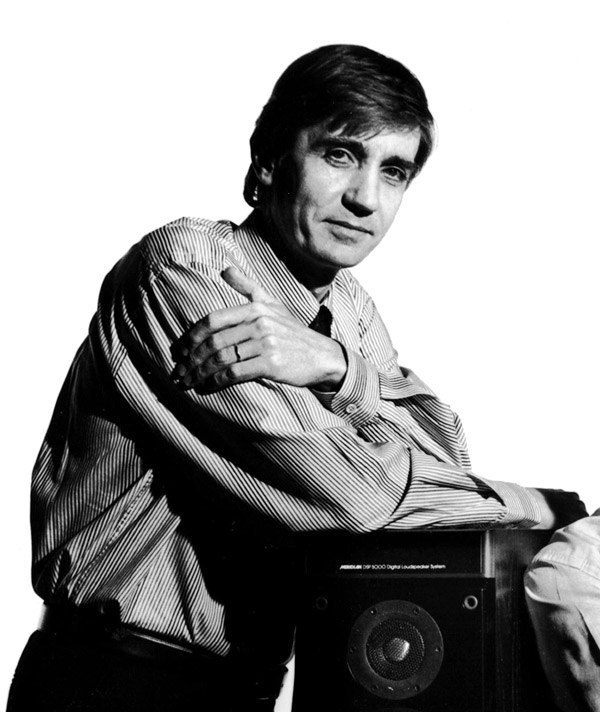
Meridian's MCD CD player was perhaps the first audiophile-quality player to be introduced in the high-end market. I met with Bob Stuart of Meridian at the Winter Consumer Electronics Show in Las Vegas, in January, 1986 (footnote 1). My first question was about the name of the company he runs with industrial designer Alan Boothroyd:

J. Gordon Holt: Meridian in England is called Boothroyd Stuart, right?

Bob Stuart: Yes, the company is called Boothroyd Stuart, Limited, and the trademark is Meridian.

Plain Talk About the Unmentionable

Editor's Note: On the 52nd anniversary of Stereophile's founding in 1962 by J. Gordon Holt, we are publishing this mea culpa "As We See it" essay from 1981, in which he explains why Vol.4 No.10 was almost six months late in mailing to subscribers. Gordon had relocated from the Philadephia suburbs to Santa Fe, New Mexico in 1978, and as he had explained in the April 1978 issue, the move had not gone well. "Much of the equipment necessary for testing got damaged or destroyed in transit," he wrote, adding that "What had promised to be a superb listening room turned out to have some sticky acoustical idiosyncrasies."

Wilson Audio Modular Monitor (WAMM) loudpeaker system

No, we made no typos in the specifications sidebar. The weight of the Wilson Audio Modular Monitor (WAMM) speaker system is enough to make you consult a structural engineer before dropping it on your living room floor—fragile, 300-year old New England frame houses are probably out. And the recent price increase from $32,000 to $35,000 is enough by itself to buy a pair of Quad ESL-63s—which is not a bad speaker system. The WAMM represents an all-out assault on both the state of the art in speaker systems and on the limits to which wealthy audiophiles will go in order to have the best.

Recording of February 1984: Beethoven/Enescu Violin Sonatas

BEETHOVEN: Violin Sonata in G, Op.96
ENESCU: Violin Sonata No.3, Op.25 (In Rumanian Style)

David Abel, violin, Julie Steinberg, piano
Wilson Audio W-8315 (LP). David Wilson, prod., eng. AAA.

Oh, what a breath of fresh air this is! An audiophile recording of real music that isn't bombastic, overblown, or high-powered.

Imagine, if you can, a private recital in your own home by two consummate artists who play these works for their own delight as much as for yours. Imagine sound so completely and disarmingly natural that after 30 seconds you're unaware it's reproduced. That's what this record is all about.

I could rhapsodize endlessly about this record, but I won't. Suffice it to say that if you think there's even a remote chance you'll like this music, you will be positively mesmerized by this recording of it . . .

Altec Lansing 301 loudspeaker

One of the oldest names in US audio, Altec Lansing was building speakers for theaters and recording studios long before the introduction of the microgroove LP in 1948 (which date many see as marking the inception of high fidelity). Started in 1931 under the name All-Technical Services ~Corp., the firm later purchased another audio firm called Lansing Engineering, and merged the names. Altec's Model 604, one of the first true coaxial speakers, was adopted for home use by many early hi-fi buffs and, several permutations later, is still widely used for monitoring in disc-cutting rooms.

Recommended Components #1

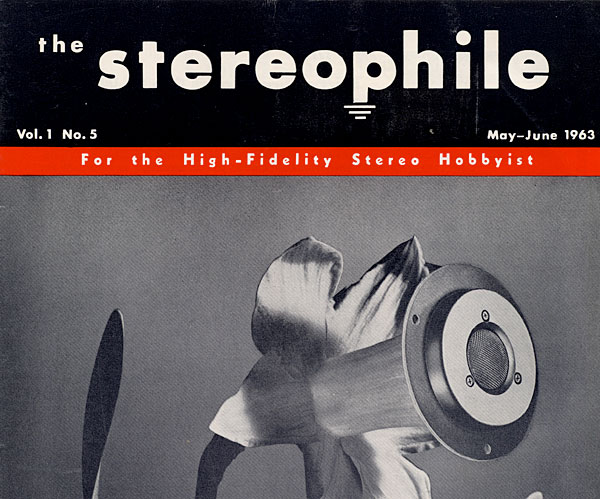
[Note - this article is from the May, 1963 issue of Stereophile]

Many readers have asked why we don't maintain a permanent listing in each issue of The Stereophile of those components that we feel to be the best available, with or without qualification.

So, we are following our readers' suggestion, and will list in each issue groups of components which, at publication time, we feel are ones from which our readers would be well advised to assemble their systems. The list will change from time to time, as new products appear, old ones are obsoleted, or manufacturers change their quality control standards. Components will be added to or dropped from the list without advance notice if we see adequate reason for doing so, but each change in the list will be explained in the magazine at the time the change is made.

Advertisement
Advertisement
Advertisement