J. Gordon Holt

Sort By:  Post Date TitlePublish Date

SAE Mark II Power Amplifier

It takes a lot of courage for a new company to launch an amplifier like this at time when most manufacturers are courting the mass market with budget-priced receivers, and Marantz is pretty firmly established as the Rolls Royce of audio electronics.

The SAE Mark II has, nominally, the same performance specs as the Dynaco Stereo 120, yet it costs twice as much as a factory-wired Stereo 120, and about 2½ times as much as a Stereo 120 kit. Is the SAE really worth the difference? And how does it compare with some other $400 amplifiers? Well, it all depends.
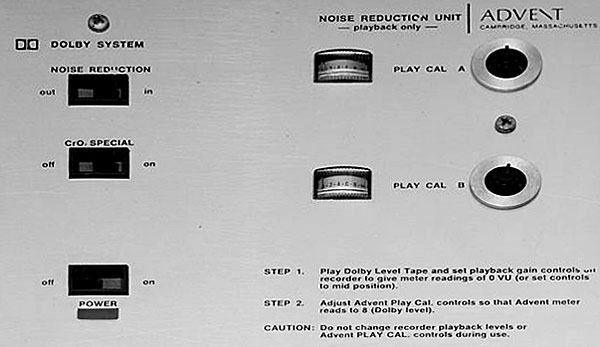
A Dolby In the House

By the time you read this, in the fall of 1967, the "Dolby system" will probably be old hat to you. Every other audio publication has been describing it, discussing it, and hailing it as the greatest invention since sex.

We've seen that kind of press ballyhoo before, about such significant advances as the Edsel, the 16-rpm LP and the "thin-profile" loudspeaker, so our first inclination was to be a wee bit skeptical of the Dolby. It seemed too good to be true.

Yamaha CD-X1 & CD-2 CD players

CD player prices continue to go down and, surprisingly, sound quality goes up; the Yamaha CD-X1 is an example of both. It's a front-drawer loader with some interesting innovations. Pushing the Open/Close button opens the drawer; it can be closed either by pushing the same button again or by pressing lightly against the end of the open drawer. (We understand this was done because many such players have been damaged by users trying to force the drawer shut by hand.)

The unit has three operating modes: Auto, Manual and Single. In Auto, play begins as soon as the drawer is closed, or as soon as the AC is turned on if a disc is already loaded. In Manual, play begins only when you press the Play button. Single is the same as Manual except that the unit goes into Pause after playing a single selection. Pressing Pause then plays the next selection.

Observations and Prognostications for 1965

Well, the New York Hi-Fi wingding has come and gone once again, and now is the time when audio editors dutifully adopt the role of oracle, divining the future of high fidelity, and generally sketching out The Big Picture for those of us too blind to see the graffiti on the wall. So, who are we to shirk our duty? Herewith, The Stereophile's audio observations and predictions for 1965.

Upward and (Hopefully) Onward

Editor's Note from 1974: As you can read in the following "As We See It," the last issue of Vol.1 No.12 (cover dated "Spring 1966") was perhaps not as "strong" as it might have been. If we had been doing things according to Proper Business Practice, we should have held back our best articles and our gutsiest reports until that issue, as a high-powered incentive for our subscribers to renew their subs. We didn't. There were better articles and a greater variety of topics covered in earlier issues, but Issue 12 was significant in that it set the pattern of topic emphasis, and the balance of reports versus other editorial material, that was to continue more or less unchanged for the next 7 years.

Nowhere to Go?

Our mail, in recent months, has brought a number of comments (some of them printed in this issue) from professional audio men who decry the fact that developments in the audio field seem to have come to a screeching halt.

There would seem to be some justification for believing this, too. There hasn't been a new kind of loudspeaker, amplifier, pickup, or tuner for the past five years or so. The professional engineering journals, once loaded with juicy articles about research and developments in music reproduction, are now devoted largely to public-address techniques and new methods for the "creation" of electronic music.

Why Argue?

While we were preparing our list of specifications for our perfectionist's tape recorder discussed elsewhere in this issue, we suddenly came to a screeching halt at the spec which started "Scrape flutter less than . . ."

What, we wondered, was the scrape flutter percentage in a recorder in which scrape flutter is audible? Would it be 0.5%? Or 1%? Or even 5%? We perused the readily available literature, and were informed that "scrape flutter is caused by the tape's tendency to move past the heads in a series of tiny jerks in stead of in a smooth gliding motion." We were also told that scrape flutter is due to friction between the tape and the head surfaces, plus the slight elasticity of the tape that allows it to stretch slightly before being dragged along by another silly millimeter, and that it sounds like a rough edge riding on all signal frequencies between about 3kHz and 8kHz.

The Weakest Link

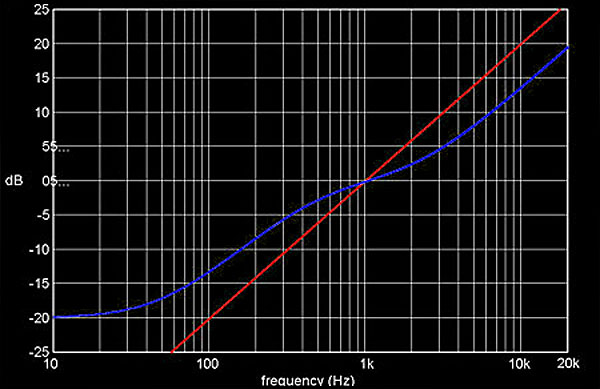
When the Record Industry Association of America adopted its standard disc playback equalization curve in 1954, hi-fi enthusiasts heaved a sigh of relief and bade fond farewell to years of confusion, doubt and virtual pandemonium. Before the RIAA curve there were six "standard" curves in use, and since nobody seemed to know who was using what, getting flat response from a disc was often more a matter of luck than anything else. The adoption of the RIAA standard playback curve heralded an end to all this.
Advertisement
Advertisement
Advertisement