Miscellaneous

Sort By:  Post Date TitlePublish Date

BSG qøl Signal Completion Stage
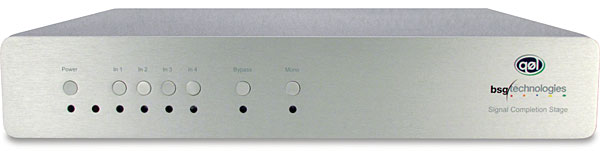
I walked into BSG's room at the Newport Beach Show in June 2012 unsure of what I was going to hear. I was well aware of this new company's qøl Signal Completion Stage ($3995), but didn't know if it was a genuine step forward in audio reproduction, or just another example of the hokum found on the fringes of our hobby. I took my listening seat, and BSG's CEO Larry Kay, cofounder and erstwhile publisher of Fi magazine, performed A/B comparisons with the qøl's processing in and out of circuit.

Totem Acoustic Beak

Erick Lichte mentioned Totem Acoustic's Beak, which costs $125/pair, in his follow-up review of the Totem Forest loudspeaker in January 2010. The Beak is a bullet-shaped device, about 2" high by 1.5" in diameter, that's intended to be placed atop a speaker to control "parasitic resonances." I was given a pair of these more than 10 years ago, and have tried them with various speakers. While Erick didn't find the Beaks to make any difference to the sound of the Forests or any of the other speakers he had to hand, my experience was different.

Bryston 10B electronic crossover

"Crossovers? We don't need no stinkin' crossovers!" Most Stereophile readers probably feel this way when it comes to third-party electronic crossovers. In this day of proprietary "soup-to-nuts" speaker systems, nearly all manufacturers supply complete systems. Nevertheless, some brave (or foolish) souls still choose to sail in uncharted crossover waters. Most do so because they're insanely in love with their current speakers, and have an irrational desire for that last bottom octave. Others have "orphaned" speakers that are not readily upgradeable to the next level of performance. I fall into the second category.

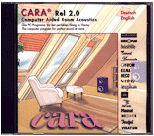
ELAC Technische Software CARA 2.0 computer program

I have been a proponent of methodical modeling and room analysis as aids in setting up audio systems and rooms. They work hand in hand: Modeling predicts a feasible room arrangement, and analysis, along with careful listening, determines how close the outcome is to that predicted. Of course, there should always be another round of modeling to see if the current setup can be improved with more work. The spiral continues, toward, one hopes, perfection.

ETF, or How I Learned to Love My Equalizer

Because I'm suspicious of just twiddling knobs to make the sound "nice," I didn't rely solely on my ears when I used the Z-Systems rdp-1 that I review elsewhere in this issue for speaker and room contouring. Instead, I used the ETF speaker/room-analysis software from Acoustisofthttp://www.acoustisoft.com">Acoustisoft; to help me manipulate the equalizer properly. This program can measure the first-arrival, on-axis speaker response, as well as the room response with its early and late reflections and its resonances.

Checkpoint SA-S P-770 laser alignment tool

In a sidebar to his">http://www.stereophile.com//loudspeakerreviews/542/">his review of the B&W DM302 speakers in the October 1997 issue (Vol.20 No.10), Wes Phillips mentioned a handy tool he uses for speaker setup—a laser level. The one Wes used was originally intended for construction work, not tweaking one's speaker placement, but now there's one available specifically for that purpose: The 770 SA-S Laser Sound Alignment System by Checkpoint Laser Tools.

Advertisement
Advertisement
Advertisement