Music and Recording Features

Sort By:  Post Date TitlePublish Date

Don Was: What Was Will Be

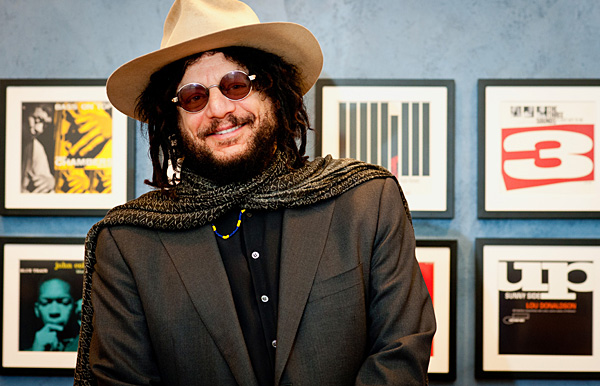
Don Was is a music lover. Looking at his extensive discography as a record producer and musician, one is struck by the variety of artists he's worked with: from Iggy Pop to the B-52's, from Roy Orbison to Elton John, with over half a dozen stops along the way as producer for a little band called the Rolling Stones. In 2017, Was produced Gregg Allman's final studio album, Southern Blood (Rounder 610005). And when you include all the music he's had a hand in since 2012, when he became president of Blue Note Records, you're talking about one busy little red hen helping to bake a lot of bread.

Honoring Hector Berlioz

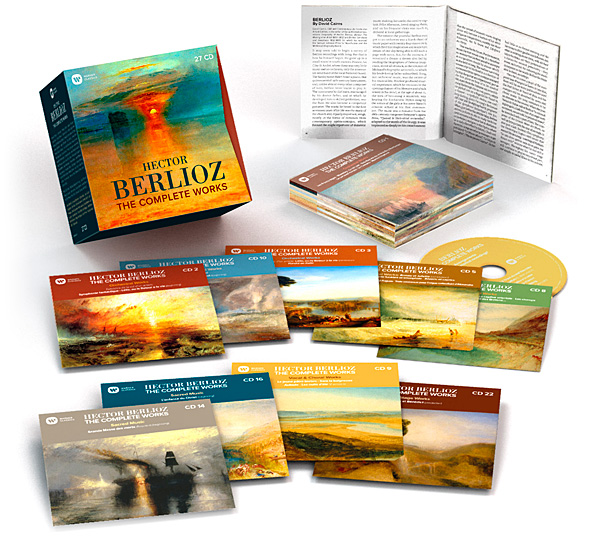
It's 150 years since that quintessential French Romantic, Louis-Hector Berlioz (1803–1869), left the planet. A near-contemporary of the equally romantic Chopin, Gounod, Schubert, Schumann, Mendelssohn, and Liszt, Berlioz shared with Meyerbeer (1791–1864) and Wagner (1813–1883) a propensity to express his passions and fantasies in music that sometimes unfolded slowly as it extended drama to extraordinary lengths.

Philip Glass Premiere from Third Coast Percussion

Philip Glass (b. 1937) may not quite be a household name in America, but he's surely as well-known as any living classical composer, and the repetitive minimalism that is the hallmark of his music has influenced everything from rock music to TV commercials. Still, after 5 decades of composing, it took a commission from Chicago-based Third Coast Percussion for Glass to write his first concerto for percussion ensemble, Perpetulum—"What took them so long to ask me?" Glass has said about the commission. TCP has just released the premiere recording of the 21:23 minute concerto on their new 2-CD set, Perpetulum (OM 0132), from Glass's own label, Orange Mountain Music. The recording, which was engineered in 24/96, is also available as a download with those specifications.

Jean-Michel Jarre: Organic meets Electronic

"I have an organic approach toward music but I've always been interested in electronics," says Jean-Michel Jarre, whose luxurious electronic pop conquered the world in 1976 with his hit album Oxygène. Even today, Oxygène's bubbling tones and saturated textures provide a blissful sonic experience. "I love jazz because of its organic approach to sound, and I've been influenced by that. I always thought that jazz and electronic music have much more in common than we think."

John Coltrane's 1963: New Directions

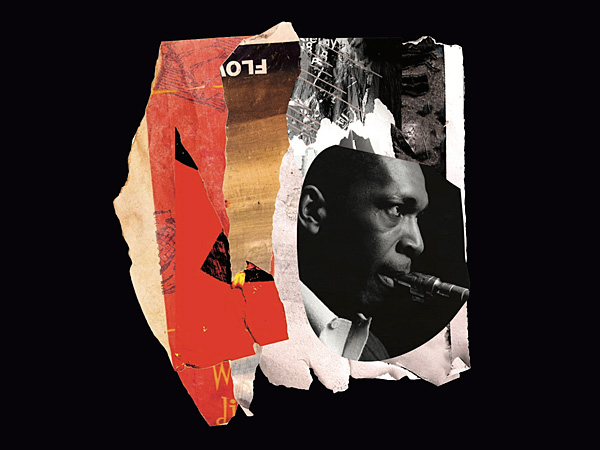
Only a few months after the extraordinary news and release of John Coltrane's Both Directions at Once: The Lost Album on Impulse! Records, which revealed the tenor and soprano saxophonist deep in transitional mode, comes Universal Music/Verve's attempt to cash in on the Trane fever. Joining music from The Lost Album with selections from other albums recorded by Coltrane in that year, 1963: New Directions brings Coltrane's legacy to our commercially crass, modern marketplace.

Shostakovich's Devastating Impact

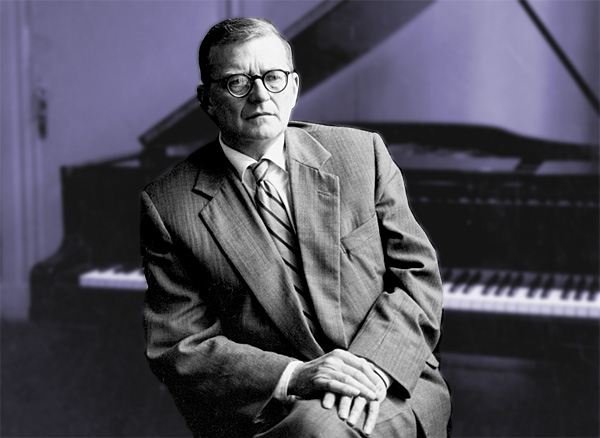
Dmitri Shostakovich (1906–1975) was hardly the first composer to run headfirst into opposition from political authorities. In his case, however, the pushback was so extreme that it affected everything he wrote thereafter.

In early 1936, after the style and subject matter of his opera Lady Macbeth of Mtsensk clashed with the so-called proletarian aesthetic of Russian dictator Joseph Stalin (1878–1953), Shostakovich was denounced by the official state newspaper, Pravda. From then on, his symphonies reflected either his defiance of decades of Socialist realism, or attempts to appease the authorities while still speaking his truth.

Bill Charlap: Life, Love, Songs, and Pianos

Autumn in New York—watching Central Park change colors. Also time to catch the Bill Charlap Trio during their annual residency at the Village Vanguard: Charlap at the piano, Peter Washington on bass, and Kenny Washington at the drums in the Church of Jazz, the room the Bill Evans Trio called home in the 1960s and '70s. Exploring the great traditions of jazz and American song has become a Charlap trademark.

The Best Jazz Albums of 2018

Sorry I've been away from this space for so long. My day gig (national-security columnist for Slate) has kept me busy (as you can imagine), and I've got a tight deadline on a new book. Still, as Congreve observed, "Musick has Charms to sooth a savage Breast," and there's plenty of breast-beating savagery out there, so I've continued to listen, and here is my dispatch on the Best Jazz Albums (10 new and two historical discoveries) of 2018.

Wayne Shorter: How the Future Would Be

Wayne Shorter is 85. His mind moves at warp speed, a million miles from Art Blakey's Jazz Messengers, who rescued him from Newark, New Jersey—or the Miles Davis's second great quintet, for which the saxophonist wrote the compositions that would establish his genius. Shorter's constellation of classic Blue Note recordings from 1964–67—Night Dreamer, JuJu, The All Seeing Eye, ETC, The Soothsayer, Adam's Apple, Speak No Evil, Schizophrenia—is now but a dim cluster of stars in his ever-expanding musical galaxy.
Advertisement
Advertisement
Advertisement