Music and Recording Features

Sort By:  Post Date TitlePublish Date

The Rolling Stones: Their Satanic Majesties Request 50th Anniversary Edition

While it may elicit shakes of the head, nasty, distasteful looks, or vociferous yawps about its being nothing more than a load of warmed-over psychedelic pandering, the time may have come to listen again to Their Satanic Majesties Request, the much-maligned 1967 album by the Rolling Stones—and perhaps think of it in a slightly more humane light. Few records from that or any other era have been as widely savaged. It's easy to make the argument that any record with such a pretentious title deserves to be ridiculed. The music itself is scattered and feels unfinished in spots. Then there's that cover image.

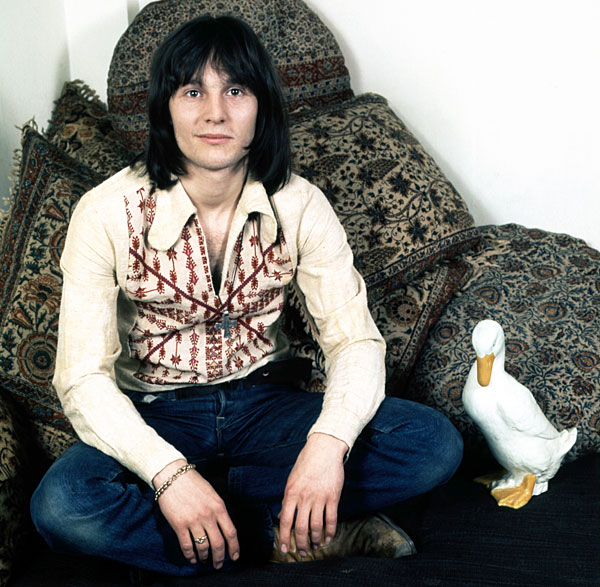
Murray Head: Nigel Lives Again

Seeing your album in a record store's cutout bin meant one thing. Despite the label execs' wide smiles, warm handshakes, and earnest promises to the contrary, once the record jacket had a hole punched in it, or its corner clipped, it meant your record label had lost faith and moved on.

Record collectors felt differently. The prices of cutouts were right—usually, from 99õ to a penny under two bucks. And cutouts were better than digging through crates because the records were still sealed . . . even if the jackets were a bit mangled. The beauty of cutouts was that they were so cheap, you could afford to be lavish, and go home with anything that caught your fancy.

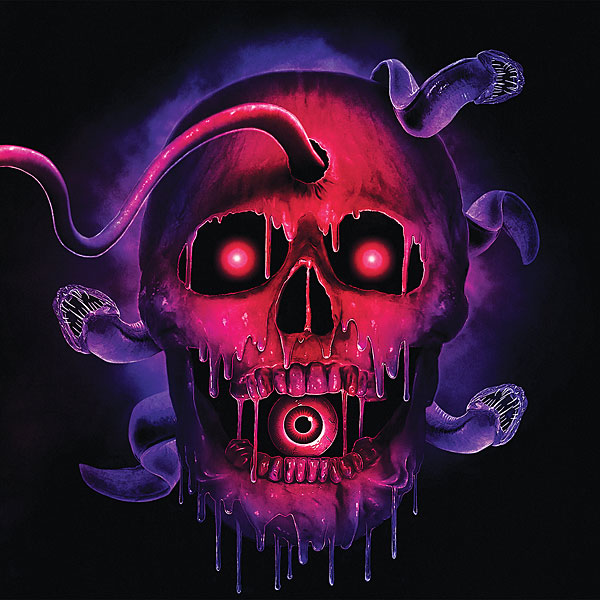
Listen to Them, Children of the Night

Long ago, I stopped associating Act II of Tchaikovsky's Swan Lake with dancing. Now, every time I hear it, I immediately flash on broken battlements, a black cape, and Béla Lugosi's unmistakable Hungarian accent: "Listen to them—cheelllldreennn of dee night. What muuuusic they make!"

Then there were James Bernard's tense scores for the Hammer films—like Dracula: Prince of Darkness (1966), starring Christopher Lee—that my parents somehow let me see in a theater when I was seven, as part of an afternoon of bargain monster movies that included all the sourballs and unbuttered popcorn you could wolf down. Scared to death, my life was forever changed.

Music in the Round #85: Nimitra, exaSound, Baetis, Roon

It's been going on for a while now: Despite support for multichannel in audio/video receivers and A/V processors priced from as little as $200 to $30,000, there are still very few offerings that cater to the music listener. They may offer stereo-only streaming features through their USB or Ethernet inputs, but these inputs don't see your multichannel files. To handle such files, they would require you to add a music server with HDMI output. However, I know of no turnkey music servers that will output multichannel audio via HDMI.

George Winston Climbs Aboard his Carousel

New Age. Most of it was acoustic. While there were vocals here and there, much of it featured instrumentalists playing solo or in groups. Some of it was meant to alleviate stress. Some of it was marginally connected to a similarly named movement in spirituality. Environmentalism and respect for nature were constant themes. Some New Age artists created moody, ambient sounds that were intended as background music, to promote healing and relaxation.

Everybody Digs Bill Evans (Again!)

For fans, of course, he's never been gone, not even for a minute. A jazz pianist who played from the heart and spent a tumultuous life fighting his demons while searching, as singer Tony Bennett has often said, "for truth and beauty," Bill Evans is now the subject of four previously unheard, recently released titles, on LPs, CDs, and downloads, of live recordings of his music. There's also, from Mobile Fidelity Sound Lab, a new and superlative One-Step Process vinyl reissue of his classic Sunday at the Village Vanguard. Finally, there's a wonderful new documentary, Bill Evans: Time Remembered, a labor of love by a fan and titled for one of Evans's best-loved tunes. And, unlikely as it sounds, the demand for Evans's music is still strong enough to inspire a controversy over rights and clearances, 37 years after his death, in 1980, at the age of 51.

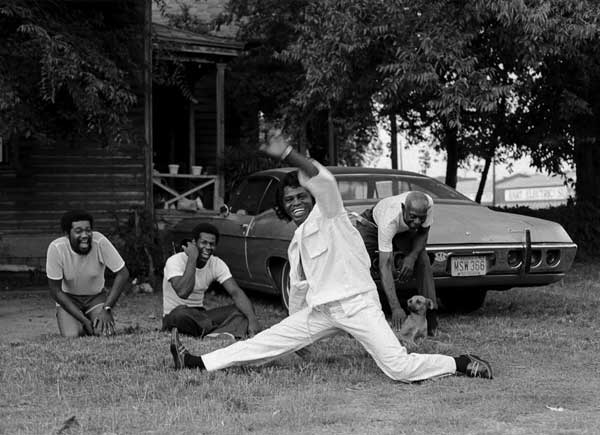
Book Review: Kill 'Em and Leave: Searching for the Real James Brown

Kill 'Em and Leave: Searching for the Real James Brown and the American Soul
by James McBride. Spiegel & Grau, 2016. Hardbound, 232 pp., $28. Also available as paperback, eBook, and audiobook.

Comparing James McBride's search for James Brown with the quest depicted in the classic John Ford film The Searchers reveals some dramatic changes in American racial attitudes over the years, along with some consistencies. Ford's film begins in post–Civil War Texas; its white protagonist, a former Confederate soldier named Ethan Edwards (John Wayne), spends most of the film hunting for the Comanches who've kidnapped his niece. To Edwards, such captives are tainted—"they ain't white," he rails—and he intends to kill the girl when he finds her.

The Tight Lines Project

It has been six years since we last released a recording on the Stereophile label—a jazz album featuring Attention Screen, the late Bob Reina's free-jazz ensemble. This dry spell was mainly due to the increasing demands made on our editorial team's time by social media and the magazine's website, but also by John Atkinson's recording activities with the Portland State Chamber Choir, who issue their recordings on their own label. Nevertheless, we've been keeping our eyes and ears open for suitable opportunities.

The Survivalists: Mosaic and Newvelle Records

One is a well-established reissue label, known the world over for its completist black boxes filled with beautifully remastered jazz recordings from the 1930s through the 1960s.

The other is a new label that records only new jazz, released in elaborate packages that include a poem and original artwork, not to mention transparent 180gm pressings, tying into the newly fashionable idea of a vinyl lifestyle.

In both cases, hope truly springs eternal.

Ray Davies & The Kinks

1996 was a banner year for Ray Davies—one of the most talented writers and conceptualists rock has ever produced. After more than 30 years with The Kinks, the group he has led off and on along with his younger brother Dave, Ray was enjoying a new career as a solo artist. His keen wit and storytelling ability enabled him to take his remarkable one-man play, 20th Century Man, to packed houses and critical acclaim all over the United States. The play, based loosely on his equally remarkable fictionalized autobiography, X-Ray, provided a unique insight into the forces that have shaped Ray Davies's long, prolific career as a rock songwriter.
Advertisement
Advertisement
Advertisement