Music and Recording Features

Sort By:  Post Date TitlePublish Date

A Year to Remember

As I sit down to write a year's-end musical retrospective, I feel that the old column-writing joke between Stereophile editor John Atkinson and myself about first needing a subject and, second, needing it to make sense, will not be a problem this time out. For me, the music and almost everything else about 2001 have been dwarfed in importance by the mayhem wreaked on New York on September 11.

The Fifth Element #1

From the days of Les Paul's chum Mary Ford, through Amanda McBroom and Jennifer Warnes, right up to Patricia Barber, audiophiles have been fascinated, and sometimes obsessed, with female vocals. I nominate to membership in that select sorority another Patricia, in this case O'Callaghan, whose third CD has just been released worldwide by her new label, Teldec.

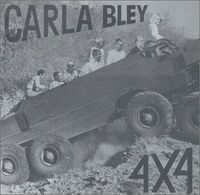
Carla Bley: The Further Adventures of the Lone Arranger

Even though she calls her new band, 4x4, a "small" group, it's a big band—almost too big for the stage of the Knitting Factory on the night of October 11, 2000, as it makes its first American appearance. Bley's piano is so far to stage left, she has to lean against the wall and stoop under a hanging monitor speaker to address the audience. Four music stands dominate the rest of the apron—her front line of tenor saxophone, alto saxophone, trumpet, and trombone stand shoulder to shoulder, blocking the audience's view of Larry Goldings and his Hammond B3, drummer Billy Drummond, and bassist Steve Swallow, who stands 15' back and on a riser. If she'd showed up with her 17-piece band, they'd have had to have hung the horn sections from the rafters, like the sound system.

The Unmaking of Elvis Presley: New Reissues 1960-1972

No artist in the history of sound recordings has a more confused recorded legacy than Elvis Presley. Thanks to several generations' worth of ruthless avarice by his label, the constant machinations and eventual fire sale by his manager, Col. Tom Parker, and his own pathetic sloth, due in part by a 20-year addiction to prescription drugs, Elvis's recorded catalog is an absolute disaster: cut and pasted, issued and reissued as both budget and full-priced collections, exploited beyond all recognition. Keeping track of Elvis's catalog is one of, if not the most, labyrinthine discography in rock 'n' roll history. When all the foreign issues and reissues of his work are taken into account, it is, (speaking from recent experience) an endeavor which severely tasks the human capacity for tedium.

Advertisement
Advertisement
Advertisement