My Back Pages

Sort By:  Post Date TitlePublish Date

Mes après-midis chez Don Cherry

In the spring of 1969, as an aspiring jazz drummer of 15 pretentiously and largely uncomprehendingly drawn to the music's difficult avant-garde, I learned that Don Cherry, Ornette Coleman's alter ego during Ornette's starvation years and an icon of free jazz himself, had recently moved to the village of Congers in my native Rockland County, New York, just north of New York City. Ornette was putting together a group drawn mostly from his early cohorts, and the call went out to Stockholm, where Don had settled—to the extent that he settled anywhere—with his Swedish wife, Moki. Hence his arrival practically on my doorstep.

Magic Picture Shows

Axiomatically, audiophile audio is about quality of reproduced sound. Experientially though—for me at least—it's about visions in the mind's eye. The older I get, the more attentively I listen to recordings, the more importance I assign to the myriad moving pictures I see between my speakers.

Ray's Scream

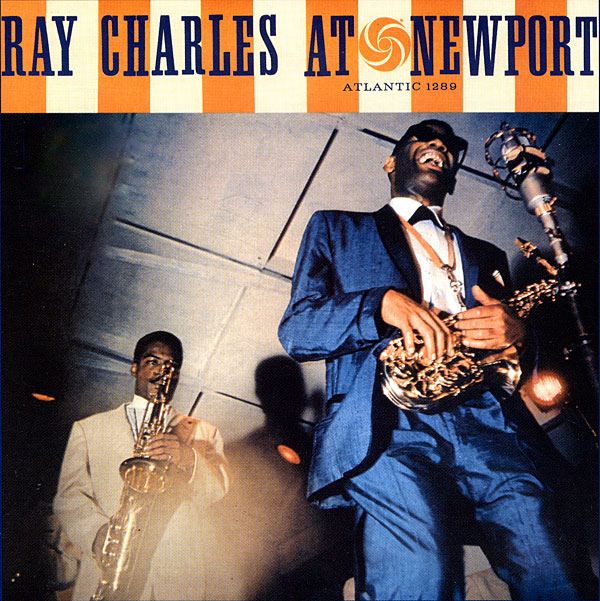
Back in the mid-1960s, I was the unusual white, suburban preteen who, for reasons I've long pondered and never fully understood, was drawn much less powerfully to the Beatles than to blues and R&B. I was a bit of a jazz snob, too. Given these leanings, it's no surprise that one of the half-dozen or so albums that fried my impressionable young brain was that seamless blend of blues, R&B, and jazz, Ray Charles at Newport.

A Wolf Howled in Chicago

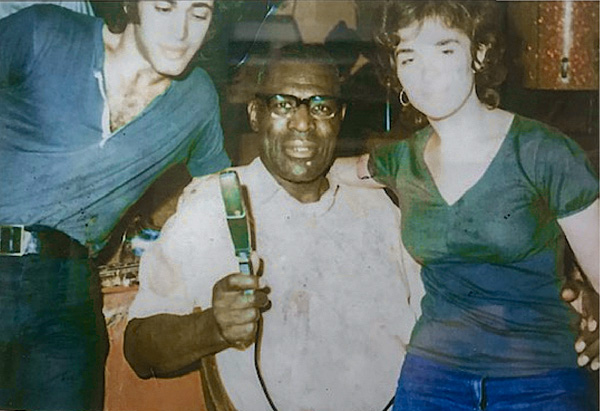
In the early 1970s, my hometown—Chicago—was a hotbed of blues. I discovered the blues in high school via the Rolling Stones, and I began to frequent the city's blues clubs as a college student, at first while still underage. From Theresa's, the South Side tavern where Junior Wells performed, I progressed to the West Side, where on weekends I would head down Madison Street to see Howlin' Wolf at Big Duke's Blue Flame Lounge.

Listening Deeply

Take a walk at night. Walk so silently that the bottoms of your feet become ears.—Pauline Oliveros, Sonic Meditations

The one activity that distinguishes audiophiles from other music lovers is our practice of sitting in solitude and listening closely to music reproduced on a finely tuned playback system.

Lou Reed's Dirty Boulevard of Dreams

New York City is a dream you can't have—glitz, glamor, grime, too much to take in from within, too much to understand from afar. It's a metropolitan manifestation of the Heisenberg principle, its nature changing with how you look at it. No matter how you try, you can't see the forest for the skyscrapers.

My journey to hi-fi

Step 1. When I was in my mid-20s, an older editor at the Dutch current-affairs magazine I worked for told me he wanted to write a piece about audiophiles: He had been bitten by the audio bug himself. Because I often wrote about rock and pop music, he asked if I had a quality hi-fi system, and if so, would I be willing to be interviewed for his article

Alive at the Cafe Au Go Go

I grew up in a household that didn't have a record player and was pretty much devoid of music. In high school, I got a little stereo and began collecting records. By the time I entered Brooklyn College, in 1963, my "main man" was Trini Lopez; I also had a couple of Jack Jones albums. In New York, I discovered the Cafe Au Go Go.
Advertisement
Advertisement
Advertisement