Listening #110
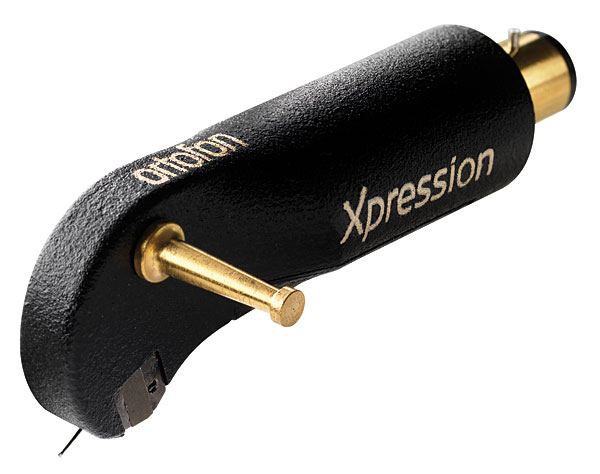
Phono cartridgesalong with mothballs, hobnails, laundry bluing, hot-water bottles, lighter fluid, fur coats, and typewritersare among the most outdated of consumer goods: To most people who make their living in the world of consumer electronics, every new cartridge that hits the shelves is little more than a coughing spasm from the death-room down the hall. You can imagine, then, the welcome accorded new samples of the even more anachronistic pickup head, which combines phono cartridge, headshell, and barbell into a product one seldom sees outside the school librarian's junk drawer. New pickup heads, which tend to look the same as old pickup heads, are manufactured in pessimistically small quantities, and seldom get much attention.

 The Brinkmann Pi cartridge's Benz-Micro heritage was obvious from the get-go. The motor is built to Brinkmann's specifications by Benz-Micro and includes a Micro-Ridge stylus. The cantilever material is not specified. The Pi's output is approximately 0.25mV, and its compliance is moderate at 15µm/mN. Recommended are a tracking force of 1.82gm, a VTA of 23°, and a resistive load of 600 ohms.
Helmut Brinkmann says he tweaked the Pi's design for a year and a half before he achieved the results he desired, including making the tiny set screws out of various materials. The Pi, with a body of machined aluminum designed to control the dissipation of resonant energy, weighs a hefty 14gm. Brinkmann supplies aluminum screws and titanium washers, which, he claims, in combination with special damping between the cartridge body and headshell, have been "sonically tuned to create a unique musical instrument."
The Brinkmann Pi cartridge's Benz-Micro heritage was obvious from the get-go. The motor is built to Brinkmann's specifications by Benz-Micro and includes a Micro-Ridge stylus. The cantilever material is not specified. The Pi's output is approximately 0.25mV, and its compliance is moderate at 15µm/mN. Recommended are a tracking force of 1.82gm, a VTA of 23°, and a resistive load of 600 ohms.
Helmut Brinkmann says he tweaked the Pi's design for a year and a half before he achieved the results he desired, including making the tiny set screws out of various materials. The Pi, with a body of machined aluminum designed to control the dissipation of resonant energy, weighs a hefty 14gm. Brinkmann supplies aluminum screws and titanium washers, which, he claims, in combination with special damping between the cartridge body and headshell, have been "sonically tuned to create a unique musical instrument."