Reference

Sort By:  Post Date TitlePublish Date

CD Tweaks & Listening Tests

In "Music and Fractals" in the November 1990 issue, I discuss how digital audio's quantization of amplitude information in what was originally a continuous waveform represents a fundamental difference between analog and digital representations of music. In a letter published in the English magazine Hi-Fi Review in January 1990, John Lambshead conjectured that naturally originating sounds were pseudo-fractal in character; that is, their waveforms have a wealth of fine detail, and that detail itself has an even finer-structured wealth of fine detail, and so on, until the crinkliness of the waveform is finally enveloped in the analog noise that accompanies every sound we hear.
Listening to MQA

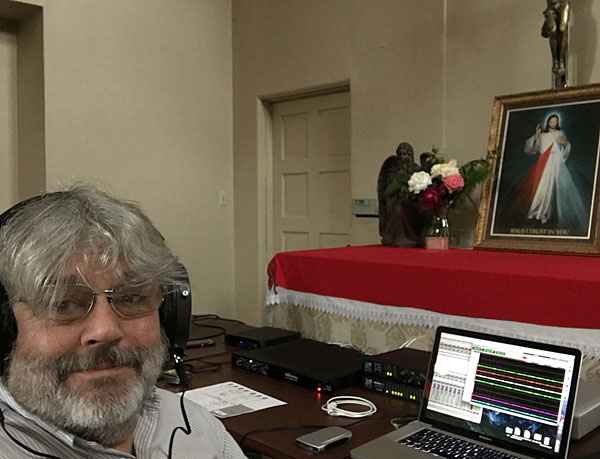
Last June, Jim Austin briefly discussed the operation of MQA in his review of the Meridian Explorer2 USB DAC, but you can find a more detailed explanation on Stereophile's website here and here. MQA involves two fundamental concepts, discussed in a paper presented to the Audio Engineering Society in October 2014. The first is responsible for a large reduction in the bandwidth required to store and stream high-resolution files, the second for a potential improvement in sound quality. . .

MQA: Questions and Answers

Author's Note: We are grateful to Stereophile for the opportunity to address some frequently repeated technical questions appearing in comments to articles. Recently this has included misunderstandings about noise calculation, dynamic range, resolution, definition, music spectra, channel capacity, lossless processing and temporal aspects of digital channels.

To simplify this document we have grouped the topics and set them as questions and answers either as response, tutorial or axiom. Some months ago we published a comprehensive Q&A for an online forum and to avoid repetition we occasionally refer to topics already discussed there (see [37] in the "References" sidebar).—J. Robert Stuart

PASC & Philips' DCC

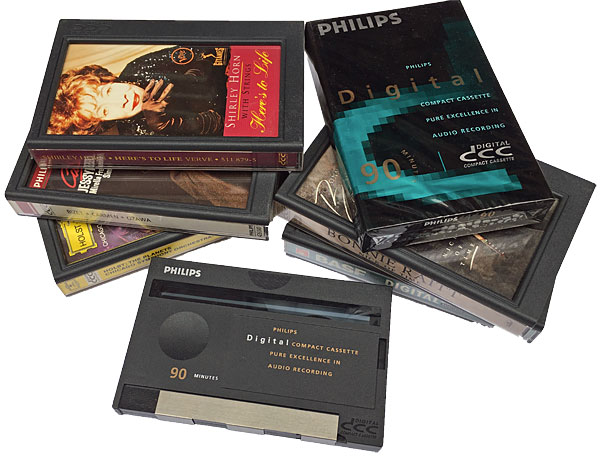
Editor's Note: In the 21st Century, lossy audio data compression, in the form of MP3 and AAC files, Dolby Digital and DTS-encoded soundtracks, and YouTube and Spotify streaming, is ubiquitous. But audiophiles were first exposed to the subject a quarter-century ago, when Philips launched its ill-fated DCC cassette format. What follows is Stereophile's complete coverage on both DCC and its PASC lossy-compression encoding from our April 1991 issue.—John Atkinson

PDM, PWM, Delta-Sigma, 1-Bit DACs

Editor's Note: One-bit DAC chips in the 21st century, where the analog output signal is reconstructed from a very high-rate stream of pulses, are ubiquitous. But a quarter-century ago, those chips were only just beginning to stream from the chip foundries. In this feature, we aggregate Stereophile's 1989 coverage of the then-new technology, starting with Peter van Willenswaard on the basics.—John Atkinson.

1989 may well become the year of the D/A converter (DAC). CD-player manufacturers have, almost without exception, launched research projects focusing on this problem area of digital audio; many of these projects are already a year old. This is, however, by no means the only imperfection keeping us away from the high-quality sound we have come to suspect is possible with digital audio media, and maybe not even the most important.

Inside MQA

Jim Austin briefly discusses MQA in his review of the Explorer2 in this issue, but a more complete description of MQA can be found in an article posted on Stereophile's website at the end of 2014.

MQA involves two fundamental concepts, discussed in a paper presented to the Audio Engineering Society in October 2014, the first responsible for a potential improvement in sound quality, the second responsible for a large reduction in the bandwidth required for storage and streaming of high-resolution files...

Absolute Phase: Fact or Fallacy?

Natural sounds produce different waveshapes during their positive and negative phases, and playback-system polarity reversal often changes the reproduced sound. Does this mean our ears are phase-responsive, or is there something else here we've been overlooking?

There has been much discussion recently among perfectionists about the importance of what is called "absolute phase" in sound reproduction. Basically, the contention has been that, since many musical sounds are asymmetrical (having different waveforms during positive and negative phases), it is important that a system make the proper distinctions between positive (compression) and negative (rarefaction) phases in playback.

Audio Engineering: the Next 40 Years

By 2035, the way we produce and consume media will be entirely different from how we experience it now. Today there is still a "fourth wall" between us and the media we consume: within three decades, that line between reality and its recreation will all but disappear. Our media experiences will become fully immersive—from spherical audio and video that tracks with our body's movements, to gestural computing, to physical-feedback devices, and more. Using tomorrow's technology, our children and grandchildren may find it difficult to distinguish the real thing from reproduced.

Lossy Compression: the Sonic Dangers

Editor's Introduction: In 2013, lossy compression is everywhere—without lossy codecs like MP3, Dolby Digital, DTS, A2DP, AAC, apt-X, and Ogg Vorbis, there would be no Web audio services like Spotify or Pandora, no multichannel soundtracks on DVD, no Bluetooth audio, no DAB and HDradio, no Sirius/XM, and no iTunes, to quote the commercial successes and no Napster, MiniDisc, or DCC, to quote the failures. Despite their potential for damage to the music, the convenience and sometimes drastic reduction in audio file size have made lossy codecs ubiquitous in the 21st century. Stereophile covered the development of lossy compression; following is an article from more than two decades ago warning of the sonic dangers.—Editor
Advertisement
Advertisement
Advertisement