
Reference

Sort By:  Post Date TitlePublish Date

Real-Life Measurements

As mentioned by two readers in this month's "Letters," amplifiers are used to drive loudspeakers but are almost exclusively measured into resistive loads. The reasons for this are twofold: 1) real loudspeakers both produce neighbor-annoying sound levels and tend to break when driven with typical amplifier test signals; and 2) the question as to which "standard" loudspeaker should be used is impossible to answer---at least the conventional resistive loads are consistent and repeatable.
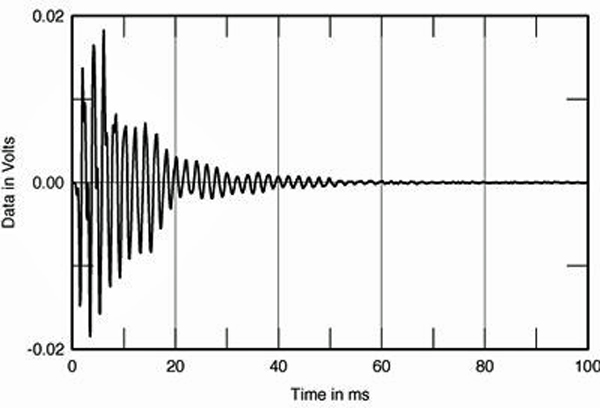
The Sound of Surprise (the loudspeaker/stand interface)

One of the great imponderables in hi-fi is how much the vibrations of a dynamic loudspeaker's cabinet walls contribute to its overall sound quality. Studies by William Stevens in the mid-1970s showed that, with some speakers, the acoustic output of the enclosure could be almost as much as that from the drive-units. Since then, responsible speaker designers have worked hard either to damp cabinet vibrations or to shift them to higher frequencies where their effect on the music will be less deleterious.

Tweaks'n'Squeaks

If you read Stereophile regularly, you already know that all audio equipment does not sound the same. But did you know that a given piece of gear can sound better or worse depending upon how it's set up and used? With a few simple tweaks, you can bring out the best in your audio system.

The Unseen Variable

Although I still haven't been able to listen to the Cary Audio Design 805 single-ended tube monoblocks that Stereophile praised so highly a year ago (Vol.17 No.1, p.104), I've recently auditioned many other tubed single-ended designs. Undeniably, a good SE design has a distinctive quality of harmony and atmosphere in the midrange that reaches well beyond the average attainment of its solid-state brethren.

Quality Lies in the Details

Time to 'fess up: How many of you actually read the "Measurements" sections of Stereophile's equipment reports and understand what's being measured, and why? I suspect that many readers skip over the technical assessment of the reviewed product and make a dash for the "Conclusion."

DTS & Data Compression

In the October 1994 Stereophile (Vol.17 No.10, p.39), I discussed my experiences with the DTS audio data-reduction code/decode switch box, which, briefly, is a two-channel box that makes use of the algorithm DTS has proposed for their version of discrete multichannel sound for laserdiscs.

Stereophile Test CD 3

Back in the spring of 1990, Stereophile introduced its first Test">http://www.stereophile.com//reference/176/">Test CD, featuring a mixture of test signals and musical tracks recorded by the magazine's editors and writers. Even as we were working on that first disc, however, we had plans to produce a second disc which would expand on the usefulness of the first and feature a more varied selection of music. The result was our Test">http://www.stereophile.com//features/338/">Test CD 2, released in May 1992.

Building the Hi-Fi House

Anyone who's ever looked for it knows how rare audio-friendly living space is. Perhaps someday an enterprising developer will build Audiophile Acres---a whole subdivision of audio houses or soundproofed condos that'll meet these needs---then stand by while hordes of long-suffering audiophiles stampede the sales office, frantically waving down-payments in their sweaty hands.

Advertisement
Advertisement
Advertisement