Tube Power Amp Reviews

Sort By:  Post Date TitlePublish Date

Balanced Audio Technology VK-56SE power amplifier

I had never been alone with a Russian-manufactured 6C33C tube. At least not at night, in the dark. The first night Balanced Audio Technology's VK-56SE tubed amplifier was in my system, I sat on the floor studying the unusual shape and dark orange glow of its four 6C33C-B output tubes. I noticed their brightly lit, cathedral-like innards. My Russian neighbor told me they were used as regulator tubes in MiG jets during the Cold War. I could believe it—their exposed cathodes were the exact color of the Soviet flag. From more than a foot away, I could feel the heat from their high-amperage filaments.

Gramophone Dreams #27: EleKit TU-8600R amplifier kit

I will never forget.

In 1988 I had my first experience with Western Electric 300B tubes. It took place on a quiet, streetlights-and-snow night at my friend Ryoichi's apartment on Riverside Drive, in Manhattan.

I had never heard of the late Japanese amplifier designer Ken Shindo, of Shindo Laboratory. But that evening, Ryo's audio system was all Shindo: a hammertone gray Shindo-restored, grease-bearing Garrard 301 turntable sitting on a Shindo plinth of glossy wood, with a Shindo-modified Ortofon tonearm and SPU cartridge, a Shindo moving-coil step-up transformer, and a Shindo preamplifier with a moving-magnet phono stage.

Air Tight ATM-300R power amplifier

To audio designers in Japan and elsewhere, the single-ended, 300B-tubed amplifier is like a haiku: an art form defined by both its prescribed limitations and the potential such restraint offers for artistic expression. Here, the only hard-and-fast rule is a simple one: output devices are limited to one 300B directly heated triode tube per channel. From there, it's a blank slate: Do you want AC or DC on the output-tube heaters? Tube or solid-state rectification? Low or high gain? Fixed or cathode bias? New parts, vintage parts, or a mix of both? Triode or pentode tubes as drivers? Capacitors or transformers—or nothing at all—between the plates of the driver tubes and the grids of the output tubes?

Cary Audio CAD-805RS monoblock power amplifier

There's no place for fashion in epidemiology, aeronautical engineering, or the mining and storage of uranium. Fortunately, domestic audio is less serious, its goals more scattered and ambiguous, than those and a thousand other pursuits.

And so, throughout the 20th century, any number of trends in domestic audio popped up their heads, some remembered as fads, others as legitimate approaches to playback. Among the latter are amplifiers whose output sections operate in single-ended mode, in which the entire signal waveform is amplified by a single device.

Counterpoint SA-4 monoblock power amplifier

Some audio products deliver truly superb sound of a kind that really makes all the frustrations of building a high-end system worthwhile; they also require exceptional attention and care. The Counterpoint SA-4 is a case in point. With the right speakers, it competes for the title of "Most Transparent Amplifier Available at Any Price." On the other hand, this amplifier steadily loses output power as speaker impedance drops; it must be carefully matched to the right speaker. Then, and only then, can it produce one of the finest musical experiences available.

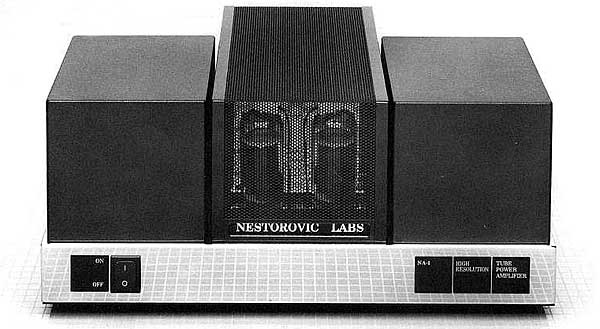
Nestorovic Alpha-1 power amplifier

The great debate that has long separated audiophiles is tubes vs solid-state. Other topics, CD for example, may temporarily steal the spotlight, but year-in and year-out no other subject is the cause of as much controversy as whether tubed or solid-state circuitry produces the more accurate sound. As is typical with long-standing feuds, the split runs deep, and tempers often flare.

Doshi Audio Monoblock V3.0 power amplifier

Doshi Audio first crossed my radar at the 2010 Rocky Mountain Audio Fest, where I wrote that the sound of the company's tubed monoblocks and preamp, connected to Wilson Audio Sasha loudspeakers via Transparent XL cables, "excelled in midrange strength as the system threw an exciting soundstage." After auditions of Doshi-Wilson pairings at many subsequent shows had convinced me that Doshi's products could truly sing, I contacted company owner and product designer Nishith "Nick" Doshi to inquire about reviewing one of his amps.

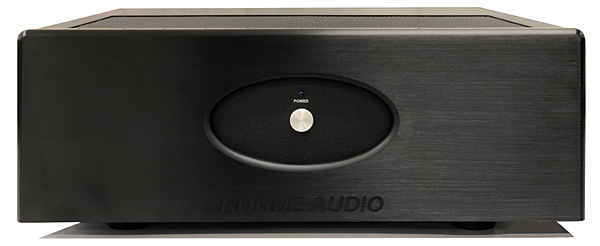
Rogue Audio Stereo 100 power amplifier

When I began writing for Stereophile, I dreaded doing comparisons. They were stressful and tedious—and what if I got them wrong? But I quickly learned: Not only do readers enjoy comparisons, they need them. How else might they imagine the relative merits of the component under consideration? Once I realized this, I began acquiring a range of reference amplifiers.

But conspicuously missing from my audio menagerie has been a fast, neutral, 100Wpc tube amp to put more pop, fire, and maybe a little glow, into the Harbeth M30.2s.

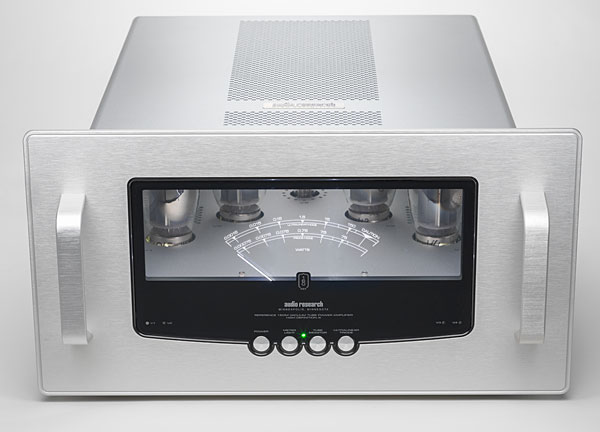
Audio Research Reference 160M monoblock power amplifier

At a recent dealer event in Seattle, after being impressed by the musical rightness of an Audio Research Corp. LS28 preamplifier and VT80SE power amplifier driving a pair of Sonus Faber Guarneri loudspeakers, I spoke with ARC's Dave Gordon about reviewing one of the company's new amplifiers. Less than a month later, two ARC Reference 160M tubed monoblock amplifiers ($30,000/pair) were headed my way.
Advertisement
Advertisement
Advertisement