

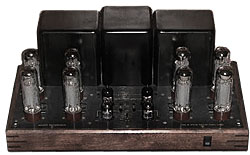
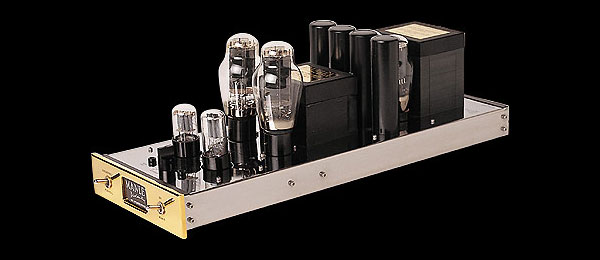
Sophia Electric 91-01 300B monoblock power amplifier

"We put music in the souls of our amplifiers. Every amplifier, every tube, every transformer has music in its soul."
Not to be cynical, but I've heard, over the years, countless variations on that sentiment. Not to be naïve, but it rang with somewhat-greater-than-usual sincerity when given voice by 45-year-old Richard Wugangfounder, with his late father, of Virginia-based Sophia Electric, Inc.


 Do you believe in beginner's luck? If so, some of your personality traits should be quite predictable. Let's see. You're very likely an optimist with a "bull-market" mentality, play the lottery, and, most important, bought a CD player within a year of its introduction, or a solid-state amp in the '60s. You're apt to mail in a profusion of bingo cards (you know, the kind Stereo Review is full of) and spend hours perusing specifications in the hope of finding a kernel of truth in all of that chaff. You'd particularly be appalled at that fellow I ran into the other day, who had bought an AR-1 in 1956 and waited another decade before buying another speakerjust to make sure stereo wasn't a fad. Hey, relax, I won't turn you in; the mere fact that you're reading Stereophile is sufficient reason for redemption.

 I've never written a love story before, but then, there's always a first time. This romance concerns the stunningly anthropomorhic