As We See It

Sort By:  Post Date TitlePublish Date

Starting Over Again for the First Time

"There are two kinds of music. Good music, and the other kind," Duke Ellington is famously supposed to have said. But that doesn't tell us how to recognize "good music," and it doesn't define good. Nor will this essay. Many have described the music of, say, Mozart or J.S. Bach with such phrases as the music of heaven or the mind of God or—especially Bach's music—that it embodies the basic structure of the universe/existence/reality. I've said such things myself.
The Next Wave

I began working as a salesman of high-end audio gear in 1978. I was 29, and, as I recall, a healthy percentage of my customers were about my age. Most of the top high-end designers and entrepreneurs, too, were young: John Curl, Dan D'Agostino, Jon Dahlquist, Ray Kimber, Mark Levinson, Bill Low, Mike Moffat, Nelson Pass, Peter Snell, Bob Stuart, Jim Thiel, Ivor Tiefenbrun, A.J. van den Hul, Richard Vandersteen, Harry Weisfeld, David Wilson. The fact is, high-end audio's Golden Age—the late 1970s to the mid-1980s—was largely fueled by the under-40 set, and most high-end journalists were fellow baby boomers. Now we're all oldsters, with just a smattering of under-fortysomethings. That's about to change.

The Missing Specification

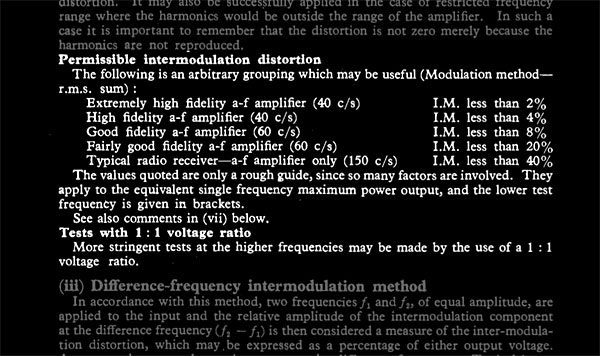
In the 1952 edition of the Radiotron Designer's Handbook, long recognized as the "bible" of the industry, the permissible level of IM distortion for a high-fidelity amplifier was given as 3%, with the alternate figure of 2% being cited as a "rather extreme" specification. We wonder what the author of that statement would think of today's solid-state amplifiers with their measured IM of 0.01% and less. And we wonder what he would think about the fact that these super-amplifiers still have audible distortion.

Why They Scorn Us—and Why We Should Care

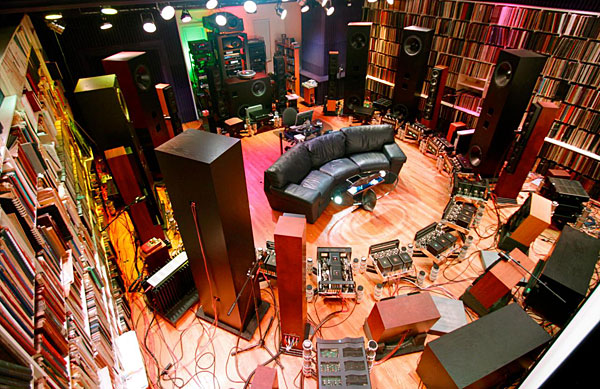
Photo © Kipnis Studios 2015

Are you on Facebook? Twitter? Instagram? Reddit? Social media has done much to bring together people of every interest imaginable to share their fascinations, desires, and, occasionally, delusions. From fans of frogs (FrogStomp) and proponents of clean public toilets (Benjyo Soujer) to a group that challenged an Iranian cleric's statement that women's flimsy attire causes earthquakes (Boobquake), social media is a global town square in which anyone with a keyboard and an attitude has an equal voice.

The Silent Minority

Until about nine months ago, in the fall of 1970, FM radio station WFLN, Philadelphia, was just another one of that dying breed: the classical FM station. Like its counterparts in the few remaining classical-radio cities, it provides the major part of the high-fidelity listener's radio diet, and also like most similar classical stations, its fidelity was nothing to brag about.

The Tin-Eared Americans

How would you feel after paying $2000 for super-stereo system, you learned that genuinely high-fidelity recordings of many excellent classical musical performances were not available to you? Could you excuse it with a shrug and the philosophical observation that nothing's perfect but things will get better as the state of the recording art improves? Okay then, what if you learned that truly high-fidelity recordings of these performances, that would sound very much like the real thing if reproduced through your super system, are available to millions of other people but not to you? Would you begin to feel just a little bit slighted, or maybe even irritated?

What's an Audiophile? (Part 634)

Most of us have experienced the proverbial curveball that comes out of nowhere to smack us right in the head. My most recent such encounter was pitched by Stereophile contributor Steve Guttenberg.

Steve's whammy arrived amid an e-mail exchange among Stereophile writers concerning a rather clueless column in another publication on the dearth of women audiophiles. After asking how many female audiophiles each of us knew, Steve G. defined what he meant by audiophile: "a person who frets over their system, agonizes over choices, loves gear, and sometimes music. You know, the kind of person who reads Stereophile or The Abso!ute Sound. Merely owning a nice stereo doesn't make you an audiophile. Owning a Leica doesn't make you a photographer. You have to be at least a little obsessed."

What's Right?

A recent experience with two excellent loudspeaker systems and two of the top power amplifiers raised a question that has been cropping up more and more frequently these days: When one component sounds more toppish or more bassy than another, which one is really flat and which isn't?

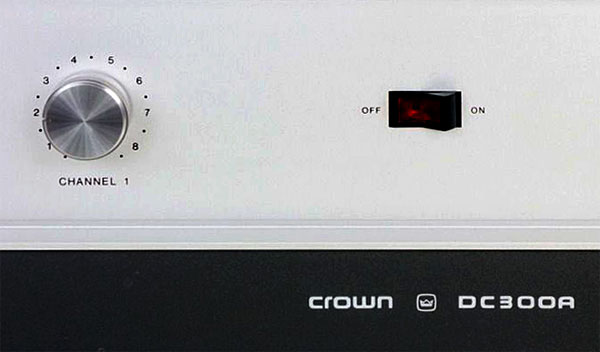
The question arose this time in connection with some listening tests on a pair of FMI 80 speakers and a pair of IMF Monitor III speakers, using Audio Research Dual 75 and Crown DC-300A power amplifiers.

The Flexible Firms

Some years ago, we attended a hi-fi show in New York City where one of the exhibitors was RCA Victor. Their presence there would have been forgotten were it not for the fact that their exhibit, featuring their own discs played on their own line of phonographs, was producing some of the filthiest sound at the entire show. And that, in the proverbial nutshell, is why you never see reports in Stereophile on equipment made by RCA, Philco or General Electric.

Are you still into that sound stuff?

A decade ago, my mother, on noticing a copy of Stereophile on my kitchen counter, asked me, "Are you still into that sound stuff?" Her tone had a touch of exasperation.

"Geez, Mom. I've been an audiophile for 15 years. This isn't a phase I'm going to outgrow."

Instead of motherly empathy, I got a slight smirk and a retort: "But it's always the same thing."

Advertisement
Advertisement
Advertisement