
As We See It

Sort By:  Post Date TitlePublish Date

Reflections on the Audiophile Image
"Blondy watched this proud, drum-tight personality fidget past him on the street and began projecting; he couldn't help it: an unfinished degree in journalism, concerned married sisters in New Jersey or Connecticut (but probably New Jersey), weights but no cardio, aggrieved blind dates, Cigar Aficionado and Stereophile, takeout menus, acres of porn." —from "Lucky Alan," by Jonathan Lethem; The New Yorker, March 19, 2007

When did being interested in hi-fi lose its cool? When did it become antisocial? One minute hi-fi was hanging with Hef center-stage in a groovy bachelor pad, and the next thing you know it's a prop used to describe someone who "walked in a fiery aura of loneliness," as Lethem described it. I ask because I'm genuinely concerned. Some of my best friends are audiophiles. But it seems that if you want to be anything related to music, the last thing you want to be is an audiophile.
When the Music's Over

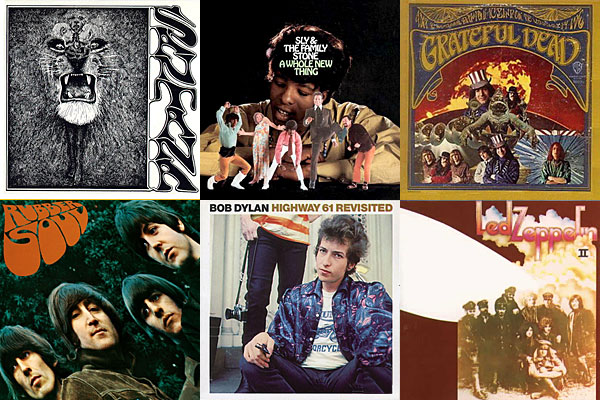
It's one of those good news/bad news stories: more people are listening to music than ever before, but the major record labels are in dire straits. Some of the reasons for the record industry's malaise are easy to spot—teenagers and grandmas grooving to music-streaming services like Spotify, Pandora, and MOG, or ripping each other's CDs—but the music industry's problems run deeper than lost sales. Digital audio mortally wounded recorded music's creative mojo in 1982, and the record industry never fully recovered.

The Upward Price Spiral

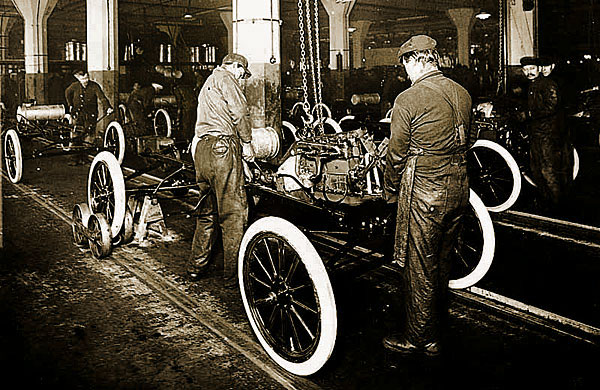
On January 5, 2011, I was flying to Las Vegas for the Consumer Electronics Show (footnote 1). On January 5, 1914, Henry Ford announced that he would pay a minimum of $5 to eligible employees who worked an eight-hour day. (At that time, a good wage was $2.50 for a workday of 10 hours.) Ford was not being altruistic; he wanted to motivate his employees both to become more productive and to stay loyal to their employer. And there were strings attached: A Ford employee "must show himself to be sober, saving, steady, industrious and must satisfy . . . staff that his money will not be wasted in riotous living." But Ford also wanted his workers to be able to afford the products they made. It was Ford's action, I believe, that triggered the rise of the American middle class, and it was that middle class's combination of disposable income and increased leisure time that fueled the growth of high-end audio.

Audio, Meet Science

For a field based on science, high-end audio has a relationship with its parent discipline that is regrettably complex. Even as they enjoy science's technological fruits, many audiophiles reject the very methods—scientific testing—that made possible audio in the home. That seems strange to me.

Music Matters

I began writing these words on December 1, 2010, 13 years to the day that the magazine's website, www.stereophile.com, emerged from the digital darkness. That first, 1997 edition of our website was to a large extent the brainchild of one man, webmonkey Jon Iverson, who ever since has overseen its design and growth.

Your Show of Shows

There's something happening here, and what it is is exactly clear. It's a revolution of sorts—a new paradigm for the High End. Despite pessimistic proclamations of the impending death of high-end audio, an unprecedented number of new high-end consumer shows have emerged in North America. Filling the gap left by the demise of Stereophile's Home Entertainment Show in 2007, these seven (!) shows—two new in 2011, two in expanded versions following successful launches in 2010—are reaching out to people of all ages, sexes, and format preferences.

Spectator Sports, Good and Bad

There is something about the performance of music that is in the nature of a spectator sport. By this I do not mean big-arena stagecraft and lights and fireworks and dance routines. I mean the actual making of the music.

To see Eric Johnson's fingers flying over his Fender Stratocaster as he hits "Cliffs of Dover" out of the park one more time is to enjoy something that is every bit as much an athletic performance and a spectator sport as baseball is. There is a thrill to watching people do difficult things exceptionally well, things that most of us can only take random sidelong swipes at.

Advertisement
Advertisement
Advertisement