John Atkinson
 Procol Harum: Live: In Concert with the Edmonton Symphony Orchestra
Procol Harum, Edmonton Symphony Orchestra, Lawrence Leonard, cond.; Da Camera Singers
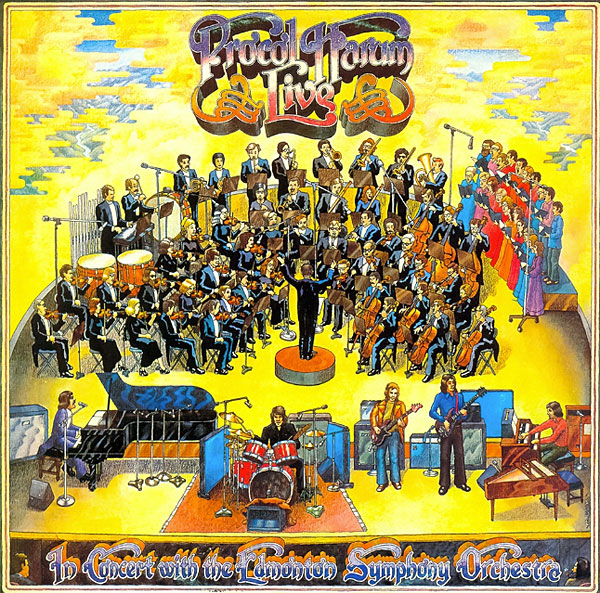
Chrysalis CHR1004 (UK LP). 1972. Mobile Fidelity Sound Lab MFCD 788 (CD) 2007. Gary Brooker, orchs.; Chris Thomas, prod.; Wally Heider, Ray Thompson, Tom Scott, Ken Caillat, Biff Dawe, engs. The end of the 1960s was a Golden Age for British "progressive" rock bands. Following the demise of Cream in 1968, those that had the biggest effect on this budding audiophile were King Crimson, The Nice, Yes, and Procol Harum. I saw the first three live on a number of occasions but Procol only once, in June 1972. Only pianist, vocalist, and composer Gary Brooker was left from the "Whiter Shade of Pale" band, but with B.J. Wilson on drums, Chris Copping on Hammond organ, Dave Ball on guitar, and Alan Cartwright on bass, they were touring to promote their then-new album recorded live in 1971 with an orchestra and choir in Edmonton, Canada. (Insights into the making of this album can be found here and here.) To my disappointment there was no orchestra at the June 1972 concert, but the new band still held the audience in thrall. Most live rock albums are mixed for sonic impact, but this one is different. Because of leakage into the mikes used for the orchestra and choir, the band used smaller amplifiers than usual and, reportedly, even B.J. Wilson played with less bombast than usual. The album's cover reflects what was captured on this album (due to that mike leakage): the band in front of the orchestra, which is in front of the choir. The individual images are appropriately sized, and the dynamic range is wide; at the concluding cry of "Shalimar" in "Whaling Stories," lyricist Keith Reid's enigmatic tale of shipwreck and redemption, a shiver never fails to run down my spine. I wager this was the only album with audiophile sound quality to reach the Top Five in the Billboard Pop Music chart.
 Gabrieli Consort: Silence & Music
Works By Dove, Elgar, Grainger, Howells, Macmillan, Stanford, Vaughan Williams
Gabrieli Consort; Paul McCreesh, cond.
Signum Classics/Winged Lion SIGCD490 (16/44.1 FLAC, Tidal, Qobuz). 2017. Adrian Peacock, prod.; Neal Hutchinson, eng.; Paul McCreesh, Adrian Peacock, David Hinitt, editing. "The music is not in the notes, but in the silence between." Was it Mozart who said this? Some insist it was Debussy. Others misquote Miles Davis. But whomever it was, this aptly titled album of small-scale choral works gave me moments of much-needed calm during New York City's pandemic shutdown. Some of these British part songs were familiar—Percy Grainger's arrangement of "Brigg Fair," Edward Elgar's "There Is Sweet Music"—others were new to me, such as Jonathan Dove's "Who Killed Cock Robin?" and James MacMillan's "The Gallant Weaver." The album takes its name from one of its five works by Ralph Vaughan Williams, but the standout track for me is Charles Villiers Stanford's "The Blue Bird." I first fell in love with this hauntingly beautiful setting of a Mary Coleridge poem on a 1977 LP by Swingle II. But in contrast to that close-miked studio recording, the sound of the Gabrieli Consort's performance is lucid, transparent, and unforced. The fragile images of each singer are stably positioned within the supportive acoustic of the recording venue, Charterhouse School Chapel in Surrey, England. As the soprano's held high E flat at the end of the "The Blue Bird" fades, it's as if a door that had been opened into a universe of calm slowly closes.
Jim Austin
 Charles Mingus: Mingus: The Candid Recordings Featuring Eric Dolphy
Charles Mingus, Eric Dolphy, many others
Barnaby KZ 31034 (LP). 1961/1972. Nat Hentoff, Jon Waxman, prods. It's astonishing for me to realize that I've never chosen a Charles Mingus recording as an R2D4, considering how much I love Mingus's angry, rowdy, yet somehow classical approach. But which one to choose? Here's one useful criterion: Eric Dolphy must play on the record. I've decided to go with this one, which collects two sessions recorded at the Nola Penthouse Studios, on the 17th floor of the former Steinway building at 111 W. 57th St., down the street from Carnegie Hall. (That 1920s building is now part of a residential complex attached to one of New York's new asymmetrical skyscrapers for billionaires.)
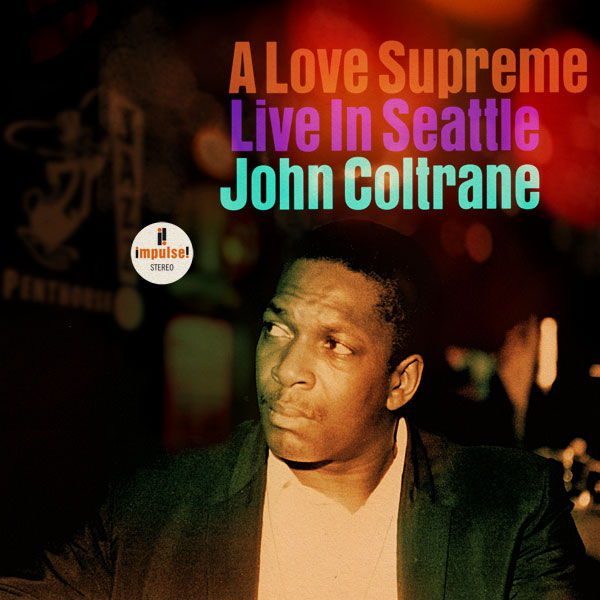 John Coltrane: A Love Supreme: Live In Seattle
Impulse!/Ume (LP B0034291-01). 2021. Ravi Coltrane, prod.; Kevin Reeves, eng.
Larry Birnbaum
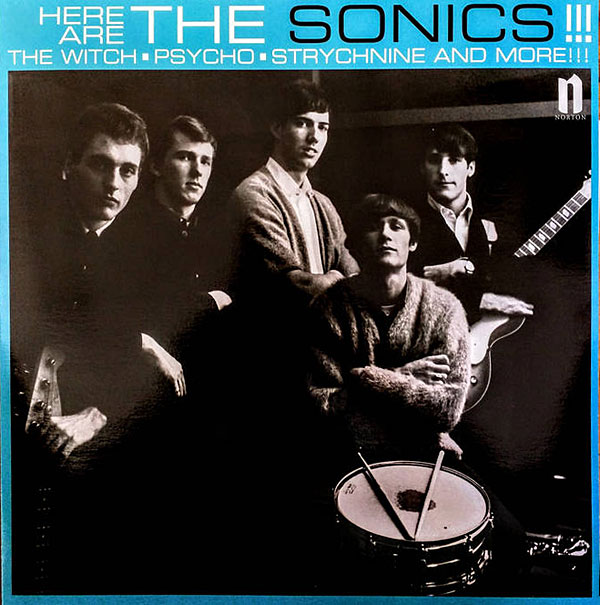 The Sonics: Here Are The Sonics!!!
Norton CRW 903 (CD). 1965/1999. John "Buck" Ormsby, Kent Morrill, prods.; Kearney Barton, eng.; Bob Irwin, remastering. Perhaps the raunchiest of the raucous garage-rock bands that emerged from the Pacific Northwest in the 1960s (think Kingsmen), the Sonics go full-throttle on their debut album, originally produced by members of Tacoma's Fabulous Wailers for their own Etiquette label. On hard-grinding originals like "The Witch," "Boss Hoss," "Psycho," and "Strychnine," and on covers like Richard Berry's "Have Love, Will Travel" and the Wailers' "Dirty Robber," singer Gerry Roslie growls and screeches over Larry Parypa's fuzzy guitar and Bob Bennett's pounding drums, forging a template for future punk rockers. The CD reissue features four bonus tracks, including the impious "Don't Believe in Christmas."
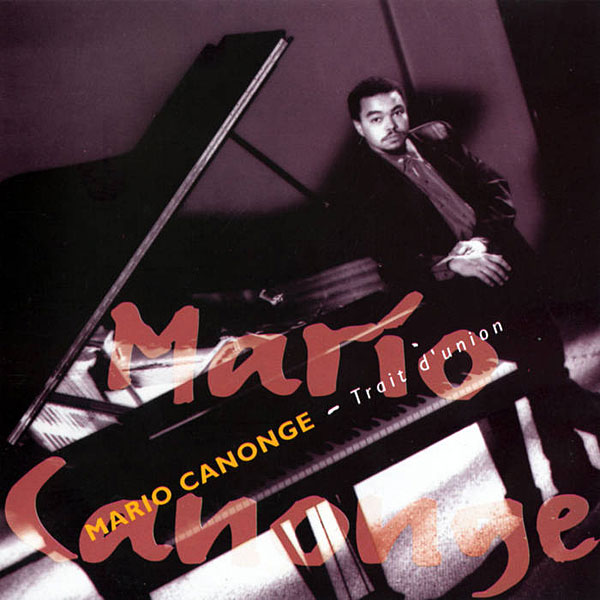 Mario Canonge: Trait d'Union
Mario Canonge, piano; 18 others
Mélodie/Kann' 08635-2 (CD). 1993. Hervé Le Guil, Damien Bertrand, prods., engs. This Martinican piano virtuoso's style is a buoyant fusion of jazz, salsa, and zouk. His sophomore release presents his regular quartet plus vocal partner Ralph Thamar, members of the pioneering zouk band Kassav', and other guests. The four instrumental tracks showcase Canonge's bopless, bluesless, cocktail-jazz piano over zouk or zouk-like beats. The remaining five tracks feature singers Ralph Thamar, Jocelyne Béroard, and Jean-Paul Pognon performing zouk, ballad, and salsa numbers. Uplifting and original, it's a breath of fresh air.
Phil Brett
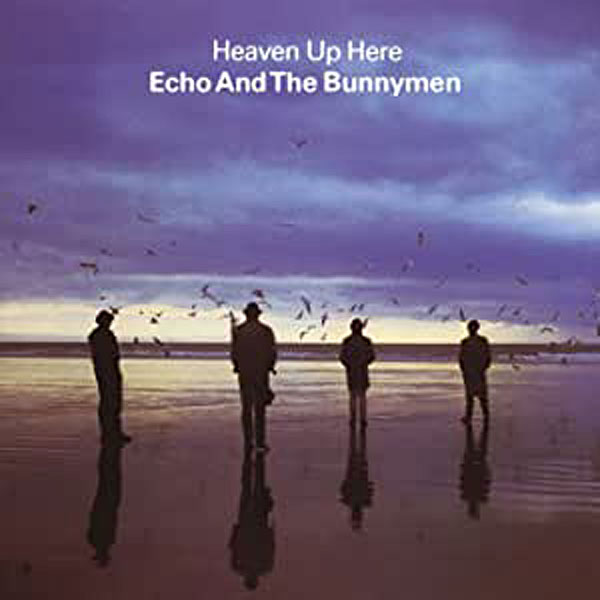 Echo And The Bunnymen: Heaven Up Here
Korova KODE 3 (LP). 1981. Hugh Jones, prod., eng. Many post-punk bands stumbled after acclaimed debuts. Not the Bunnymen; indeed, their first four albums are all stunning. For me, though, this is their masterpiece. It affects me physically like few records have ever managed to do. When I first heard it, ripples went through me like an electric current, and with every subsequent listening, the reaction has always been the same.
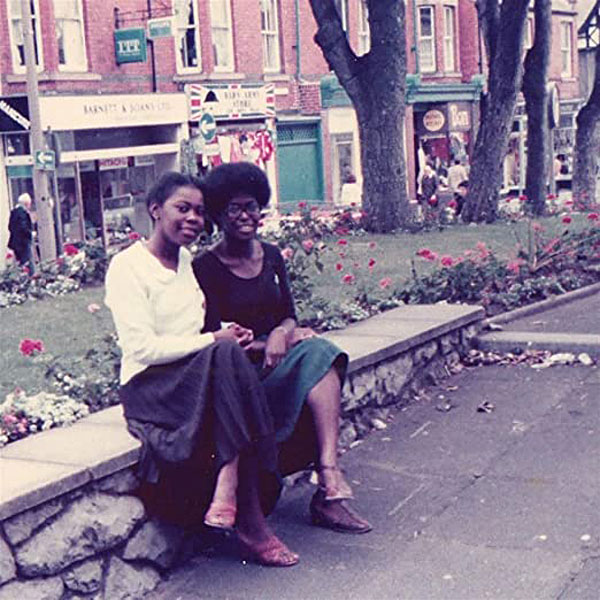 Big Joanie: Sistahs
The Daydream Library Series DLSO1CD (CD). 2018/2019. Margo Broom, prod., eng. Big Joanie's debut, Sistahs, had already been out a while when I went to see the Raincoats play. Big Joanie was the supporting act, and I had never heard of them. Two minutes into their set, I was hooked. A few years before my "discovery," drummer Chardine Taylor-Stone and bassist Kiera Coward-Deyell (replaced later by Estella Adeyeri) had responded to an ad placed by Stephanie Phillips (guitar and lead vocals) calling for a "black feminist punk band." With its assertive, witty lyrics and lo-fi approach, Sistahs has obvious influences from bands such as the Raincoats. But it would be wrong to view the album as a derivative nostalgia trip: Sistahs is alive and contemporary. It's not thrash, but it's melodic, and danceable in its DIY way. Packed with short catchy tunes played by a tight band fronted by a lead singer with a great voice, it is a marvelous album. Discover it for yourselves.
Thomas Conrad
 Thomas Marriott/Bill Anschell/Jeff Johnson/John Bishop: The Cool Season
Marriott, trumpet, flugelhorn; Anschell, piano; Johnson, bass; Bishop, drums
Origin Records 82494 (CD). 2007. John Bishop, prod.; Floyd Reitsma, eng.
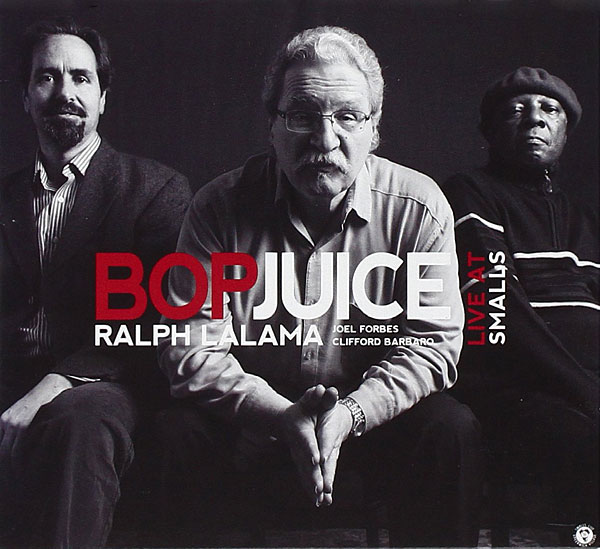 Ralph Lalama & Bopjuice: Live At Smalls
Lalama, tenor saxophone; Joel Forbes, bass; Clifford Barbaro, drums
SmallsLIVE SL-0027 (CD). 2012. Spike Wilner, prod.; Jimmy Katz, eng. When the SmallsLIVE label was going strong a decade ago, it was as close as you could get to live jazz without leaving home. The recordings from this funky, tiny Greenwich Village club, especially those engineered by Jimmy Katz, put you smack in the middle of this sweaty hang. In a bare-bones trio format, tenor saxophonist Ralph Lalama, stalwart of big bands (Village Vanguard, Jones/Lewis, Rich, Herman), kicks ass. He burns fast songs into the night, splintered notes flying ("Wonderful, Wonderful"), or he rolls through slower tunes like a river, flowing free from their melodies into vast, 11-minute digressions ("Love Letters"). You can almost say you were there.