

Anti-Node: Active Room-Acoustics Correction

Recently, I assessed four disparate room-correction systems based on digital signal processing (DSP): Copland DRC205, Lyngdorf Audio RoomPerfect, Velodyne">http://www.stereophile.com/musicintheround/1105mitr">Velodyne SMS-1, and Meridian">http://www.stereophile.com/musicintheround/706mitr">Meridian DRC. I concluded that Meridian's approach—which applies IIR (Infinite Impulse Response) "anti-resonance" filters to suppress room resonant modes, if only partially—was, in many respects, the best. What I particularly like about Meridian DRC is that, unlike the Copland and Lyngdorf processors, its approach to system tonal balance is largely hands-off. Yes, it lightens up the extreme bass a little, as you'd expect, but it doesn't recast the system balance in any way that might prove undesirable. If you like your system's tonal character as it is, Meridian DRC behaves just as you'd want a room-correction system to behave: it quells room resonance effects while leaving the system's essential sound well alone.
Arc Angles: Optimizing Tonearm Geometry

As Chester Rice, co-inventor of the moving-coil loudspeaker, once ruefully observed: "The ancients have stolen our inventions." So often, what is painted as new and innovative turns out to be something someone thought of long before. We have a habit of forgetting, and that applies not only to inventions, but to knowledge of other kinds as well.
Audio Basics: A Is For Ampere
In the real world, "knowledge is power" means that if I know more about something than you do, I am better able than you to control it or use it to my own advantage. This is no less true in high-end audio, where a gut-level understanding of how a component works can free its owner from the constraints and frequent inaccuracies of instruction manuals, folklore, advertisements, and the nugatory, nullifidian nonsense in the mainstream audio press assuring you that most of what you know damn well you are hearing is really only a figment of your imagination.
Audio Engineering: the Next 40 Years

By 2035, the way we produce and consume media will be entirely different from how we experience it now. Today there is still a "fourth wall" between us and the media we consume: within three decades, that line between reality and its recreation will all but disappear. Our media experiences will become fully immersivefrom spherical audio and video that tracks with our body's movements, to gestural computing, to physical-feedback devices, and more. Using tomorrow's technology, our children and grandchildren may find it difficult to distinguish the real thing from reproduced.
Aunt Corey's Homemade Buffered Passive Preamplifier
"An' then ya bring alla ground wahrs to uh, uh single po-wint..."
Bad Vibes!
A thorough exploration in a magazine article of such a pervasive and complex topic as vibration control in audio systems is next to impossible; vibration and sound are so intimately bonded that it would be very easy to extend this discussion to just about any area of interest in audio. My intention here is simply to lay a foundation for understanding the basic mechanical forces affecting our quest for improved sonic fidelity, and in the process provide the tools for anyone to achieve good, practical vibration control in his or her system.
Balance: Benefit or Bluff?
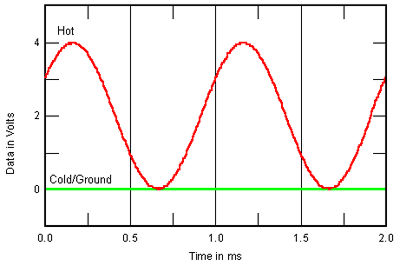
If you read much promotional literature for recently introduced high-quality equipment, you'll notice a common theme emerging: balanced connection. Balanced inputs and outputs are becoming a must for any audio equipment that has any claim to quality. The word itself has promotional value, suggesting moral superiority over the long-established "unbalanced" connection (for the purpose of this discussion, I will call this "normal"). What's my problem with this? Simply this: The High End could be paying dangerous, costly lip service to the received wisdom that balanced operation is the goal for an audio system.
Basso Profundo

Bass constitutes one of the least understood aspects of sound reproduction. Opinions vary greatly on matters of bass quality, quantity, and perceived frequency range or response. Moreover, the bass region is subject to the most unwanted variation in practical situations due to the great influence listening-room acoustics have on loudspeaker performance. Every room has its different bass characteristic, and changes in the position of speakers or listener also constitute major variables at low frequencies.
Between the Ears: the art and science of measuring headphones

Headphones get pretty short shrift in much of the hi-fi press, which is puzzling—the headphone market is burgeoning. I don't know what the equivalent US figures are, but in recent years the UK headphone market has increased by an annual 15–20% in both units sold and overall revenue. It's easy to dismiss this as a natural byproduct of the Apple iPod phenomenon, but 20% of the market value is now accounted for by headphones costing over $120; a significant subset of consumers would seem to be looking for quality. When you also consider that many people's first exposure to higher-quality audio comes via headphones, there is ample reason for treating them more seriously.
Bits is Bits?
High-quality digital audio systems require that all digital interfaces in the signal path exhibit signal transparency. The widely adopted AES/EBU and S/PDIF interfaces have been criticized for a lack of signal transparency; here we (footnote 1) address possible problems with such interfaces and present methods for improving the interface standard.