

Recording of October 2004: Careless Love

MADELEINE PEYROUX: Careless Love
Madeleine Peyroux, vocals, acoustic guitar; Lee Thornburg, trumpet; Dean Parks, guitars; Larry Goldings, piano; David Piltch, bass; Jay Bellerose, drums; Scott Amendola, brushes.
Rounder 11661 3192-2 (CD). 2004. Larry Klein, prod.; Helik Hadar, eng.; Ricky Chao, Nicolas Fournier, asst. engs. AAD. TT: 42:56
Performance ****
Sonics ****
Madeleine Peyroux, vocals, acoustic guitar; Lee Thornburg, trumpet; Dean Parks, guitars; Larry Goldings, piano; David Piltch, bass; Jay Bellerose, drums; Scott Amendola, brushes.
Rounder 11661 3192-2 (CD). 2004. Larry Klein, prod.; Helik Hadar, eng.; Ricky Chao, Nicolas Fournier, asst. engs. AAD. TT: 42:56
Performance ****
Sonics ****
Recording of October 2005: At Carnegie Hall

THELONIOUS MONK QUARTET WITH JOHN COLTRANE: At Carnegie Hall
John Coltrane, tenor sax; Thelonious Monk, piano; Ahmed Abdul-Malik, bass; Shadow Wilson, drums
Thelonious/Blue Note 35173 (CD). 2005. Michael Cuscuna, T.S. Monk, prods.; unknown eng. AAD. TT: 51:36
Performance *****
Sonics ***
John Coltrane, tenor sax; Thelonious Monk, piano; Ahmed Abdul-Malik, bass; Shadow Wilson, drums
Thelonious/Blue Note 35173 (CD). 2005. Michael Cuscuna, T.S. Monk, prods.; unknown eng. AAD. TT: 51:36
Performance *****
Sonics ***
Recording of October 2007: This Is Somewhere

Recording of October 2007: This Is Somewhere
Hollywood D00038502 (CD). 2007. Grace Potter and the Nocturnals, prods.; Mike Daly, prod., asst. eng.; Joe Chiccarelli, eng.; Kennie Takahashi, Travis Huff, Tim Bright, Wayne Warnecke, Otto D'Angelo, asst. engs. AAD? TT: 48:34
Performance ****½
Sonics ****
Hollywood D00038502 (CD). 2007. Grace Potter and the Nocturnals, prods.; Mike Daly, prod., asst. eng.; Joe Chiccarelli, eng.; Kennie Takahashi, Travis Huff, Tim Bright, Wayne Warnecke, Otto D'Angelo, asst. engs. AAD? TT: 48:34
Performance ****½
Sonics ****
Recording of October 2008: Way to Normal

BEN FOLDS: Way to Normal
Epic 886970984928 (CD). 2008. Dennis Herring, prod., Joe Costa, eng. AAD? TT: 40:32
Performance ****½
Sonics ***
Epic 886970984928 (CD). 2008. Dennis Herring, prod., Joe Costa, eng. AAD? TT: 40:32
Performance ****½
Sonics ***
Recording of October 2009: Far

Regina Spektor: Far
Sire 519396-2 (CD). 2009. Mike Elizondo, Jeff Lynne, Jacknife Lee, David Kahne, prods.; Adam Hawkins, Marc Mann, Steve Jay, Tom McFall, engs. AAD? TT: 47:21
Performance ****
Sonics ****½
Sire 519396-2 (CD). 2009. Mike Elizondo, Jeff Lynne, Jacknife Lee, David Kahne, prods.; Adam Hawkins, Marc Mann, Steve Jay, Tom McFall, engs. AAD? TT: 47:21
Performance ****
Sonics ****½
Recording of October 2010: Grinderman 2

Grinderman: Grinderman 2
Anti- 87125 (CD). 2010. Grinderman, Nick Launay, prods; Launay, eng. AAD. TT: 41:19
Performance ****½
Sonics ****
Anti- 87125 (CD). 2010. Grinderman, Nick Launay, prods; Launay, eng. AAD. TT: 41:19
Performance ****½
Sonics ****
Recording of October 2011: The Time of the Sun
 Tom Harrell: The Time of the Sun
Tom Harrell, trumpet, flugelhorn; Wayne Escoffery, tenor saxophone; Danny Grissett, piano, Fender Rhodes; Ugonna Okegwo, bass; Johnathan Blake, drums
High Note HCD7222 (CD). 2011. Tom Harrell, Wayne Escoffery, Angela Harrell, prods.; Joe Fields, exec. prod.; Mike Marciano, eng. AAD? TT: 62:12
Performance ****½
Sonics ****½ Trumpeters use their horns to search for truth. At least that's the folk tale. Somehow, that pure, ringing tone that most strive for at some point in their careerthink Louis Armstrong, Clifford Brown, Miles Davissuggests a quest for deeper knowledge, something closer to the heart. In effect, trumpeters play a knifea blade that can cut through nerve, bone, and sinew to that heart; to realizations, we'd like to think, that force them to be honest.
Recording of October 2013: Selected Signs III–VIII

The most indelicate, if not gory, term in all of music is the ever-popular "bleeding chunks." The bane of classical audiences cursed with lazy pops conductors, bleeding chunks are movements of worksor even parts of movementsstrung together in that abomination known as a medley. The effect can be, I guess, soothing to those who, for example, know only a little about Mozart. But for anyone well versed in their Wolfy, these programs are jarring, and can produce involuntarily grinding of those cavity-prone back molars.
Recording of October 2014: Bruckner: Symphony 9
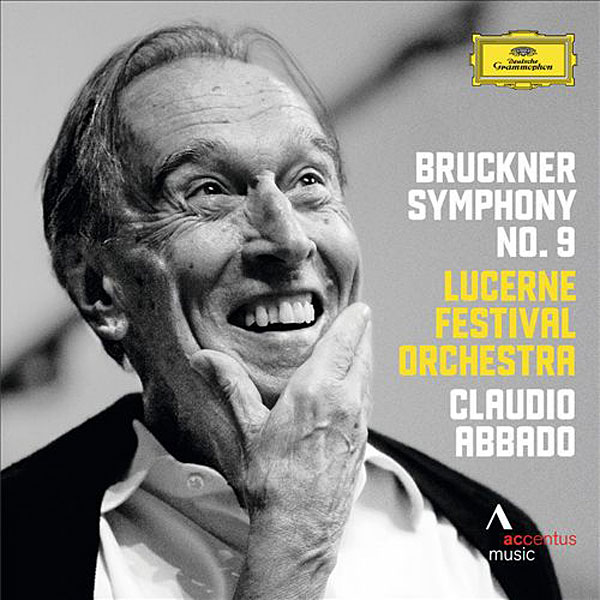
Bruckner: Symphony 9
Claudio Abbado, Lucerne Festival Orchestra
Deutsche Grammophon 479 3441 (CD, 48/24 download from HDTracks). 2014. Georg Obermayer, prod., ed.; Urs Dürr, Toine Mertens, engs. DDD. TT: 63:09
Performance *****
Sonics ****½ This performance of Bruckner's last, all-but-finished composition was recorded at the last concert conducted by Claudio Abbado. It is a fitting final statement by an interpreter of unparalleled sensitivity, intelligence, and taste. The Ninth is no serene work, and Abbado's earlier recording, with the Vienna Philharmonic, is a darker, more intensely driven vision of Bruckner's fight to live long enough to complete his most profound, most ambitious composition. The difficulties of that double struggle are evident throughout the three movements Bruckner completed (Abbado never conducted a completion of the nearly finished Finale), and in 1996 in Vienna, those struggles seemed the story Abbado wanted to tell.
Claudio Abbado, Lucerne Festival Orchestra
Deutsche Grammophon 479 3441 (CD, 48/24 download from HDTracks). 2014. Georg Obermayer, prod., ed.; Urs Dürr, Toine Mertens, engs. DDD. TT: 63:09
Performance *****
Sonics ****½ This performance of Bruckner's last, all-but-finished composition was recorded at the last concert conducted by Claudio Abbado. It is a fitting final statement by an interpreter of unparalleled sensitivity, intelligence, and taste. The Ninth is no serene work, and Abbado's earlier recording, with the Vienna Philharmonic, is a darker, more intensely driven vision of Bruckner's fight to live long enough to complete his most profound, most ambitious composition. The difficulties of that double struggle are evident throughout the three movements Bruckner completed (Abbado never conducted a completion of the nearly finished Finale), and in 1996 in Vienna, those struggles seemed the story Abbado wanted to tell.
Recording of October 2015: Time Present and Time Past
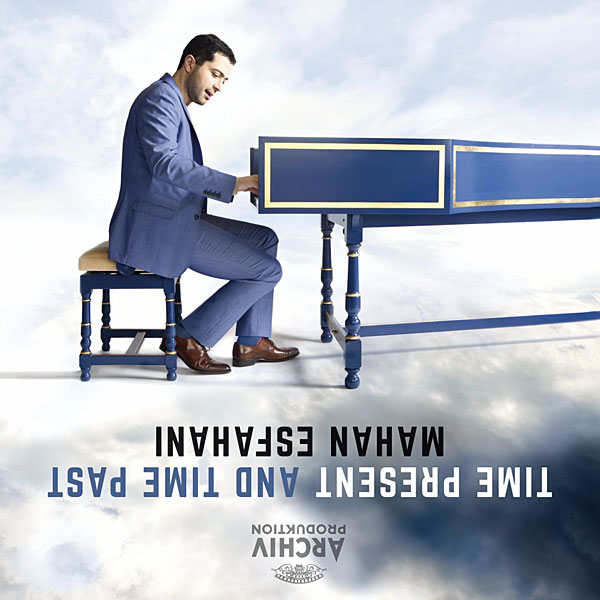
Mahan Esfahani: Time Present and Time Past
C.P.E. Bach: 12 Variations on "Les Folies d'Espagne." J.S. Bach: Harpsichord Concerto in d, BWV 1052. Geminiani: Concerto Grosso in d (after Corelli). Górecki: Harpsichord Concerto. Reich: Piano Phase for Two Pianos (harpsichord version: Esfahani). A. Scarlatti: Variations on "La Folia."
Mahan Esfahani, harpsichord; Concerto Köln
Archiv Produktion 4794481 (CD). 2015. Christoph Classen, prod.; Michael Morawietz, eng. DDD. TT: 73:45
Performance ****½
Sonics ***** This razzle-dazzle release is remarkable on several levels, and I wouldn't be surprised if it converted harpsichord haters to harpsichord hipsters. Iranian-American harpsichordist Mahan Esfahani, stealing a quote from T.S. Eliot about the relevanceor irrelevanceof time and (while he's at it) the harpsichord, here presents the instrument in works written for it in the 17th and 18th centuries, interspersed with pieces by two 20th-century composers. (The album's title references these lines from Eliot's Four Quartets: "Time present and time past / Are both perhaps present in time future, / And time future contained in time past.") Esfahani's argument holds water: bringing an "olde" instrument into the present with unflinchingly contemporary music turns this debut solo-recital disc into a splendid eventand, yes, proves that baroque music, with its repeating patterns, can make a fine pairing with minimalism. It's all far less jarring than you might think, and does provoke thoughts about the slippage of time.
Mahan Esfahani, harpsichord; Concerto Köln
Archiv Produktion 4794481 (CD). 2015. Christoph Classen, prod.; Michael Morawietz, eng. DDD. TT: 73:45
Performance ****½
Sonics ***** This razzle-dazzle release is remarkable on several levels, and I wouldn't be surprised if it converted harpsichord haters to harpsichord hipsters. Iranian-American harpsichordist Mahan Esfahani, stealing a quote from T.S. Eliot about the relevanceor irrelevanceof time and (while he's at it) the harpsichord, here presents the instrument in works written for it in the 17th and 18th centuries, interspersed with pieces by two 20th-century composers. (The album's title references these lines from Eliot's Four Quartets: "Time present and time past / Are both perhaps present in time future, / And time future contained in time past.") Esfahani's argument holds water: bringing an "olde" instrument into the present with unflinchingly contemporary music turns this debut solo-recital disc into a splendid eventand, yes, proves that baroque music, with its repeating patterns, can make a fine pairing with minimalism. It's all far less jarring than you might think, and does provoke thoughts about the slippage of time.