

Chips for Chumps
In his "From the Editor's Desk" in the March issue of Stereophile's e-newsletter, John Atkinson recounts how, years ago, "erstwhile audio scribe Enid Lumley" demonstrated her pizza-box-tripod tweak at a hi-fi show. Lumley, JA writes, "placed the tripod atop a CD player and convinced her audience—including me—that the sound was better."
Cholera in the time of love
I was recently reunited with an old friend from high school. My best friend from high school, in fact. Our families got together, everyone got along, and as the dust of conversation settled toward the rug of companionable silence, talk turned to work. And when the inevitable happened, and my old friend and his wifeclassical-music lovers bothasked how much a person had to spend these days in order to get a good music system, I answered their question with a questiona question that, crazily enough, just popped into my head...
Classical Music as an Act of Rebellion
There's a widespread myth that writers who get published are more talented than writers who don't get published, and that musicians who make records are more talented than musicians who don't make records. But anyone with any talent who has ever tried to earn a living as a writer, a musician, or any other kind of artist understands that the correlation between merit and success is, at best, loose. Some successful artists are talented, and some talented artists are successful. But for every talented artist who manages to make a living there are a dozen more, equally deserving, who have no choice but to keep their day jobs.
Closer Together Covers?
The audiophile in the plaid shirt and gray Dockers had his hand up. Moderator Jonathan Scull handed him the roving microphone, and the Stereophile writers on the podium at HI-FI '99's Sunday afternoon "Ask the Editors" session shifted in their chairs. "This one's for John Atkinson," came the windup. The other writers relaxed; I started to sweat. Then the pitch: "How come Stereophile issues are so small these days?"
Clowns to the left of me, jokers to the right . . .
The dichotomy between what is measured and what is heard has resurfaced in recent months. Jon Iverson discussed it in his "As We See It" in our December 2018 issue, and I followed up on the subject in my January 2019 "As We See It." These further thoughts were triggered by an e-mail exchange I had last December with Stereophile's longtime copyeditor, Richard Lehnert.
Cocktail Parties, Wedding Parties, Recording Sessions
It's called the "Cocktail Party Effect." You may be immersed in the middle of a crowd of audiophiles all talking at once, but when someone says something that catches your attention, such as your name, you can focus on the sound of that person's voice and exclude the babble. The noise suppression can be 9–15dB; ie, the sound being concentrated on seems to be three to four times louder than the ambient noise, according to Wikipediahttp://en.wikipedia.org/wiki/Cocktail_party_effect">Wikipedia;. The exact mechanism of the Cocktail Party Effect is not known, but it is conjectured that it has something to do with the binaural nature of human hearing: the fact that we have two ears allows us to apply spatial discrimination to what would otherwise be a jumble of sound.
Commonsense System Strategies
There's an old Russian folktale about a farmer who goes to a fair. He buys a bread roll from a vendor. He eats it, but he's still hungry. So he buys and eats another roll, and then another. Still hungry. Next, he buys a donut from a different vendor. At last, he's no longer hungry. The farmer then says to himself, "I wasted the money I spent on the rolls—I should have just bought the donut first!"
Communication Breakdown
Classical and jazz notwithstanding, an awful lot of new music is highly compressed, processed, and harsh, and it's about time we got used to it. Musicians, producers, and engineers are, in large part, on board with the sound, and any suggestion of making less-compressed recordings, with a wider dynamic range, is met with confused stares, or worse. One superstar producer didn't take kindly to my suggestion that he make two mixes for his new project: the standard compressed one, and another, less-crushed version. That didn't fly; he said there could be only one, the mix approved by him and the band, and that to them, a less-compressed mix wouldn't sound better. This producer is an audiophile, but he's not the least bit interested in making music for audiophiles. Harshness, it seems, isn't just a byproduct of compression; it's an integral part of the sound of today's music.
Communities
I was having breakfast in my hotel room on December 13, 2008, finally getting down to preparing the presentation I was to give at the Los Angeles and Orange County Audio Society scant hours later (footnote 1). I procrastinated a little more by checking my e-mail one more time. The message from Ivor Humphreys, once my deputy editor at the UK's Hi-Fi News & Record Review magazine (now just plain Hi-Fi News), and for many years technical editor at Gramophone magazine, was typically terse: "John Crabbe has died. He had a fall on the wintry ice a few days ago and broke an arm. He died at home yesterday. He was 79."
Complicated
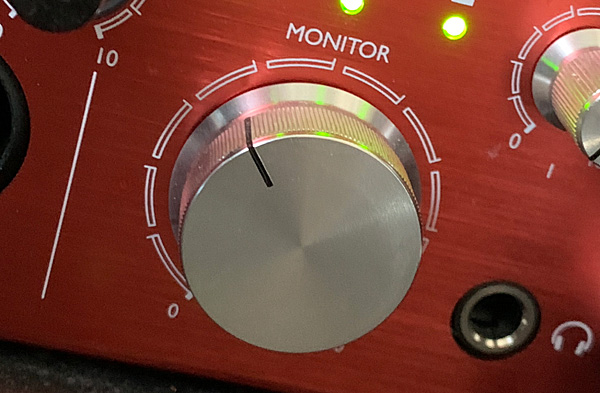
Even though I'm the editor of Stereophile, I sometimes struggle to get my audio system to play. It's a little bit embarrassing. Just last night, I put on a record and there was no sound. I figured out the problem immediately: I'd forgotten to turn on the amplifiers. But the reason isn't always so obvious.